

PBIS School Newsletter: Positive Behavior Communication
PBIS is one of the most research-supported school climate frameworks available, with evidence from thousands of schools showing consistent reductions in office discipline referrals, improved school climate ratings, and better academic outcomes when implemented well. That evidence is worth sharing with families, especially early in the year when the program is being introduced or re-established.
Explain PBIS before you describe the rewards
Many families hear about PBIS through the token economy or the school store and conclude it is a bribery system. The newsletter that leads with the philosophy before the mechanics prevents that misperception.
"PBIS starts from a simple observation: students behave better when they know exactly what is expected of them and when those expectations are taught explicitly, not just assumed. We define our expectations clearly, teach them in every setting, and acknowledge students when they meet them. The recognition system reinforces the learning; it is not the point of the program."
State the three to five school expectations
Every PBIS school has a set of core expectations, often three to five, that apply across all settings. These might be "Be Safe, Be Responsible, Be Respectful" or "PRIDE: Prepared, Respectful, Involved, Determined, Empathetic." State them clearly in the newsletter and give one concrete example of each in a different setting.
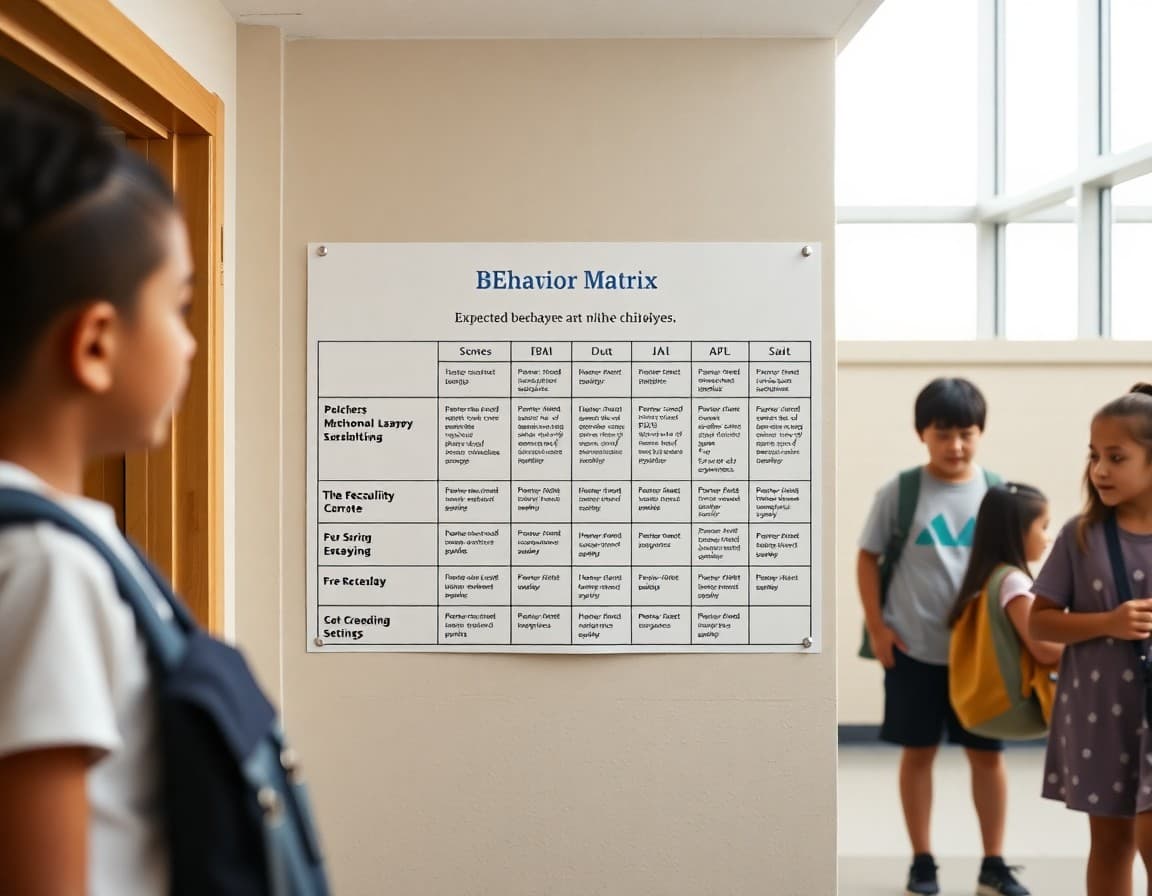
A behavior matrix table in the newsletter, showing what each expectation looks like in the hallway, classroom, cafeteria, and bathroom, is the most useful single thing a PBIS newsletter can include. Families who know the matrix can use the same language at home.
Share behavioral data that shows impact
Behavioral data is credible and motivating: "In September and October, we had 47 office discipline referrals. In November and December after launching PBIS, we had 19. That represents a 60% reduction. More importantly, those 28 students who would have been sent to the office were instead recognized for the expectations they met and kept in class learning."
Connect the data to what it means for students' daily experience. Families care about reduced referrals because they understand that every referral is a disruption to learning.
Describe the recognition system clearly
Name the recognition tool (paw print tickets, caught being good cards, digital points in a tracking system), explain how students earn them, and describe what they can do with accumulated recognition. If there is a school store, a monthly celebration event, or a special privilege tied to recognition, explain it.
A family who understands that their child earned 15 paw prints this month for responsibility and kindness can celebrate that specifically and meaningfully at home.
Give families the parallel language
PBIS works better when home uses the same vocabulary as school. Give families a short list of the recognition phrases teachers use: "I noticed you..." "You showed responsibility when you..." "That is exactly what we mean by being respectful." Families who use the same language reinforce the same mental model of expected behavior.
Template: PBIS monthly update newsletter section
"This month at Jefferson Elementary, students earned 2,340 PRIDE tickets for demonstrating our five school expectations. Office referrals dropped to 11, our lowest monthly total in four years. The class with the most tickets per student this month is Ms. Torres's third grade, who earned 287 tickets in November. At home, you can reinforce the same expectations by naming them when you see your student demonstrate them: 'You showed real determination finishing that homework.' That language matters."
Acknowledge where PBIS is still developing
A newsletter that only reports successes loses credibility with families who observe areas where the program is not yet working. A brief honest acknowledgment builds trust: "We are still refining our cafeteria expectations. Lunchtime remains our most challenging setting and we are working on it. Here is what we are trying this month." Families who see the school's honest self-assessment trust the positive data more.
Get one newsletter idea every week.
Free. For teachers. No spam.
Frequently asked questions
What should a PBIS school newsletter include?
Explain the PBIS framework briefly for families who are not familiar with it: what positive behavioral interventions and supports means in practice, how the token economy or recognition system works, and what the school's three to five core expectations are across different settings. Celebrate current data like the number of behavior citations, discipline referrals, or positive behavior awards given since the program started. Give families parallel language to use at home.
How do you explain PBIS to families who are unfamiliar with it?
PBIS, or Positive Behavioral Interventions and Supports, is a framework that teaches expected behaviors explicitly rather than assuming students already know them. Instead of punishing students for not following rules they were never taught, PBIS schools define, model, and practice the behaviors they want to see in every setting. The newsletter should communicate that PBIS is a teaching approach, not a reward program, and explain what the three to five core expectations are and why they were chosen.
What data should a PBIS newsletter share with families?
Share behavioral data that shows the program's impact: office discipline referrals before and after PBIS implementation, the number of positive behavior recognitions given this month, the percentage of students who have not received a single office referral this year, and any improvement in attendance or academic engagement correlated with the behavior climate data. Data makes the program real and builds family trust in the approach.
How do you communicate the reward system in a PBIS newsletter?
Describe the token economy specifically: what students earn points or tickets for, how they accumulate them, and what they can exchange them for at the school store or recognition event. Families who understand the reward system can reinforce it at home with parallel acknowledgment. 'You showed responsibility today by putting your shoes away without being asked. That is exactly what we are celebrating at school right now.'
How does Daystage support PBIS and school culture program communication?
Daystage lets you send a PBIS launch newsletter at the start of the year, monthly celebration newsletters showing behavioral data milestones, and targeted newsletters to families of students receiving specific recognition. All three communicate the program's presence and impact throughout the year, keeping families aligned with the school's behavioral approach.

Adi Ackerman
Author
Adi Ackerman is a former classroom teacher and curriculum writer with 8 years in K-8 schools. She writes about school communication, parent engagement, and what actually works in real classrooms.
More for School Culture
Ready to send your first newsletter?
3 newsletters free. No credit card. First one ready in under 5 minutes.
Get started free