School Newsletter: Teaching Conflict Resolution Skills
Conflict is a normal part of school life. How schools respond to it, what they teach students about managing it, and how they communicate about their approach to families determines whether conflict becomes a persistent culture problem or a teachable moment. A newsletter that communicates the school's conflict resolution approach clearly and early, before a conflict involving a family's child occurs, is far more useful than one sent in the aftermath of an incident.
Explain the specific skills your school teaches
Conflict resolution is a set of learnable skills, not a vague disposition toward getting along. A newsletter that names the specific skills students are learning, active listening, perspective-taking, using first-person language to describe feelings, identifying needs underneath positions, helps families understand what the school is actually teaching and why. When families know the vocabulary the school uses, they can reinforce it at home.
Describe what happens when a conflict occurs
Many families have no idea what the school actually does when students have a conflict. A newsletter that describes the process, from initial response through resolution, communicates that the school has a thoughtful approach rather than reacting inconsistently. Be specific: when a conflict is reported, here is what happens next, here is who is involved, here is what the goal of the process is.
Introduce peer mediation if you have it
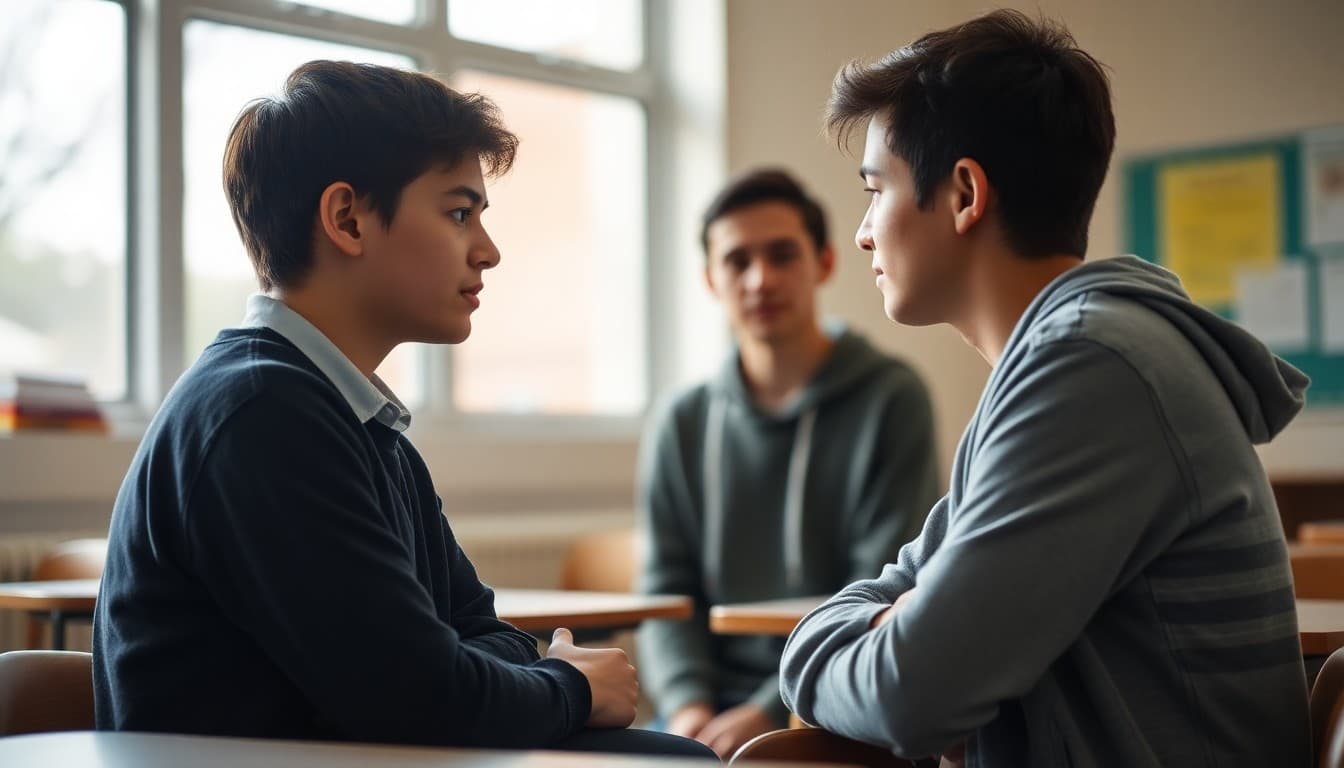
Peer mediation programs, where trained student mediators help peers work through conflicts, are effective and underexplained. Many families have never heard of peer mediation and do not know it exists at their school. A newsletter that explains what peer mediation is, how student mediators are trained, and how a family's child can request or participate in mediation demystifies a process that benefits from family understanding and support.

Give families language to use at home
When families use the same conflict resolution language at home that the school uses in the classroom, the skills transfer more effectively. A newsletter section that gives families specific phrases, what did you need in that situation, what do you think the other person needed, what are three ways this could be resolved, extends the school's teaching beyond the building.
Be clear about what conflict resolution does and does not cover
Conflict resolution education addresses everyday interpersonal friction: disagreements, hurt feelings, misunderstandings, and competition. It is not the primary response to bullying, harassment, threats, or violence. A newsletter that is explicit about this distinction prevents families from concluding that the school uses conflict resolution as a way to avoid accountability for serious incidents. The two approaches serve different purposes.
Share what students say about the skills they are learning
Student voices are the most credible testimony for conflict resolution programs. A newsletter that includes quotes from students about how they used a specific skill to handle a difficult situation, what was hard about it, what they would do differently next time, communicates the program's reality in a way that no description from an adult can. Ask students to share brief reflections and feature them in the newsletter.
Get one newsletter idea every week.
Free. For teachers. No spam.
Frequently asked questions
How should schools communicate about conflict resolution programs in newsletters?
By describing what specific skills students are learning, how the school responds when conflicts arise, what families can do to reinforce these skills at home, and what the school's peer mediation or restorative practices look like if those programs exist. Families benefit from understanding the school's approach to conflict before a conflict involving their child occurs.
What conflict resolution skills should schools communicate that students are learning?
Active listening, perspective-taking, using "I statements" to describe feelings, identifying underlying needs rather than just positions, generating multiple possible solutions, and agreeing on a path forward. These are specific, teachable skills that families can reinforce at home when they know what to look for and practice.
What is peer mediation and how should schools communicate about it?
Peer mediation programs train students to help their peers resolve conflicts with the support of a trained student mediator rather than only through adult intervention. A newsletter that explains how peer mediation works, how students are trained as mediators, and how families can encourage their child to use the process rather than escalating removes the mystery from a program that many families have never encountered.
How do schools communicate about conflict resolution without minimizing serious incidents?
By distinguishing between the everyday interpersonal conflicts that conflict resolution skills address and the more serious incidents that require disciplinary and safety responses. A newsletter can explain that conflict resolution education helps students manage disagreements, hurt feelings, and misunderstandings, while also being clear that serious violations of safety and school policy are handled through a separate process.
How does Daystage help schools communicate conflict resolution programs to families?
Daystage makes it easy for school counselors and administrators to send targeted newsletters explaining conflict resolution programs before conflicts involving families arise. A family that understands the school's approach to conflict resolution before their child has a conflict is more likely to support that approach than one who encounters it for the first time in the middle of an incident.

Adi Ackerman
Author
Adi Ackerman is a former classroom teacher and curriculum writer with 8 years in K-8 schools. She writes about school communication, parent engagement, and what actually works in real classrooms.
More for School Culture
School Conflict Resolution Newsletter: Communicating Peer Mediation to Parents
School Culture · 6 min read
Writing a Social-Emotional Learning Newsletter Families Will Actually Use
School Culture · 6 min read
Explaining Restorative Practices to Families Through Your Newsletter
School Culture · 6 min read
Ready to send your first newsletter?
3 newsletters free. No credit card. First one ready in under 5 minutes.
Get started free