
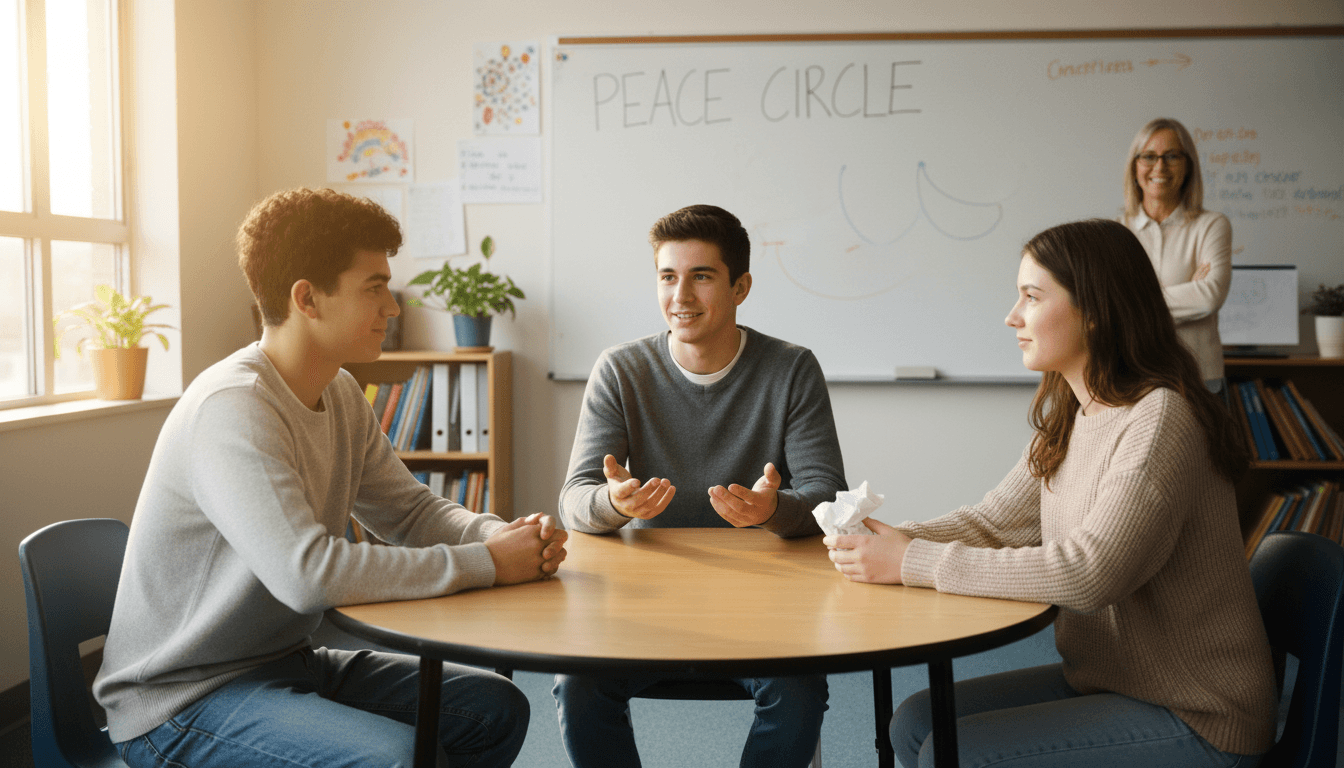
School Conflict Resolution Newsletter: Communicating Peer Mediation to Parents
Student conflict is one of the leading reasons parents contact schools with concerns. Most conflicts that families escalate to school staff could be resolved earlier, at a lower temperature, if families understood what tools the school has available and how to help their child use them. Your newsletter is how you teach families those tools before they need them.
Explain What Conflict Resolution Training Students Receive
Most schools teach some form of conflict resolution skills. Most families have no idea what that training involves or whether their child has received it. Describing it explicitly gives families confidence that the school is not just telling students to "be kind" and calling it done.
"Beginning in fourth grade, all students complete a six-session conflict resolution course taught by our school counselor. Students learn a five-step process for addressing conflict: stop and cool down, identify what happened from each person's perspective, name how each person felt, identify what each person needs, and propose a solution both can agree to. Students practice this process with real scenarios, not hypothetical ones."
Describe the Peer Mediation Program
Peer mediation programs are effective and underused partly because families do not know they exist. Describe who the mediators are, how they are selected and trained, and what a mediation session actually looks like.
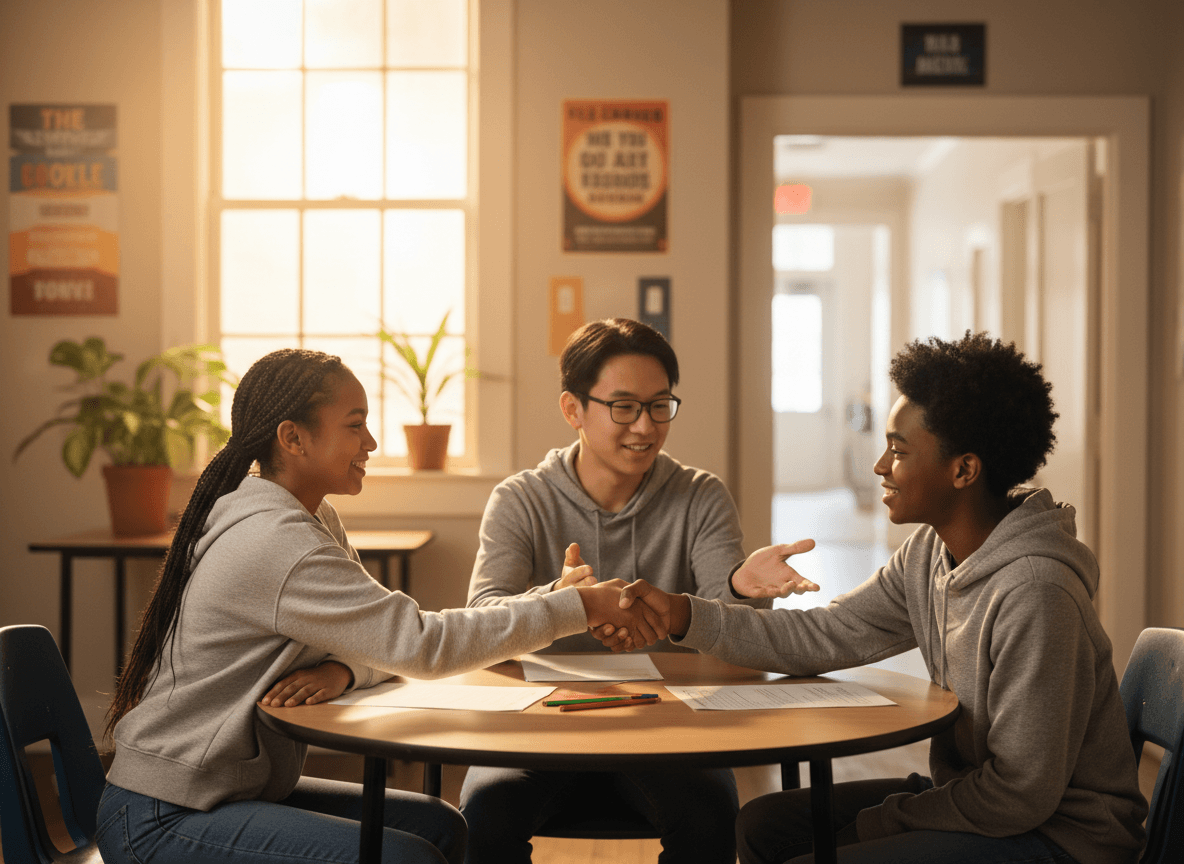
"Our peer mediators are 18 students in grades seven and eight who completed a 12-hour training in facilitated conflict resolution. When two students have a conflict they cannot resolve on their own, they can request a peer mediation session. Sessions take 20 to 30 minutes and are held in a private room with two mediators. A counselor is always available nearby but does not participate unless asked. The process is voluntary for both parties. Since September, we have held 24 peer mediation sessions. Of those, 21 resulted in a written agreement that both parties signed."
That data, 21 of 24 sessions resulting in a signed agreement, is more persuasive than any description of the philosophy.
Tell Families When to Refer to Peer Mediation
Families who call the school about a conflict often want the school to intervene immediately with consequences. Sometimes that is appropriate. But for interpersonal conflicts that do not involve threats, harassment, or power imbalances, peer mediation is often a faster and more durable resolution. Teach families the distinction.
"Peer mediation works best for: arguments between friends or classmates, disagreements about social situations, conflicts that have gone back and forth over a few days. Peer mediation is not appropriate for: bullying (which involves repeated targeting and a power imbalance), threats of harm, or incidents requiring disciplinary action. If you are not sure which category your child's situation falls into, call the counselor and we will help you figure it out."
Give Families Language to Avoid Escalating at Home
Parents often inadvertently escalate student conflicts by coaching their children to defend themselves, confront the other student, or wait for the school to punish the other child. Give families language that supports resolution instead.
"If your child comes home describing a conflict with another student, the most helpful question you can ask is: 'What do you want to be different tomorrow?' Not 'What are you going to do about it?' or 'What did the school say they would do?' The first question focuses your child on the outcome they want. The other two focus on action and accountability, which can make the conflict larger rather than smaller."
Close the Loop After Mediation
When a conflict involving a family's child has gone through mediation or a formal resolution process, the family deserves to know the outcome, in appropriate terms. This does not mean disclosing what the other student agreed to. It means confirming that a resolution process occurred and describing what support is now in place.
"Your child participated in a peer mediation session on [date]. The session resulted in a written agreement. Both parties will check in with the counselor at the end of this week and again in two weeks. If the conflict resurfaces, please contact [name] directly."
Get one newsletter idea every week.
Free. For teachers. No spam.
Frequently asked questions
When should schools communicate conflict resolution programs to families?
Before conflicts happen, not during them. Explaining your peer mediation program and the distinction between mediation-appropriate conflicts and disciplinary ones at the start of the year means families arrive informed rather than reactive when their child is involved in a dispute.
What should a school conflict resolution newsletter include?
A description of the conflict resolution training students receive, details on who the peer mediators are and how they are trained, clear guidance on when peer mediation is and is not appropriate, and language families can use at home to help their child focus on resolution rather than retaliation.
How can schools share conflict resolution skills through newsletters?
Describe the actual steps of the process students learn, not just the philosophy. Share outcome data like how many peer mediation sessions resulted in signed agreements. And give families one specific question they can ask their child after a conflict that supports resolution rather than escalation.
What are common mistakes in school conflict resolution communication?
Waiting until a high-profile conflict to explain how the school handles disputes, which means families are reading about the process while they are already upset. Describing the philosophy of conflict resolution without explaining what it looks like in practice. And leaving families without a clear way to request mediation for their child.
How does Daystage help schools communicate conflict resolution programs?
Daystage makes it easier for schools to build and send newsletters consistently, so conflict resolution content reaches families as part of regular communication rather than only appearing in reactive messages after incidents.

Adi Ackerman
Author
Adi Ackerman is a former classroom teacher and curriculum writer with 8 years in K-8 schools. She writes about school communication, parent engagement, and what actually works in real classrooms.
More for School Culture
Ready to send your first newsletter?
3 newsletters free. No credit card. First one ready in under 5 minutes.
Get started free