
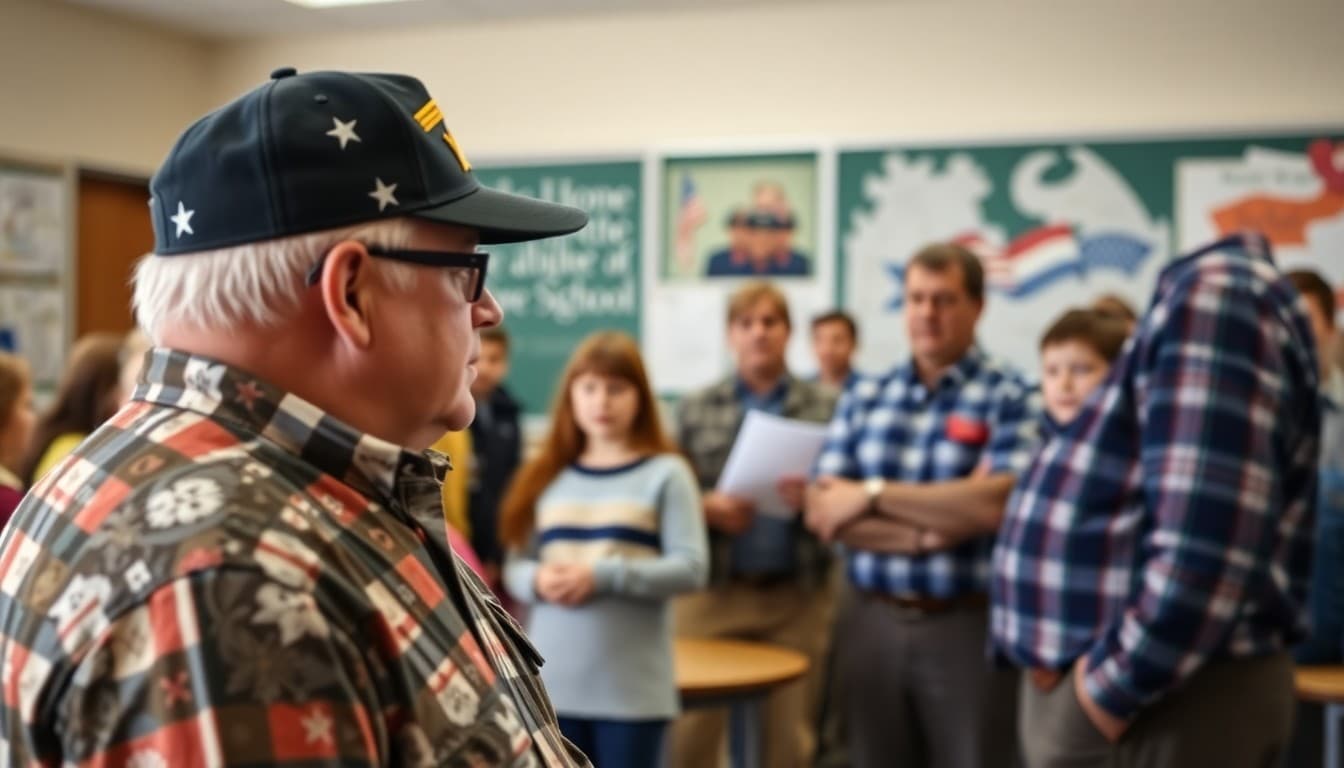
Veterans School Partnership Newsletter: Honoring Service

Veterans bring to school communities something no textbook can replicate: firsthand experience with service, sacrifice, and the values that define citizenship. When veterans visit classrooms, speak at assemblies, or mentor students, they create connections between curriculum content and living history that change how students understand both the past and their own potential. A newsletter about your school's veterans partnership shows families how the school honors service, what students learn from these relationships, and how everyone can participate.
Why Veterans Programs Belong in Schools
The gap between civilian and military communities has grown wider over the past several decades. Fewer than one percent of Americans currently serve in the armed forces, and fewer than seven percent of adults are veterans. Most students today grow up without a veteran in their immediate family. School partnerships with veterans organizations bridge this gap by creating direct, personal connections between students and people who have chosen a life of service. These connections matter regardless of any student's future intention to enlist. They develop civic knowledge, respect for sacrifice, and an understanding of institutions that shape the national story.
Planning a Veterans Day Program
A Veterans Day program that students have genuinely prepared for is more meaningful than a perfunctory ceremony. Students who have spent two weeks writing letters to veterans, learning about the history of Veterans Day, researching the branches of the military, and preparing a musical performance arrive at the ceremony with investment that transforms the experience. Your newsletter before Veterans Day should describe how students have been preparing, which veterans have accepted your invitation and who they are in brief terms, what the program will include, and how families can attend if the event is open to the public. This preparation shifts Veterans Day from an assembly day to a genuine community event.
Veterans as Career and Life Educators
Veterans who participate in career exploration programs at schools bring perspectives that are remarkably diverse. A veteran who served as a military doctor is now a civilian surgeon. A veteran who worked in military intelligence is now a cybersecurity professional. A veteran who served as a logistics officer now manages operations for a manufacturing company. A veteran who was a combat medic is now a nurse practitioner at a community health clinic. Veterans demonstrate that military service is a preparation for almost every civilian career path. Career day presentations by veterans show students that the same core competencies, discipline, leadership, teamwork, and mission focus, apply in every professional context.
Sample Template Excerpt
Here is a section you can adapt for your own newsletter:
Honoring Veterans: What We Are Doing on November 11th
Our school is hosting a Veterans Day ceremony this year that our students have been preparing for since October.
What students have created: All grade levels have written letters or made cards for veterans. Fifth graders researched one veteran from our community's history and will present brief profiles at the ceremony. Our choir has prepared two patriotic songs.
Our veteran guests: We have four veterans joining us this year. They represent the Army, Navy, Marine Corps, and Air Force and span service periods from Vietnam to Iraq. After the ceremony, they will rotate through classrooms for informal Q&A conversations with students.
How to attend: The ceremony is in the gymnasium starting at 9:00 AM. Families and community members are welcome. If you are a veteran and would like to be recognized during the ceremony, please RSVP to [contact] by November 5th.
If your family includes a veteran: Let your child's teacher know. We would love to recognize your family's service as part of our ceremony.
Supporting Military-Connected Students Year-Round
Some of your students are children of active duty service members who may be deployed, stationed away from home, or navigating a recent transition out of the military. These students sometimes carry stresses that are invisible to teachers and classmates. A newsletter that acknowledges the school's commitment to supporting military families, names the counselor or family liaison who is the designated contact for military-connected family concerns, and points to external resources like the Military Child Education Coalition sends a clear message to these families that the school sees them. This does not require a lengthy program. It requires consistent, specific acknowledgment of a population that often slips through the cracks of school communication.
Building a Year-Round Veterans Partnership
Veterans Day is the most visible moment for school-veteran partnerships, but it should not be the only one. A sustained partnership with a local veterans organization or American Legion post can provide mentors, career day speakers, tutors, and community service project collaborators throughout the year. Students who develop relationships with veteran mentors over a semester or a school year gain more than students who meet a veteran once at a ceremony. Your newsletter can describe what a year-round veterans partnership looks like at your school and how interested community members, including veterans, can get involved beyond the November ceremony.
Get one newsletter idea every week.
Free. For teachers. No spam.
Frequently asked questions
How do schools typically partner with veterans organizations?
Common school-veteran partnerships include Veterans Day ceremonies and classroom visits, career day presentations from veterans working in diverse civilian fields, mentorship programs where veteran mentors meet with students regularly, writing or art projects where students correspond with active duty service members, oral history projects where students interview veterans about their service, and partnerships with organizations like Team Red White and Blue or Mission Continues that facilitate structured school engagement.
What should a Veterans Day school event newsletter cover?
A Veterans Day newsletter should describe the event program, how students have been preparing (cards written, artwork created, presentations rehearsed), which veterans have been invited and in what capacity, whether families are invited to attend, and how students can honor veterans in their own families. Include information about the significance of Veterans Day versus Memorial Day, since many families and students confuse the two. Veterans Day honors all living veterans. Memorial Day honors those who died in military service.
How do veterans benefit from school partnership programs?
Veterans who participate in school programs often report significant personal benefits, including a renewed sense of purpose and community connection. For veterans experiencing the challenges of transitioning to civilian life, regular engagement with a school community provides structure, social connection, and the opportunity to contribute to others in a meaningful way. Many veteran service organizations specifically recommend school volunteering as part of transition support programs. A newsletter that acknowledges what the school community offers veterans, not just what veterans offer students, reflects a more complete and respectful understanding of the relationship.
How should schools acknowledge veteran families in their school community?
Many schools have students who are children of active duty service members or veterans. These students sometimes face unique challenges including frequent moves, parental deployment, and the stress that military families carry. A Veterans Day newsletter can acknowledge these families specifically, invite them to share their family's service story with the school community, and connect military-connected families to each other and to school support resources. The Military Child Education Coalition provides resources specifically for schools serving military-connected students.
How can Daystage help schools communicate about veterans programs?
Daystage makes it easy to send a Veterans Day event invitation to all families with program details, RSVP links, and information about how students have prepared. After the event, Daystage can share photos and highlights with the school community, celebrating the partnership publicly in a way that honors both the veterans who participated and the students who created a meaningful ceremony. Schools that communicate about veterans programs through Daystage consistently see higher family attendance at these events.

Adi Ackerman
Author
Adi Ackerman is a former classroom teacher and curriculum writer with 8 years in K-8 schools. She writes about school communication, parent engagement, and what actually works in real classrooms.
More for Community Outreach
Ready to send your first newsletter?
3 newsletters free. No credit card. First one ready in under 5 minutes.
Get started free