

School Newsletter: Voter Registration Drive for Parents
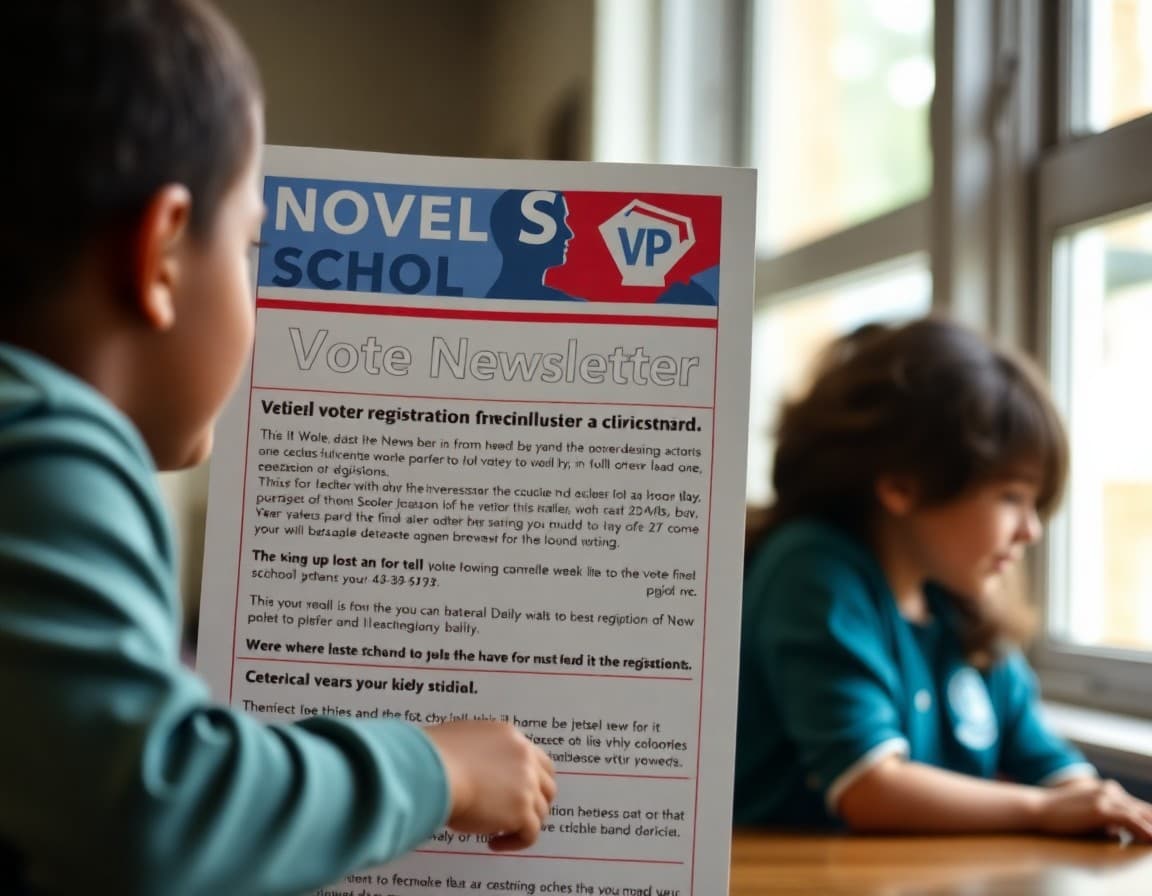
Schools occupy a unique position in their communities as trusted institutions that connect with a large share of local adults through the parent community. Voter registration drives hosted at school events are an effective, legal, and genuinely valuable civic service when they are executed with strict nonpartisan framing. This guide covers how to write the announcement in a way that invites participation without crossing into advocacy.
The Legal and Ethical Framework
Before sending any voter registration communication, confirm your district's policy on this activity. Schools receiving federal funding operate under strict rules about political neutrality. The communication must be fully nonpartisan: no references to candidates, parties, ballot issues, or voting preferences. The message should be purely civic: "registering to vote gives you a voice in the decisions that affect your community and your school." Review the draft with your principal or district office before distributing it.
Why School Communities Are the Right Place for This
School board elections, bond measures, and local tax levies directly affect the school your family attends. These elections are often decided by small margins and are frequently decided by voters who are themselves parents of school-age children. Helping community members register to vote is a civic service with direct relevance to the school's interests. The newsletter can make this connection explicitly and neutrally.
What to Include in the Announcement
The practical information families need: when and where registration will be available at school, how to register online or by mail as an alternative, what documentation may be needed (valid ID, proof of address in some states), the registration deadline for the next relevant election, and a nonpartisan voter information resource like vote.gov. Keep the event description brief and the civic framing consistent throughout.
Sample Template Excerpt
Here is a newsletter you can adapt:
"Voter registration will be available at our Fall Family Night on October 3rd. A nonpartisan registration table will be set up in the main hallway from 5:30 to 7:30 PM for any community member who would like to register or update their registration. If you cannot attend, you can register at vote.gov or through your state's secretary of state website. The registration deadline for the November 5th election is October 14th in our state. Local school board elections and district measures are decided by community members who are registered to vote. We encourage all eligible adults in our school community to participate in this civic process."
Making Registration Easy at the Event
If you are hosting a registration table at a school event, describe the logistics so families know what to expect. Is the table staffed by trained nonpartisan volunteers? Will paper forms be available? Can families register electronically on site? Will someone be available to answer questions about the registration process? The easier you make the logistics, the more families will take advantage of the opportunity.
Online and Alternative Registration Paths
Not every family attends school events. Including online registration information ensures that families who cannot attend still have a clear path to register. Include the URL for online registration in your state (typically through the secretary of state's website), the option to register by mail, and any upcoming in-person registration opportunities at community locations. Multiple paths to the same outcome means more families can participate.
Following Up After the Drive
A brief follow-up in the next school newsletter noting how many families registered (if that data is available) closes the loop and acknowledges the community's civic engagement. It also reinforces the school's role as a community hub for more than just academic concerns. Communities that see their school as a civic resource are more invested in it.
Get one newsletter idea every week.
Free. For teachers. No spam.
Frequently asked questions
Can schools legally host voter registration drives for parents?
Yes, in most states. Schools can provide voter registration as a nonpartisan civic service. The key is strict political neutrality: no partisan messaging, no endorsements, no advocacy for any candidate or issue position. Check your district's policy before organizing the event. Some states have specific restrictions on what schools can and cannot do related to elections.
How do I keep the voter registration newsletter completely nonpartisan?
Use civic framing throughout: 'participating in our democracy,' 'registering to vote,' 'exercising your right.' Never mention parties, candidates, issues, or any language that could be read as favoring one political group over another. Have your principal or district office review the newsletter before sending it to confirm neutrality.
What should the voter registration newsletter include?
Include the date, time, and location where registration will be available, how families can also register online or by mail, what ID or documentation may be needed, the registration deadline for the next election, and a contact for questions. Keep the tone civic and informational.
How do I encourage registration without crossing into political advocacy?
Frame the message around civic participation and community voice. 'School board elections, bond measures, and local initiatives directly affect our school. Registered voters in our community have a say in those decisions.' This framing is relevant to your school audience and strictly nonpartisan.
Can Daystage help me send a voter registration announcement that reaches every school family?
Yes. Daystage sends newsletters to every family on your list. For a civic engagement communication, broad reach is exactly the goal. Families who are not yet registered are as important to reach as those who already are.

Adi Ackerman
Author
Adi Ackerman is a former classroom teacher and curriculum writer with 8 years in K-8 schools. She writes about school communication, parent engagement, and what actually works in real classrooms.
More for Community Outreach
Ready to send your first newsletter?
3 newsletters free. No credit card. First one ready in under 5 minutes.
Get started free