

School Newsletter: Career and Technical Education Month Highlights
February is Career and Technical Education Month, and it is an opportunity to help families understand what CTE programs actually offer -- and why they matter for students who are planning any kind of post-secondary path. A CTE newsletter that goes beyond a program listing to explain the skills, credentials, and career pathways available at your school changes how families think about the options in front of their children.
What CTE Means at Your School
CTE programs vary widely by school and district. Give families a specific description of the programs available at your school: culinary arts, healthcare, construction technology, computer science, automotive, agriculture, early childhood education, business, media arts. Name each program, describe what students learn, and note what grade levels can participate. Many families assume CTE is only for students not planning college. The reality is that CTE programs build practical skills, earn industry credentials, and often count for college credit.
Industry Credentials Students Can Earn
One of the most compelling things about CTE is that students can leave high school with real, recognized industry credentials. Name the specific credentials available through your school's programs: ServSafe certification, OSHA 10-hour certification, CompTIA certifications, CNA, Microsoft Office Specialist, and others depending on your programs. A family that learns their child could graduate with a credential that earns immediate employment in a specific field evaluates CTE very differently than one that thinks of it as a vocational track.
Connecting CTE to College and Career Pathways
Many CTE programs articulate directly with community college and four-year programs, meaning students can earn college credit in high school through their CTE coursework. If your school has articulation agreements with local colleges, name them. If CTE students can apply for college programs in their field with their high school credentials as a foundation, explain how. CTE and college preparation are not either/or choices -- for many students, CTE provides the most practical on-ramp to both employment and further education.
Spotlight a CTE Student or Program
Feature one CTE student or program in the newsletter. A student who used their culinary CTE training to start a small catering business. A cohort of healthcare CTE students who completed their CNA exams before graduation. A computer science program whose students won a regional competition. Specific, real stories of student achievement in CTE programs are the most effective marketing the school can do for these programs.
CTE Open House or Program Showcase
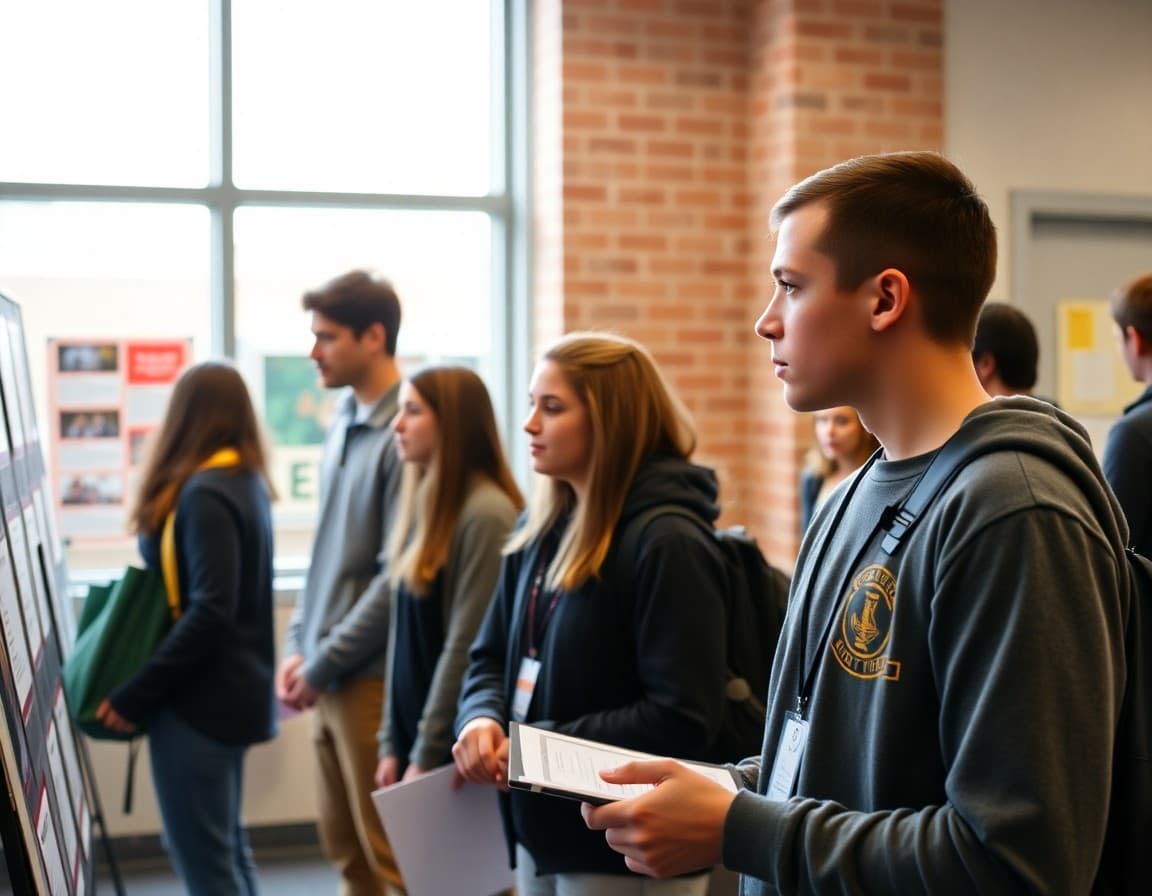
If the school is hosting a CTE open house, program showcase, or career fair during February, announce it with all the details families need to attend. What programs will be featured. Whether students will be presenting their work. How to arrange a program visit for interested students. Families who can see CTE programs in action -- and talk to students currently in them -- are far more likely to encourage their children to explore these options.
Addressing the CTE Stigma Directly
Some families still associate CTE with tracking -- the old vocational education system that assigned students to non-college pathways based on perceived ability. Modern CTE is fundamentally different. Acknowledge this directly in the newsletter: CTE is a choice, not an assignment. It is available to all students. It provides skills and credentials that enhance any post-secondary pathway. Families who understand this history and the current reality can make more informed choices alongside their children.
What Families Can Do to Support CTE Exploration
Give families one concrete action: have a conversation with your child about what work or career they find interesting, and ask their counselor how the school's CTE programs connect to that interest. This positions the CTE counselor as a resource, makes career exploration a family activity, and positions the school as a partner in helping families navigate the options. A brief, specific action step converts newsletter readers into engaged participants in their child's CTE exploration.
Get one newsletter idea every week.
Free. For teachers. No spam.
Frequently asked questions
What should a Career and Technical Education Month Highlights newsletter cover?
The most effective newsletters for this observance cover three things: what the school is doing to recognize or celebrate the month or week, how families can participate or reinforce the themes at home, and who at school to contact for more information or to get involved. Lead with the specific activities happening at school, not with a generic description of the observance. Families respond to what is real and local, not to national awareness month statistics.
When should the school send this newsletter?
The week before or the first week of the observance month or week. Families need enough lead time to participate in any events, volunteer for relevant activities, or have informed conversations with their children about the topics being raised at school. A newsletter that arrives after the week has already started is useful for context but misses the participation window.
How do you keep this kind of observance newsletter from feeling generic?
Connect every awareness month or week to something specific happening in your school building. A student who shared their experience. A classroom project in progress. A community organization the school is partnering with. A specific action families can take this week. Generic awareness newsletters list facts about the month. Specific newsletters tell families what their community is actually doing about it.
Should the newsletter include community resources?
Yes, briefly. Include one or two community organizations or helplines relevant to the observance if appropriate. For mental health awareness months, crisis lines. For financial literacy month, free local resources. For heritage months, community cultural organizations. This section takes one minute to add and significantly increases the newsletter's value as a community resource beyond school walls.
How does Daystage help schools send observance newsletters?
Daystage lets school staff create a clean, formatted newsletter for any observance month or week and send it to all families in a few minutes. You can include event details, resource links, and family action steps in a mobile-friendly format that arrives directly in every family's inbox. Templates can be reused and adapted each year.

Adi Ackerman
Author
Adi Ackerman is a former classroom teacher and curriculum writer with 8 years in K-8 schools. She writes about school communication, parent engagement, and what actually works in real classrooms.
More for Community Outreach
Ready to send your first newsletter?
3 newsletters free. No credit card. First one ready in under 5 minutes.
Get started free