
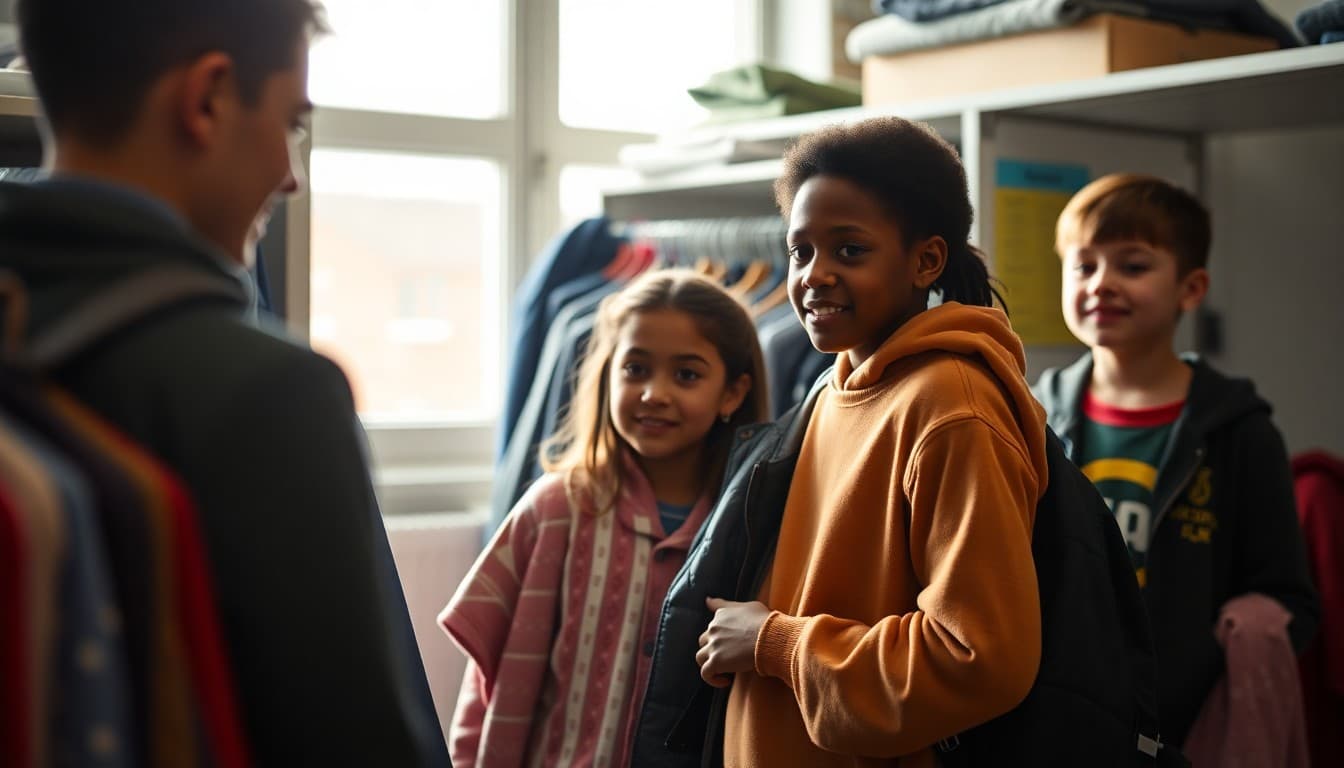
School Newsletter: Community Clothing Closet Open for Families

A school community clothing closet serves two groups: families who need access to clothing and community members who want to donate. A newsletter that addresses both groups, without shaming either one, is the most effective way to keep the closet stocked and used. This guide covers exactly what to say and how to say it.
Setting the Right Frame From the First Sentence
The opening of the newsletter determines how families read everything that follows. An opening that frames the closet as a charity for struggling families will make some families feel it is not for them and others feel embarrassed to use it. An opening that frames it as a school community resource available to everyone normalizes access and dramatically increases utilization. "Our school community closet is a free, welcoming space where any family can pick up clothing they need or donate items they have outgrown" does both things in one sentence.
Access: Location, Hours, and Privacy
Tell families exactly how to access the closet. Where in the building is it? What are the hours? Is access by appointment or open during certain windows? Is there a staff member present or is it self-service? Is there a private way to access it for families who do not want to be seen? This last point matters more than it might seem. Some families will only use the resource if there is a discreet option. Providing and advertising a private access path is worth the effort.
What Is Available
Describe the types of items typically available. Sizes, seasonal items, categories like coats, school uniforms, shoes. Families make the decision to go based on whether the closet is likely to have what they need. A brief inventory description, even general, helps them decide whether a visit is worth it. If inventory changes seasonally, say so and encourage families to check in at the start of each season.
Sample Template Excerpt
Here is a newsletter you can adapt:
"Our school community closet is open and stocked with gently used children's clothing for all sizes from toddler through adult. The closet is located in Room 102 and is open every Tuesday and Thursday from 3:30 to 5:00 PM and by appointment with the front office. Any family is welcome to come in and take whatever items they need at no cost. If you prefer a private appointment, please call the front office and we will arrange a time. If you have items to donate, we are currently accepting fall and winter clothing in any size. A donation bin is available at the front entrance all week. Thank you for being part of what makes this school a community."
The Donation Ask: Framing It as Community Exchange
When you invite donations, frame the ask as participation in a community resource, not a charitable giving campaign. "If your family has grown out of items you love and want to pass along, the community closet is the perfect home for them" makes donation feel like a gift from one family to another. It is a more sustainable motivator than urgency or pity. Specify what the closet needs most: specific sizes, seasonal items, particular categories like dress clothes or school uniforms.
Acknowledging Donors
If individual families or community organizations have made significant donations, acknowledge them (with permission) in the newsletter. "This fall's inventory was made possible in part by a donation from the Rivera family, who sent in three bags of nearly new winter coats" honors the contribution and signals to others that donations are noticed and valued. Generosity is contagious when it is made visible.
Seasonal Updates and Ongoing Communication
Include a brief community closet update in your newsletter at the start of each season. "The closet is now accepting winter coats and sweaters. We have plenty of sizes 4T through 10 available to take home." This keeps the resource visible year-round and prompts families to donate outgrown seasonal items before they end up in the trash. A resource that is mentioned once at launch is used far less than one that stays in front of the community all year.
Get one newsletter idea every week.
Free. For teachers. No spam.
Frequently asked questions
What should a community clothing closet newsletter include?
Include the location within the school, the hours of access, what types of items are available, how to access the closet privately if needed, and how community members can donate. A brief description of what the closet supports, without stigmatizing language, helps families understand the resource.
How do I communicate about the clothing closet without stigmatizing families who use it?
Frame access as a community resource available to all, not a charity for families in need. Use language like 'our school community closet is available to any family who would like to shop' rather than 'for families who cannot afford clothing.' Normalizing the resource reduces the shame that prevents families from using it.
Should I communicate the clothing closet separately from donation requests?
You can combine both in one newsletter, but lead with access information before the donation request. Families who need the resource should not have to read through a donation pitch to find out how to access it. Put access first, donation invitation second.
How do I encourage donations without making it feel like a pity appeal?
Frame donations as a community contribution, not a charity. 'If you have gently used items your family has outgrown, we would love to pass them along to another school family' is an invitation to participate in a community exchange. It is different from 'please donate to help families who are struggling.'
Can Daystage help me send community closet updates as the seasons change?
Yes. Daystage makes it easy to send seasonal updates when the closet has new inventory or specific items needed. A brief newsletter every season keeps the community closet visible and keeps donations flowing year-round.

Adi Ackerman
Author
Adi Ackerman is a former classroom teacher and curriculum writer with 8 years in K-8 schools. She writes about school communication, parent engagement, and what actually works in real classrooms.
More for Community Outreach
Ready to send your first newsletter?
3 newsletters free. No credit card. First one ready in under 5 minutes.
Get started free