
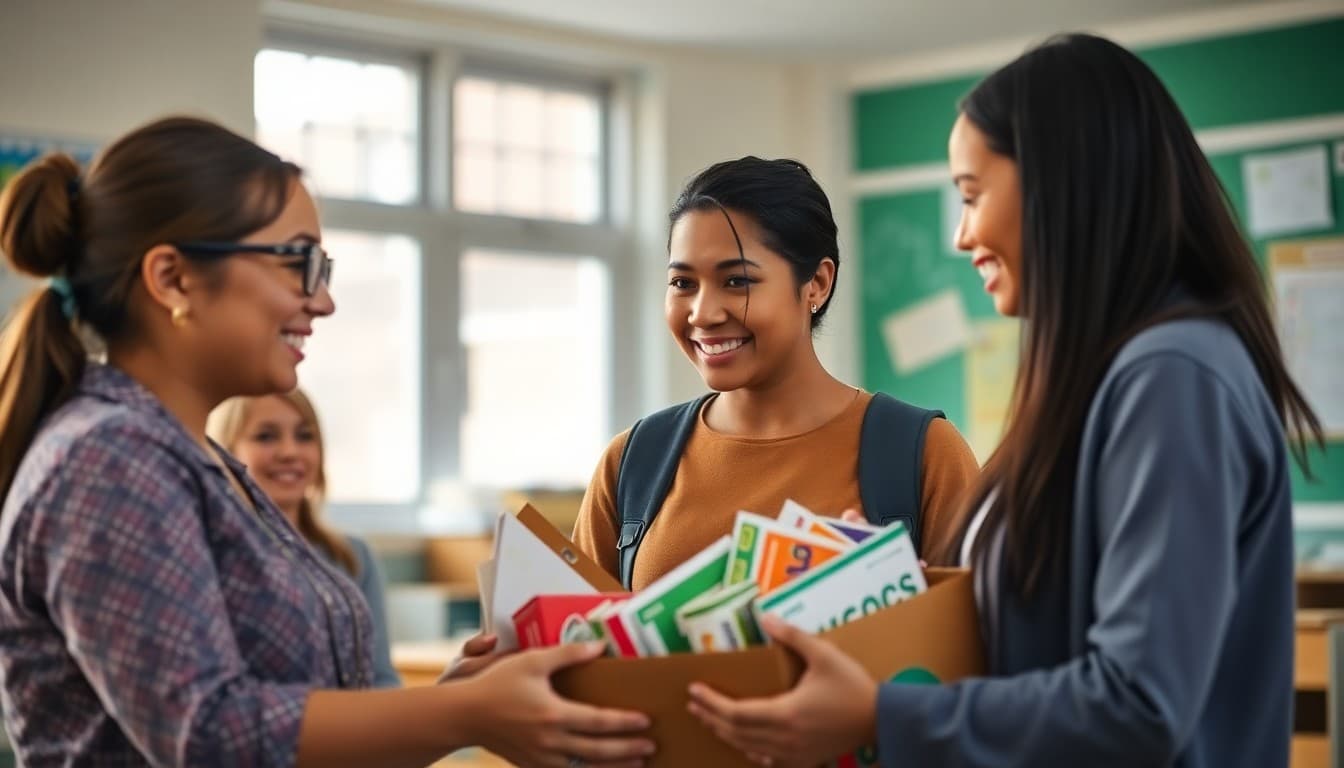
Nonprofit School Partnership Newsletter: Giving Back Together

Nonprofits extend what schools can do. They provide mentorship, food security, mental health support, after-school programs, and college access services that supplement but do not replace what trained educators provide. A nonprofit partnership newsletter introduces these organizations to families, explains what they do and why the school chose to work with them, and invites the broader community to support or engage with programs that benefit students directly.
Why Nonprofit Partnerships Expand School Capacity
Schools are bounded by their staffing, budget, and mission scope. A school counselor can provide acute mental health support but cannot provide the weekly therapy that some students need. A school cafeteria can serve breakfast and lunch but cannot address what a student eats over the weekend. A school library can teach research skills but cannot run the daily one-on-one reading tutoring sessions some struggling readers require. Nonprofit partners fill these gaps with specialized expertise and dedicated resources. The school's job is to identify the gaps, find the right organizations, vet them carefully, and communicate about them clearly enough that every eligible family accesses the support available.
Introducing a New Nonprofit Partner
When introducing a nonprofit to families, provide more context than a name and logo. Describe the organization's mission and history. Explain why the school sought this particular partner or why the organization approached the school. Describe what the partnership looks like in practice: which students it serves, what they receive, where and when the program operates, and whether parent consent or enrollment is required. Include the organization's contact information for families who want to learn more, and describe any other ways families can engage with the nonprofit beyond the school partnership.
Programs That Change Student Trajectories
The most powerful nonprofit school partnerships do more than provide a single service. They build relationships over time. A mentorship program that matches a student with the same adult mentor for three years changes how that student navigates challenges in middle school and high school. A college access organization that begins working with students in seventh grade and stays with them through application season in 12th grade significantly increases college enrollment rates. Your newsletter can make the long-term impact of these partnerships visible by sharing multi-year data or individual student progress stories, with appropriate privacy protections, that illustrate what sustained support looks like.
Sample Template Excerpt
Here is a section you can adapt for your own newsletter:
Meet Our New Partner: Community Learning Initiative
We are partnering with Community Learning Initiative (CLI) this year to expand after-school tutoring access for students in grades 4-8.
What CLI does: CLI is a local nonprofit that has provided free academic support to students in our county for 18 years. They currently serve 400 students annually across six schools. Their tutors are trained university students supervised by licensed teachers.
What this means for your child: Starting October 1st, CLI will operate a free tutoring program in our library on Tuesdays and Thursdays from 3:30 to 5:00 PM. Any student in grades 4-8 can attend without registration. Students can also request a consistent tutor by completing the preference form linked below.
If your child could benefit from extra academic support, this is one of the best resources our school has ever offered. It is free, it is on-site, and it is staffed by people who are trained to help. Please take advantage of it.
Vetting Partners: What Families Should Know
Families trust the school to bring vetted, appropriate organizations into contact with their children. Your newsletter should briefly describe the vetting process your school or district uses to evaluate nonprofit partners. At minimum, this should include a mission alignment review, background checks for all staff and volunteers who work with students, reference checks with other schools or communities the organization serves, and a review of the organization's financial health and governance. Sharing this process does not require legal language or exhaustive detail. A single paragraph saying "we reviewed their program model, spoke with three other schools they work with, and confirmed that all staff complete background checks before working with students" is sufficient to build family confidence.
How Families Can Support Nonprofit Partners
Most nonprofit partners welcome community support beyond their school engagement. Some run annual fundraisers, volunteer drives, or donation campaigns. Families who want to deepen their connection to organizations that serve their children often welcome these opportunities. Your newsletter can briefly mention how families can support the partner's broader mission, whether that is attending a gala, donating to an annual fund, or volunteering on weekends. This turns the school newsletter into a community connection tool rather than just an information delivery mechanism.
Get one newsletter idea every week.
Free. For teachers. No spam.
Frequently asked questions
What types of nonprofits typically partner with schools?
The most common school-nonprofit partnerships involve youth development organizations like Boys and Girls Clubs and Big Brothers Big Sisters, food security organizations like food banks and backpack programs, mental health and social services agencies, literacy and tutoring nonprofits, arts and cultural organizations, environmental and outdoor education groups, and college access programs. Each type of organization brings different expertise and resources that complement what schools can provide directly.
How do schools find nonprofit partners?
Most city and county governments maintain directories of local nonprofits organized by service area. United Way affiliates often coordinate school-nonprofit matching. Community foundations frequently facilitate introductions between schools and vetted organizations. Many nonprofits actively seek school partnerships as part of their outreach strategy and will contact schools directly. For schools looking to initiate partnerships, a meeting with the local United Way or community foundation is often the fastest path to multiple relevant connections.
What should a school communicate to families about nonprofit partners?
Families need to know who the organization is, what their mission is, what they do at the school specifically, and what students receive. They also need to know whether any consent is required for student participation in nonprofit programs, what vetting process the school used to select the partner, and how to contact the school with questions. Transparency about the selection and vetting process builds family trust, especially for partnerships involving student support services.
How should schools handle conflicts of interest with nonprofit partners?
Nonprofit partners should be selected based on program quality, mission alignment, and student impact rather than personal relationships or board membership. If a school board member or major donor is affiliated with a nonprofit seeking a school partnership, that conflict of interest should be disclosed and the selection process should involve parties with no personal stake. Your newsletter's credibility depends on families trusting that partners were chosen for the right reasons.
How does Daystage support nonprofit partnership communication?
Daystage makes it easy to send a formatted newsletter introducing a new nonprofit partner with their logo, program description, and the specific students they serve. When a nonprofit runs a drive, event, or program at the school, Daystage can send a targeted newsletter to the relevant families at once. The platform's delivery tracking ensures the nonprofit's program reaches every family who needs to know about it, rather than relying on flyers that students may or may not bring home.

Adi Ackerman
Author
Adi Ackerman is a former classroom teacher and curriculum writer with 8 years in K-8 schools. She writes about school communication, parent engagement, and what actually works in real classrooms.
More for Community Outreach
Ready to send your first newsletter?
3 newsletters free. No credit card. First one ready in under 5 minutes.
Get started free