
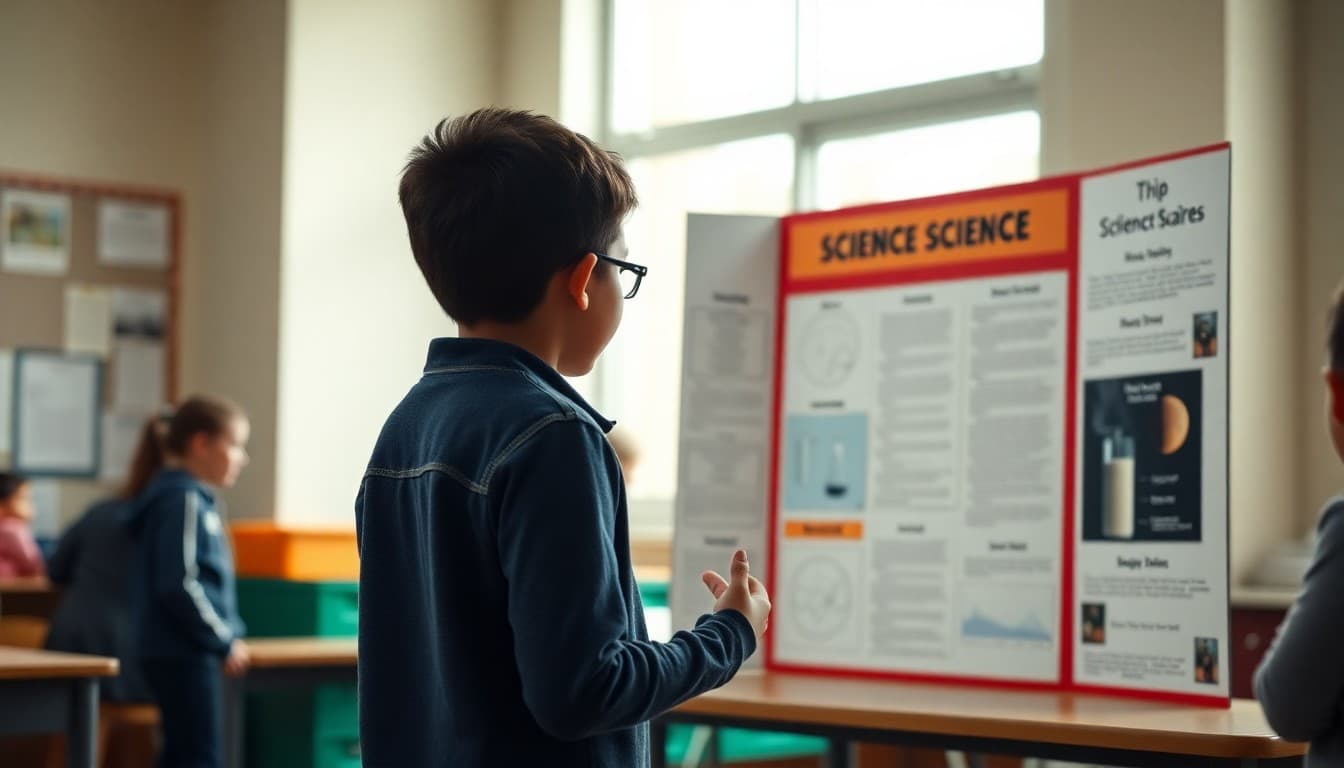
Third Grade Science Fair Newsletter: Guide Families Through a Real Experiment

Third grade science fairs are where the scientific method starts to feel real. Students at this level can design experiments, collect data over multiple trials, and draw evidence-based conclusions. Your newsletter sets families up to support that process without taking it over.
Third Grade vs. Earlier Science Fairs
Be explicit about what changes at third grade. Projects now require: a testable question with a defined variable, a hypothesis based on prior knowledge, data from multiple trials (not just one test), a data table, a graph, and a written conclusion. This is a real experiment, not a demonstration or a diorama. Families who understand this distinction will help their child design an appropriate project rather than building a volcano.
The Scientific Method: Third Grade Version
Walk families through the steps in order. Question (what do you want to find out?), research (what do you already know about this topic?), hypothesis (what do you predict will happen, and why?), procedure (what steps will you follow?), data collection (record what happened in each trial), analysis (what patterns do you see in the data?), and conclusion (was your hypothesis correct?). Each step should appear on the display board.
Project Ideas for Third Grade
Suggest 5-6 ideas that work at this level. Projects that produce reliable data and multiple trials: which paper towel brand absorbs the most water (test each brand 5 times), does water temperature affect how fast sugar dissolves, which bridge design holds the most weight, does music type affect plant growth over two weeks, how does ramp angle affect how far a toy car rolls. Each can be designed to test one variable across multiple trials.
Data Tables and Graphs
Help families understand the data requirements. For each condition tested, students should run 3-5 trials and record each result. Then calculate the average. The graph (bar graph is standard at this level) should display the average for each condition, not individual trials. Including the data table and the graph shows both the raw data and the summary, which is good science practice.
The Conclusion: What It Should Say
Third grade conclusions should answer three questions: did the data support the hypothesis, what did the data show, and what would you do differently next time? The "what would you do differently" section distinguishes third grade projects from earlier ones and teaches students that science is an iterative process, not a one-shot test.
Timeline and Fair Day Details
Week 1: Choose question, write hypothesis, plan procedure.
Week 2: Gather materials, run experiment, record data in table.
Week 3: Create graph, write conclusion, build display.
Fair Day: Setup 8:00-8:30 AM. Family viewing 1:30-3:00 PM.
Get one newsletter idea every week.
Free. For teachers. No spam.
Frequently asked questions
What makes a science fair project appropriate for third grade?
Third grade projects should have a clearly defined independent variable (what you change), a dependent variable (what you measure), and control conditions (what you keep the same). Students at this level can design a fair test, collect data over multiple trials, calculate averages, and create a basic graph. The project should be the student's own design with parent guidance on safety and logistics.
How do I explain independent and dependent variables to an 8-year-old?
Use concrete language: 'The independent variable is the one thing you are changing on purpose. The dependent variable is what you are measuring to see if your change made a difference.' Example: if you are testing whether salt affects how fast ice melts, the salt is what you change (independent variable) and the melting time is what you measure (dependent variable). Third graders can grasp this with an example.
How many trials should a third grade science fair project run?
Three to five trials per condition is standard for third grade. Multiple trials make the results more reliable than a single measurement. This is also an opportunity to introduce the concept of averaging data, which is a math skill that aligns with the third grade curriculum. Including a simple average in the data table demonstrates scientific rigor at an age-appropriate level.
What should a third grade science fair display include?
The display should include: question/problem statement, background research (2-3 sentences about the topic), hypothesis, materials list, step-by-step procedure, data table with multiple trials, bar or line graph of results, conclusion (did the data support the hypothesis?), and a reflection (what would you do differently?). The reflection section is what separates third grade projects from second grade.
Can Daystage help manage science fair parent communications and fair day RSVPs?
Yes. Using Daystage to send the initial instructions, mid-project reminders, and fair day logistics in a series of newsletters keeps all communication in one place. Adding an RSVP block for family attendance lets you get a headcount before the event, which helps with setup and display space planning.

Adi Ackerman
Author
Adi Ackerman is a former classroom teacher and curriculum writer with 8 years in K-8 schools. She writes about school communication, parent engagement, and what actually works in real classrooms.
More for Classroom Teachers
Third Grade Science Unit Newsletter: How to Bring Families Into Your Hands-On Learning
Classroom Teachers · 5 min read
Science Project Update in Your Classroom Newsletter: What to Share
Classroom Teachers · 5 min read
Second Grade Science Fair Newsletter: Guide Families Through the Process
Classroom Teachers · 6 min read
Ready to send your first newsletter?
3 newsletters free. No credit card. First one ready in under 5 minutes.
Get started free