

Third Grade Science Unit Newsletter: How to Bring Families Into Your Hands-On Learning
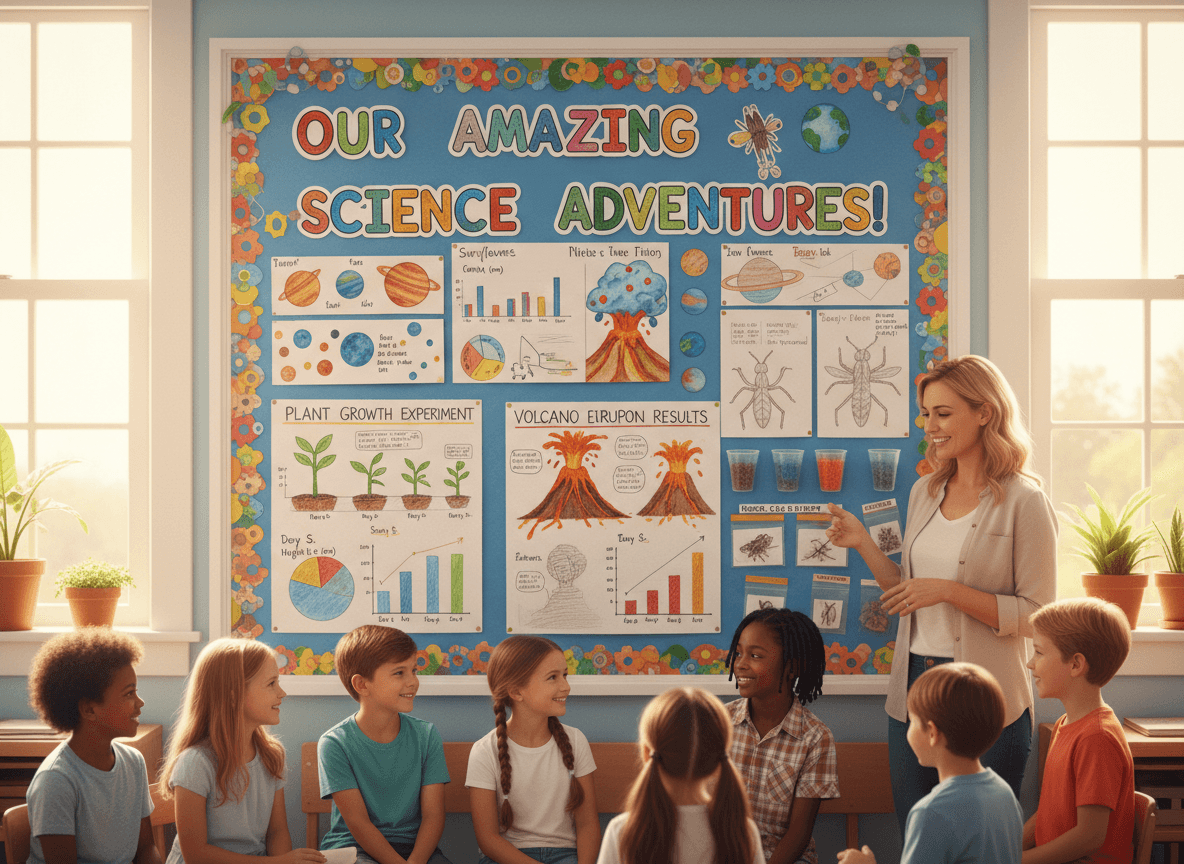
Science is one of the subjects that most naturally excites third graders. Eight-year-olds are native questioners. They want to know how things work, why things happen, and what would happen if you changed one thing. A science unit newsletter is your chance to share that excitement with families, pull them into the inquiry process, and give parents the context to support science thinking beyond the school day.
Open with the Big Question of the Unit
Every good science unit has a driving question. It might be "what do living things need to survive?" or "how do forces change the way objects move?" or "what happens to matter when it changes state?" Start your newsletter with that question. Let parents feel the same curiosity their child is walking into each day.
Beginning with a question rather than a content summary immediately signals that science in your classroom is about thinking, not memorizing. It also gives parents a conversation starter for the dinner table: "Your teacher asked a big question this week. What do you think the answer is?"
Describe the Hands-On Investigations
Science in third grade should be largely hands-on, particularly at the investigation and observation stages. Tell parents what students are actually doing. Are they building model habitats? Measuring how fast different objects roll down a ramp? Observing the life cycle of a butterfly in the classroom? Growing seeds and recording measurements?
Specific descriptions of investigations do two things at once. They make the learning feel real and tangible to parents who only hear about it secondhand from their child. And they explain why some days your student comes home excited about something that seems unrelated to "school," like caring for caterpillars or dropping things off a table.
Explain What Students Are Learning to Do, Not Just What They Are Learning
Science standards at the third grade level are as much about scientific practices as they are about content knowledge. Students are building skills like making observations, recording data, identifying patterns, constructing explanations, and communicating findings. These practices are what prepare students for a lifetime of evidence-based thinking, well beyond the science classroom.
Your newsletter should name these practices alongside the content. "While students are learning about ecosystems, they are also practicing how to use data to support a claim, which is one of the most important scientific thinking skills at this grade level" gives parents insight into the deeper purpose of what might otherwise look like playing with dirt and plants.
Share Student Observations and Vocabulary
Every science unit introduces new vocabulary. Ecosystem, habitat, organism, force, matter, prediction, evidence. When students bring these words home without context, parents often cannot engage with them meaningfully. Your newsletter should introduce the key vocabulary of the current unit and define each term briefly.
Even better, include a direct quote or observation from your class. "This week a student asked why a plant growing in a dark corner was bending toward the window, and that question led us into a great discussion about what plants need and how they respond to their environment." Those moments tell the story of your classroom more vividly than a vocabulary list ever can.
Connect the Science to the Real World
One of the most valuable things a science newsletter can do is help parents see the connection between classroom science and the world outside school. If students are studying weather patterns, that connects to forecasts they see on their phones. If students are learning about ecosystems, that connects to the park, the backyard, and the documentary they watched last weekend. If students are exploring forces and motion, that connects to sports, playgrounds, and how their bicycle works.
Pointing parents toward these real-world connections transforms the science unit from an academic exercise into a lens for exploring the physical world together. That extension is how science learning deepens and sticks.
Ask for Supply Donations When Relevant
Science units often use materials that are inexpensive and easy to find at home. Empty cardboard tubes, foam plates, rubber bands, seeds, soil, and similar items are useful across many third grade science investigations. If you have an upcoming need, your newsletter is the right place to mention it.
Keep the ask low-pressure and specific. "If you have any empty 2-liter bottles or plastic containers you were going to recycle, we could use them for our forces unit starting next Monday" is specific, practical, and easy to act on. Parents who cannot donate materials should feel no pressure, so frame it as optional and time-bound.
Preview What Is Coming Next
Close your science unit newsletter with a brief look ahead. What is the next investigation? Is there a culminating project or presentation? Will students do a science fair component? If there is a special event tied to the unit, such as a nature walk, a guest expert visit, or a parent share, mention it early enough for families to plan.
A forward-looking close builds anticipation and keeps parents connected to the arc of learning rather than just the snapshot of a single week. It also signals that your science program is coherent and planned, which builds confidence in your curriculum and in you as the teacher steering it.
Get one newsletter idea every week.
Free. For teachers. No spam.
Frequently asked questions
What science units are typically covered in third grade?
Third grade science commonly covers life cycles and ecosystems, forces and motion, weather and climate, properties of matter, and sometimes basic engineering design challenges. The specific units depend on your state or district standards, so your newsletter should name the standards driving your current unit so parents understand the academic context.
How do I explain inquiry-based science to parents unfamiliar with it?
Connect it to something familiar. 'Instead of reading about life cycles in a textbook, students are raising caterpillars and recording their observations every day. They are building scientific habits of asking questions, making predictions, and looking for evidence' is more accessible than explaining the Next Generation Science Standards framework from scratch.
Should I include experiment details in the science newsletter?
Yes, especially when experiments involve materials from home or require family participation. If students are collecting data outdoors or bringing natural specimens to class, families need advance notice. If an experiment could be replicated at home, sharing the basics gives interested families a way to extend the learning.
How do I ask for science supply donations without making it feel like a burden?
Frame it as optional and specific. 'If you happen to have any of these items at home and are willing to donate them, we would love to use them in our upcoming unit' with a specific list is better than a vague ask. Also mention when the unit starts so families who want to help have enough lead time to gather materials.
What newsletter tool works best for third grade science newsletters?
Daystage is well-suited for science unit newsletters because you can include photos of student work and experiments alongside your written update. A science newsletter with images of students conducting experiments or displaying findings is far more engaging than a text-only message and gives families a real window into what inquiry learning looks like.

Adi Ackerman
Author
Adi Ackerman is a former classroom teacher and curriculum writer with 8 years in K-8 schools. She writes about school communication, parent engagement, and what actually works in real classrooms.
More for Classroom Teachers
Ready to send your first newsletter?
3 newsletters free. No credit card. First one ready in under 5 minutes.
Get started free