
Third Grade Math Facts Newsletter: Multiplication Fluency Starts at Home
Multiplication fluency is one of the most consequential math skills a student builds in elementary school. Third graders who leave the year without automatic recall of multiplication facts carry a real cognitive burden into fourth grade, where multi-step problems demand that computation be fast and effortless. Your newsletter makes the case for home practice and gives families a clear path to build fluency.
Why Multiplication Fluency Matters Beyond Third Grade
Be direct with families about what is at stake. Automaticity with multiplication facts is not about passing a test; it is about freeing up working memory for more complex math. Students who have to stop and calculate 7x8 in the middle of a multi-step word problem are using cognitive resources that should be available for understanding the problem. Students who know the facts automatically can focus entirely on the reasoning.
Where to Start
Tell families which facts to prioritize first. The 2s, 5s, and 10s are the starting point because they have strong patterns. Students who know the 2s (doubles) and 10s (place value) already have a strong foundation. After those, the squares (3x3=9, 4x4=16, 5x5=25) provide useful anchor facts for the rest.
Effective Practice Methods by Stage
Match the practice method to the student's current stage.
Conceptual stage (early third grade): Use arrays (rows and columns of objects), skip counting, and connecting to area models. The student should be able to explain why 4x3=12, not just recall it.
Fluency building stage (mid-year): Flashcards, games, and brief timed personal bests. The student knows most facts and is building speed.
Automaticity stage (late year): Mixed practice with division and fact families. The student recalls facts without strategies.
Three Games Families Can Play Tonight
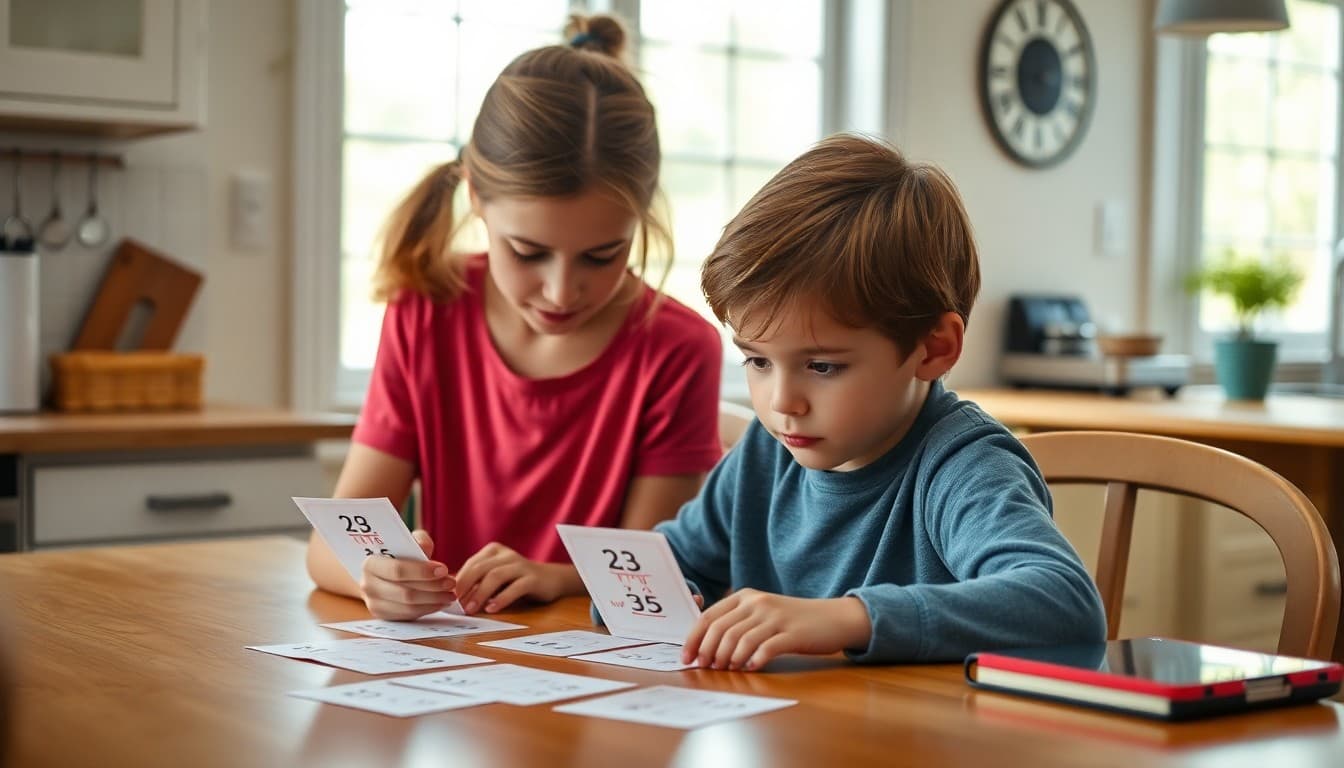
Multiplication war: Each player flips two cards, multiplies them, and the higher product wins all four cards. Standard card game, no prep.
Times table relay: Take turns saying the multiples of a number as fast as possible. Time each other. Try to beat last night's time.
Missing factor: Say a product and a factor. "The answer is 24. If one number is 6, what is the other?" This builds division thinking alongside multiplication.
The Division Connection
Third grade introduces division as the inverse of multiplication. Practicing fact families (3x4=12, 4x3=12, 12÷3=4, 12÷4=3) is more efficient than practicing multiplication and division separately. If a student knows 6x7=42, they should automatically know 42÷6=7. Include this connection in the newsletter so families do not treat division as a separate topic.
Monitoring Progress This Month
Tell families which fact families you are currently covering in class. If you are on the 4s and 8s this month, home practice should focus there rather than trying to tackle all facts simultaneously. Aligned home practice is far more effective than random review.
Get one newsletter idea every week.
Free. For teachers. No spam.
Frequently asked questions
What multiplication facts should third graders know by end of year?
Third grade math standards require fluency with multiplication and division facts within 100. This means all multiplication facts 0-10 x 0-10 and their corresponding division facts. By the end of third grade, students should automatically recall most of these facts. The facts that typically require the most practice are 6x, 7x, 8x, and 9x, as these have fewer patterns to leverage.
What is the best sequence for learning multiplication facts?
Research-supported sequence: 2s (doubles from addition), 10s (extend place value understanding), 5s (count by fives, clock connections), 1s and 0s (rules), squares (2x2, 3x3, 4x4, etc.), 4s (double the 2s), 3s, 6s (double the 3s), 9s (use the nines trick or 10s minus one), 7s, and 8s (double the 4s). This sequence prioritizes facts with patterns before teaching the harder facts with fewer relationships.
Are multiplication flashcards effective for third graders?
Flashcards are effective once the student has developed conceptual understanding of what multiplication means. Used before understanding is solid, they produce memorization without meaning, which breaks down in novel contexts. Used after understanding, they build automaticity efficiently. The key question is not 'are flashcards good' but 'is my child ready for flashcard practice?'
How much time should third graders spend on multiplication practice at home?
Ten minutes of focused practice, five days a week, is more effective than one longer session per week. Daily practice builds the spaced repetition that moves facts into long-term memory. A mix of strategies (visual arrays, skip counting, games, and eventually flashcards) is more durable than any single method used exclusively.
Does Daystage let me share multiplication practice tools and tracking resources with families?
Yes. You can link to printable practice grids, free online fact practice tools, and multiplication games in a Daystage newsletter. Many teachers send a 'fact focus of the month' section in their regular newsletter with the current fact family to practice and 2-3 specific activity suggestions. This keeps home practice aligned with classroom instruction.

Adi Ackerman
Author
Adi Ackerman is a former classroom teacher and curriculum writer with 8 years in K-8 schools. She writes about school communication, parent engagement, and what actually works in real classrooms.
More for Classroom Teachers
Third Grade Math Progress Newsletter: Keeping Parents Up to Date on Number Skills
Classroom Teachers · 5 min read
Math Curriculum Overview in Your Classroom Newsletter: What Parents Need to Know
Classroom Teachers · 6 min read
Second Grade Math Facts Newsletter: Help Families Build Real Fluency
Classroom Teachers · 6 min read
Ready to send your first newsletter?
3 newsletters free. No credit card. First one ready in under 5 minutes.
Get started free