
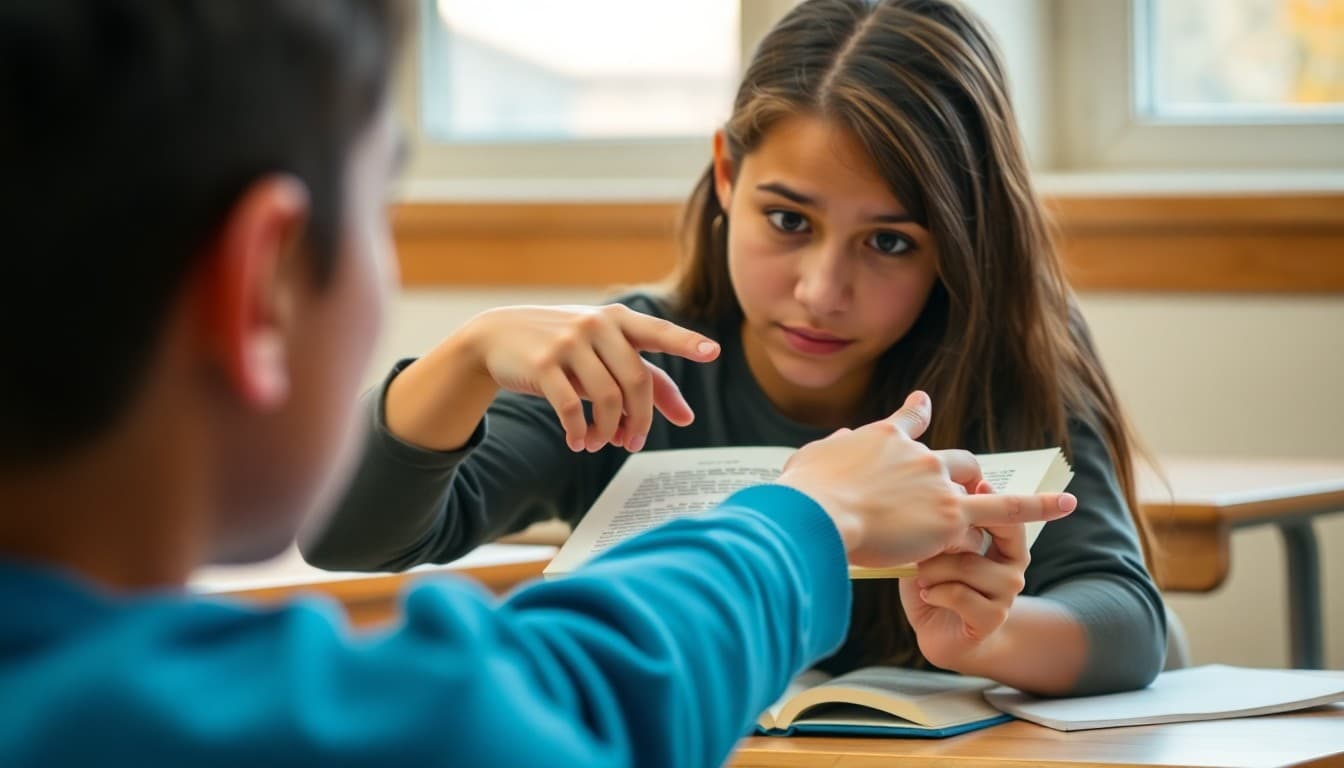
Teacher Newsletter for Text Evidence: Helping Families Understand This Core Skill

Text evidence is one of the most frequently assessed reading and writing skills in elementary and middle school. Every standardized test, every essay, and every reading conference assumes students know how to go back to the text to support what they say. A newsletter that helps parents understand this skill gives families the vocabulary to reinforce it at home in a way that compounds your classroom work rather than conflicting with it.
Define text evidence in the clearest possible terms
Text evidence means that when you make a claim about a text, you back it up with something the author actually wrote, not something you thought or remembered or felt. It is the difference between "the character is brave" and "the character is brave because the text says she walked into the burning building even after she was told not to." The second response is evidence-based. The first is an impression. Both might be true, but only one demonstrates comprehension.
Explain why this skill matters beyond the classroom
The ability to support an argument with evidence is a life skill. It applies to academic work, professional communication, and civic participation. Students who learn to say "here is what the source actually says" are developing the same critical thinking that prevents misinformation from spreading. Parents who understand this take the skill seriously rather than treating it as a school-specific requirement.
Share the sentence frames students are using
Provide the specific language structures you teach. "According to the text...", "The author explains...", "This is supported by the evidence on page...", "For example, in the third paragraph...": these frames are scaffolds that help students access a skill they are still developing. When parents see the same language at home, they can prompt their student to use it during homework help.
Describe the difference between direct quotes and paraphrases
Some parents will wonder whether their student should quote exactly or put it in their own words. Explain both options: direct quotes use quotation marks and the author's exact words; paraphrases restate the meaning with a signal phrase. Both require a connection to the source. Neither includes personal opinions without a text anchor. Students at different levels will lean toward one or the other, and both are valid.
Give families a home practice conversation
Text evidence practice does not require a school assignment. After any reading, ask your student: what makes you think that? Where in the book does it say that? Can you show me the part that gave you that idea? These questions build the habit of returning to the text as the authority rather than relying on memory or impression.
Explain how text evidence connects to writing
Students who know how to cite text evidence in reading responses write stronger essays. The skill of finding a claim, locating supporting evidence, and integrating it into a sentence is the same skill at the heart of argumentative writing. If you are working on essays alongside reading, tell parents. The two units are not parallel tracks. They are the same skill practiced from two angles.
Address common mistakes students make
The two most common errors are quoting too much, where students paste in large chunks of text and leave it unexplained, and quoting too little, where students summarize loosely without anchoring to the source. Tell parents what to watch for. If a student's reading response is mostly quote and no explanation, or mostly opinion and no quote, that is a flag worth raising gently with the student at home.
Get one newsletter idea every week.
Free. For teachers. No spam.
Frequently asked questions
What is text evidence and why should I explain it to parents?
Text evidence is the practice of supporting answers, arguments, or analyses with specific quotes or details from the text rather than personal opinion or memory. Parents who understand this can ask the right follow-up questions at home and reinforce the skill rather than accepting 'because the character is mean' as an adequate explanation.
What sentence starters help students cite text evidence?
Common frames include: 'According to the text...', 'The author states...', 'On page ___, it says...', 'This is supported by...', and 'For example, in paragraph ___, the text explains...' Sharing these in the newsletter gives parents language to use when asking their student to back up a claim.
How do I explain the difference between quoting and paraphrasing to parents?
Quoting uses the author's exact words in quotation marks. Paraphrasing restates the meaning in the student's own words with a signal phrase. Both are valid forms of text evidence. Students should know how to use both and should not confuse either with personal opinion.
How do I extend text evidence practice beyond school reading?
Have students find text evidence in any informational text: a news article, a recipe, an instruction manual. 'Where in this article does it say that?' is text evidence practice. The skill transfers across all texts, not just the ones assigned in class.
How does Daystage help me send reading skill newsletters like this one?
Daystage is built for teachers who want to send clean, professional newsletters with specific content guidance. You can share text examples, formatting, and practical family tips all in one readable format.

Adi Ackerman
Author
Adi Ackerman is a former classroom teacher and curriculum writer with 8 years in K-8 schools. She writes about school communication, parent engagement, and what actually works in real classrooms.
More for Classroom Teachers
Teacher Newsletter for Close Reading: Explaining the Strategy to Parents
Classroom Teachers · 6 min read
Teacher Newsletter for Annotation Strategies: Building Active Reading Habits
Classroom Teachers · 6 min read
Teacher Newsletter for Citing Sources: What Families Need to Know
Classroom Teachers · 6 min read
Ready to send your first newsletter?
3 newsletters free. No credit card. First one ready in under 5 minutes.
Get started free