
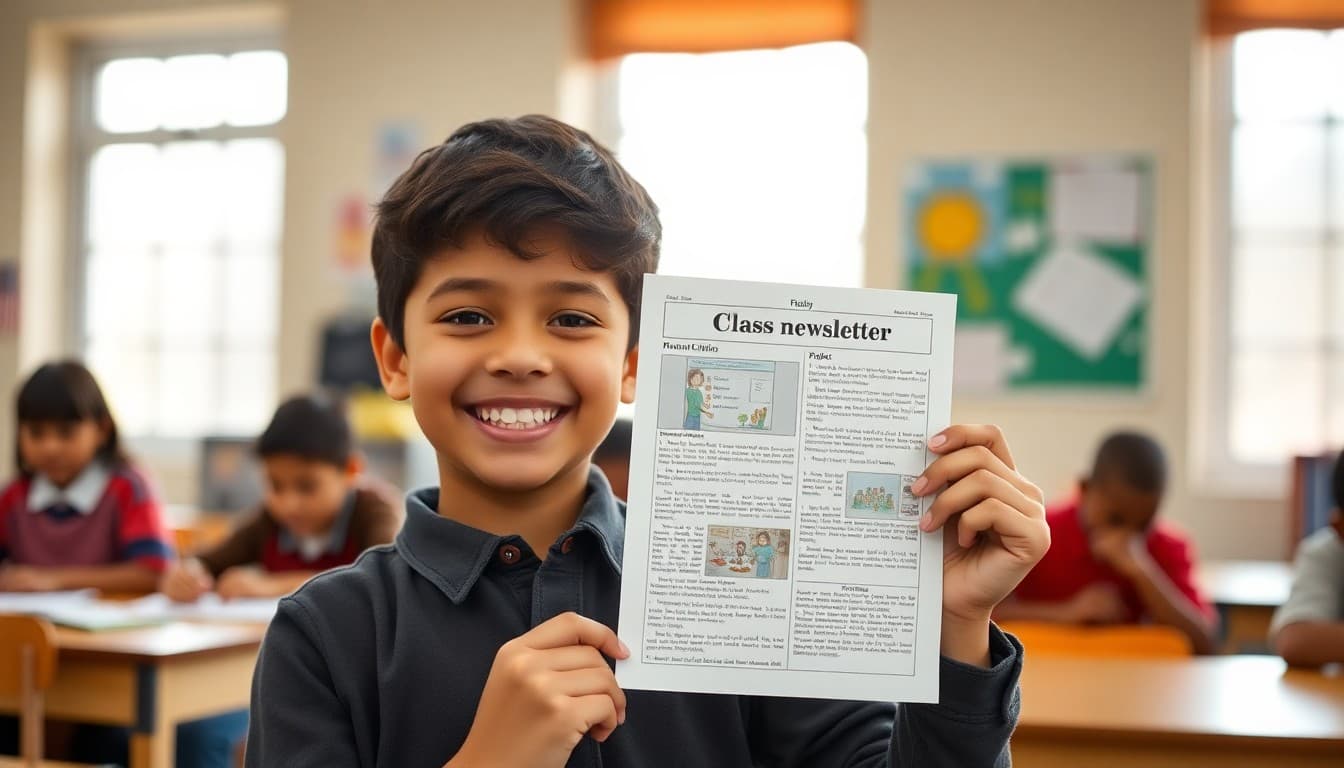
Teacher Newsletter Student Success Stories: How to Share Wins With Families

Success stories in your newsletter do more than celebrate one student. They tell every family what kind of achievement and growth your classroom values, they motivate students who are still working toward something, and they build community around a shared sense of what the class is capable of. Done right, every family who reads the success story feels like it is partly about their child too.
Define Success Broadly Before You Write
If you only feature students who earn perfect scores, you are implicitly telling every other family that their child's progress does not belong in the newsletter. Before you write the success section, list at least three or four different types of achievement you will rotate through the year: academic mastery, significant growth from a starting point, leadership in the classroom, persistence through a hard project, creative problem-solving, and peer mentorship. A newsletter that cycles through these categories includes a much wider range of families across the year.
Be Specific About What Happened
Generic praise does not build motivation. "Marcus did a great job on his research project" tells families nothing useful. "Marcus approached his research project with a question that no one in the class had thought to ask, then spent three sessions tracking down the answer in two different sources" is a story. It tells families what great research work actually looks like, gives Marcus something specific to be proud of, and gives every other student a concrete example of what you are looking for.
Connect the Success to Skills
Link every featured success to the specific skill it demonstrates. Not just "she worked really hard" but "she showed what persistence looks like: she rewrote her opening paragraph four times before she found the version that worked." That connection teaches all families and students what the skill actually requires in practice, which is far more useful than a general acknowledgment.
Protect Privacy Appropriately
Know your school policy before using student names. Many schools require a general media release for any name or photo published in school communications. When in doubt, use first names only, describe the achievement without identifying the student, or obtain specific parent permission before featuring their child. A success story that creates a privacy concern is not worth the recognition.
Make the Story About the Class, Not Just the Student
Frame success stories as community wins. "This week, something happened in our class that I want to share because it captures exactly what we are building together." That framing invites every reader to participate in the celebration rather than comparing themselves to the featured student. The success story becomes a classroom value statement, not just a recognition moment.
Rotate Through the Class Intentionally
Keep a simple list and make sure every student gets a genuine spotlight before the year is over. Not a forced or inauthentic one, but a real moment every student will eventually have if you are paying attention. Families of students who are featured feel seen. Families of students who never appear in the newsletter wonder why. A rotation prevents that disparity.
Invite Families to Share Success Stories Too
Close with an invitation: "If your child comes home and shares something they are proud of this week, I would love to hear about it. Send me a note and it might end up in the next newsletter." That request builds community, gives families a reason to have specific school conversations at home, and gives you a stream of real student moments that enrich your newsletters all year.
Get one newsletter idea every week.
Free. For teachers. No spam.
Frequently asked questions
What should a student success story section in a newsletter include?
Include the specific achievement, why it matters academically or personally, what it says about the student's growth, and what families can celebrate about this kind of progress in their own child. Keep it genuine and specific rather than generically positive.
How do I feature students fairly without always recognizing the same high achievers?
Define success broadly. Academic achievement is one category. Persistence, peer leadership, showing growth from where a student started, demonstrating courage in a difficult moment: all of these are worth featuring. A rotating spotlight that covers different types of growth ensures every family can expect to see their child eventually.
Do I need parent permission to mention a student by name in a newsletter?
Check your school's media and communication policy. Many schools require general media permission for any student name or photo in a school communication. When in doubt, use first names only, or describe the achievement without naming the student. The recognition still lands without the privacy concern.
How do I recognize a student without making other students feel overlooked?
Frame success stories as community wins rather than individual superiority. 'This week, one student showed the kind of persistence that I hope every student takes away from their time in this class.' That framing invites every student to see themselves in the story rather than comparing themselves to the named student.
Can I share student success stories through Daystage with photos?
Yes. Daystage supports photos and formatted sections, so you can create a dedicated spotlight section in your newsletter with student photos (where permitted) and a written description of the achievement. A visual spotlight is more memorable than a text mention alone.

Adi Ackerman
Author
Adi Ackerman is a former classroom teacher and curriculum writer with 8 years in K-8 schools. She writes about school communication, parent engagement, and what actually works in real classrooms.
More for Classroom Teachers
Ready to send your first newsletter?
3 newsletters free. No credit card. First one ready in under 5 minutes.
Get started free