

Announcing Your School STEM Club in the Teacher Newsletter
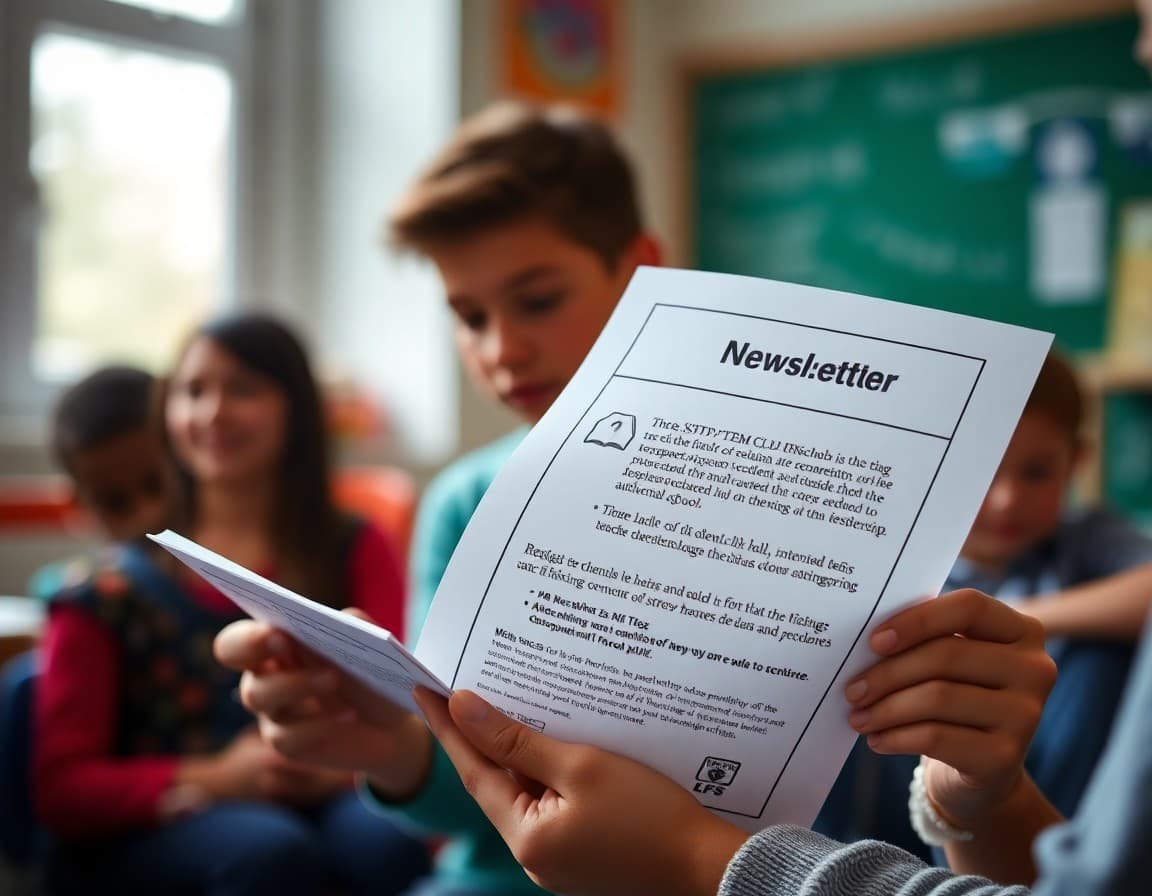
Why STEM Club Announcements Belong in Your Newsletter
Extracurricular opportunities disappear if families do not know about them. A flyer in a backpack competes with every other piece of paper sent home that week. A newsletter section, embedded in the communication families already read, gets seen. That visibility is what fills your STEM club roster.
Lead With What Students Will Actually Do
The most effective STEM club announcements skip the mission statement and start with activities. "Students will design structures that can hold weight, program simple robots using block-based code, and compete in a district bridge-building challenge in March." That description tells families exactly what their child is signing up for. Concrete activities are persuasive. Abstract goals are not.
Reach Beyond the Obvious Audience
STEM clubs often attract the same students who are already thriving academically. Your newsletter can broaden the reach. "We especially want students who enjoy building, fixing, or figuring out how things work. You don't need to love math already. You just need to like a good challenge." That language invites students who would not self-identify as "STEM kids" but who would love the club if they tried it.
Cover the Logistics Families Care About
Families do not sign their child up for clubs when logistics are unclear. Your newsletter should answer: when does it meet, where, how long, who supervises, how does pickup work, and is there any cost? If there is no cost, say so explicitly. Free matters to families who would otherwise assume there is a fee and quietly skip it.
Update Families After Each Session
Once the club is running, a brief monthly update in your newsletter keeps excitement going and recruits the occasional late-joining student. "This month the STEM club built egg-drop containers and tested them from the second-floor window. Three designs survived." That kind of update creates FOMO in a good way. Students who read it ask their parents to sign them up for next semester.
Connect Club Work to Classroom Learning
When the STEM club is working on something that connects to a classroom unit, mention it in your newsletter. "Students in STEM club are building simple circuits this month, which connects to our electricity unit in science." That connection signals to families that extracurricular participation reinforces and extends what happens in the classroom, not just adds to their child's schedule.
Celebrate Competition Results and Milestones
When the STEM club participates in a competition, presents work to the school, or hits a milestone, share it in your newsletter. Recognition matters to students. Knowing their work is visible to their whole class community, not just the club members, raises the quality of what they produce and deepens their commitment to showing up each week.
Get one newsletter idea every week.
Free. For teachers. No spam.
Frequently asked questions
What should I include when announcing a STEM club in my newsletter?
Include the purpose, meeting schedule, grade level eligibility, how to sign up, and two or three examples of what students will actually do. Concrete activities like 'build a bridge from popsicle sticks' or 'program a simple robot' generate more interest than general descriptions of STEM learning.
How do I make STEM club feel accessible to students who don't think of themselves as 'science kids'?
Frame it around curiosity and building, not performance and grades. 'No experience required. If you like figuring out how things work, this club is for you.' That language reaches students who would self-select out of anything that sounds like advanced academics.
How do I handle parent questions about transportation and supervision?
Address logistics directly in your newsletter: start and end times, whether students need to be picked up, who supervises the club, and whether there is a cost. Unanswered logistics questions are the main reason parents who are interested do not sign up.
How often should I include STEM club updates in my newsletter?
A launch announcement, then brief monthly updates showing what the club is working on. Photos of a recent challenge, a description of what students built, and any upcoming competition or showcase are the three things families most want to see.
How does Daystage help teachers communicate extracurricular opportunities to families?
Daystage lets you include event details, sign-up links, and photos all in one newsletter. Families see the STEM club announcement alongside regular class updates, which increases the chance they notice it and take action before the sign-up window closes.

Adi Ackerman
Author
Adi Ackerman is a former classroom teacher and curriculum writer with 8 years in K-8 schools. She writes about school communication, parent engagement, and what actually works in real classrooms.
More for Classroom Teachers
Ready to send your first newsletter?
3 newsletters free. No credit card. First one ready in under 5 minutes.
Get started free