

Teacher Newsletter for Native American Heritage Month: Family Guide
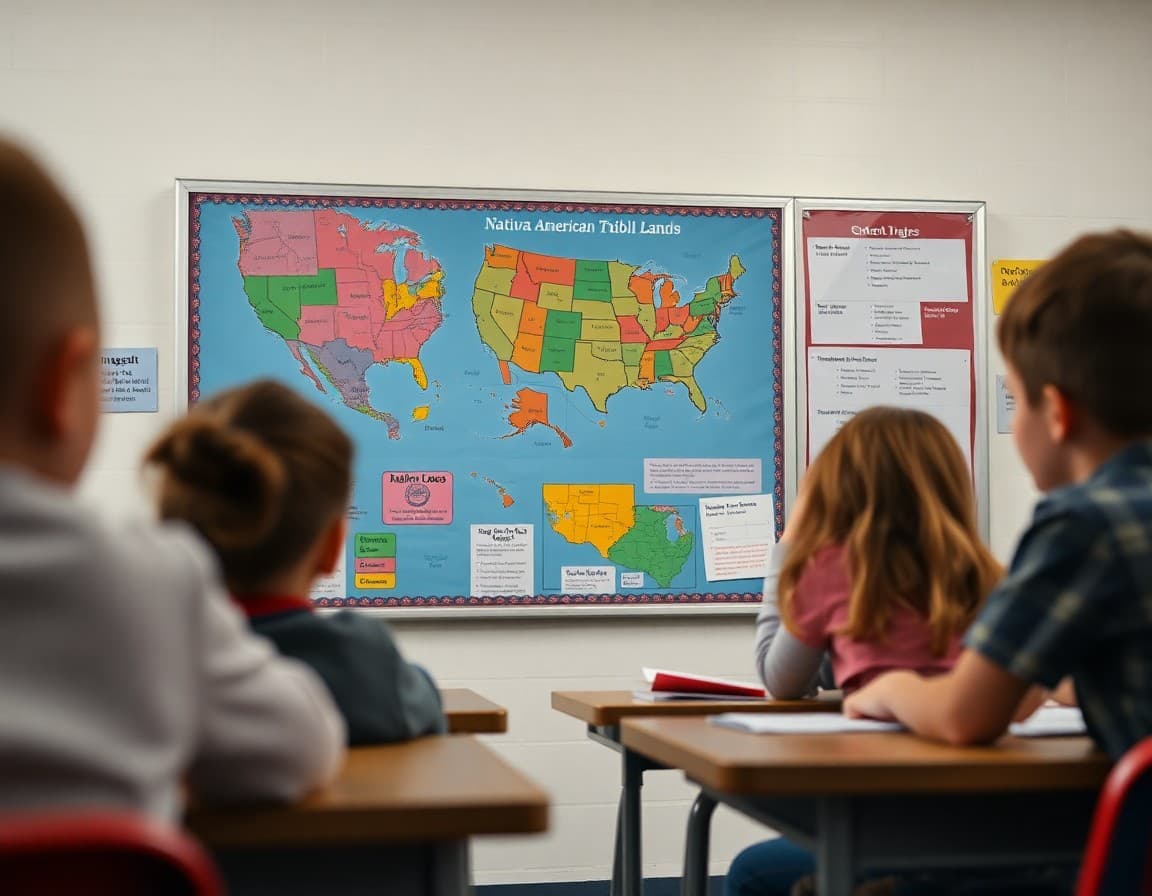
Native American Heritage Month is observed in November, and for many classrooms it arrives alongside Thanksgiving with its incomplete and often distorted narrative. Your newsletter can reframe the month as a genuine study of Indigenous history and present-day communities, and give families the context to understand why that reframing matters.
Explain Your Approach Before Families Assume the Default
Tell families at the start how your unit differs from the Thanksgiving-adjacent curriculum some may remember. "We are studying specific tribal nations and their histories, examining both historical realities and present-day Indigenous communities. Our goal is accuracy and depth, not a festival overview." That framing sets expectations before families project what they expect from a November heritage month unit.
Name the Specific Nations You Are Studying
Do not teach about a generic "Native Americans." Name the specific nations your unit focuses on. If you are studying the Lakota Sioux, the Navajo Nation, the Iroquois Confederacy, or the peoples of the Pacific Northwest, say so. Specificity is both more accurate and more respectful. Families who know what their child is studying can look it up and ask specific questions at home.
Use Present Tense Throughout
Remind families that Native nations exist today. This is a point that elementary curricula often miss, presenting Indigenous peoples as historical rather than contemporary. Tell families: "Throughout this unit, we use present tense when discussing tribal nations that are still active. We talk about what the Navajo Nation does, not what the Navajo people did. That distinction matters."
Center Native Voices and Authors
Tell families that you are using materials by Native authors, not just about Native people. Explain why: "Books and resources by Indigenous creators present history and culture from the inside rather than as an outsider observation. That is a different kind of learning, and students respond to it differently." Give families the list of authors and titles you are using so they can find those books at the library.
Address the Thanksgiving Narrative Directly
If your unit overlaps with November, address the Thanksgiving conversation directly. Tell families what you are and are not teaching. "We are discussing the full history of the Wampanoag people, including what the autumn of 1621 looked like to them and what happened in the decades that followed. This is more accurate than the story most of us learned, and students handle it with maturity."
Give Families Concrete Home Recommendations
Recommend specific books, particularly those by Native authors. Tell families to look for those titles at the local library or through interlibrary loan. Point them to resources like the National Museum of the American Indian website, which has family-friendly materials. Give them one specific action: look up which tribal nation historically inhabited the land your community sits on. That five-minute activity connects the history to the present in a direct and memorable way.
Acknowledge the Ongoing Issues
Briefly and appropriately for the grade level, acknowledge that Indigenous communities face contemporary challenges including land rights, treaty obligations, and cultural preservation. "Our students are learning that this history is not over. Native nations are active governments with ongoing relationships with the federal government, living cultures, and present-day community members who are our neighbors." That framing takes the unit out of the past and into the now.
Get one newsletter idea every week.
Free. For teachers. No spam.
Frequently asked questions
What should a Native American Heritage Month newsletter include?
Include which tribal nations or Indigenous communities you are studying, how you are approaching the material with accuracy and respect, recommended books by Native authors, and how families can continue learning at home beyond the Thanksgiving-adjacent narrative.
How do I approach Native American Heritage Month in a way that avoids stereotypes?
Focus on specific nations, not a generic pan-Indian narrative. Use contemporary materials alongside historical ones to show that Native communities are present-day, not historical artifacts. Center Native voices: books by Native authors, interviews with Native community members, and primary sources from tribal nations themselves.
What are strong book recommendations for Native American Heritage Month?
By Native authors: 'Fry Bread' by Kevin Noble Maillard, 'When We Were Alone' by David A. Robertson, 'The Birchbark House' by Louise Erdrich, 'Bowwow Powwow' by Brenda Child. For older students: 'Fry Bread' and 'An Indigenous Peoples' History of the United States for Young People.' Always prioritize books written by Native authors over books about Native people.
How do I handle the Thanksgiving narrative sensitively in this context?
Teach the full history of the Wampanoag people and the first harvest celebration, including what happened in the decades that followed. Native American Heritage Month in November is a good anchor for this conversation. 'We are learning about the real history and present-day lives of Native nations, which is more complex than the story most of us learned as children.'
Can I send a heritage month unit update with reading recommendations through Daystage?
Yes. A Daystage newsletter is a good format for this type of update because you can include the book titles with short descriptions, links to Native-authored resources, and photos from the classroom unit. Families have something to reference rather than trying to remember a verbal recommendation.

Adi Ackerman
Author
Adi Ackerman is a former classroom teacher and curriculum writer with 8 years in K-8 schools. She writes about school communication, parent engagement, and what actually works in real classrooms.
More for Classroom Teachers
Ready to send your first newsletter?
3 newsletters free. No credit card. First one ready in under 5 minutes.
Get started free