

Teacher Newsletter on Late Work Policy: What to Tell Families
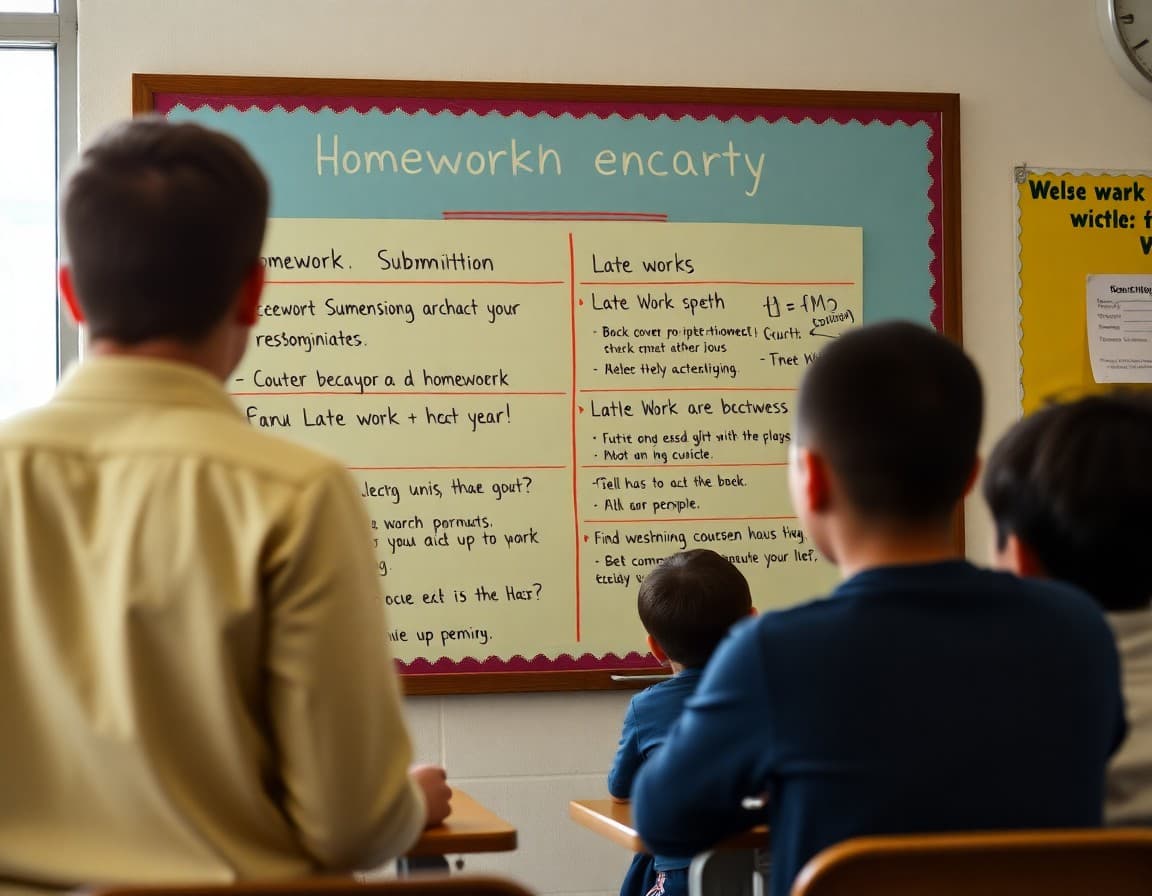
Your late work policy is one of the most impactful policies in your classroom, and most families do not know what it is until they need to know it. A proactive newsletter explaining the policy clearly prevents confusion, reduces end-of-marking-period panic, and sets shared expectations from the beginning of the year.
State the Policy Plainly
Do not bury your policy in qualifications. Tell families exactly what happens when work is submitted late. Is there a grace period? What is the grade penalty? Is there a cutoff after which late work is not accepted? Can students resubmit for a higher grade? How is missing work recorded in the gradebook? Each of these questions is simple, and answering them upfront prevents confusion every time a student misses a deadline.
Explain the Reasoning Behind the Policy
Tell families why your policy works the way it does. A policy stated without reasoning invites negotiation. A policy explained with reasoning invites understanding. "I accept late work within two weeks for partial credit because the goal is to complete the learning, not to punish with a zero. A completed assignment, even late, tells me more about what a student knows than a missing one." That rationale is more persuasive than the rule alone.
Clarify How Missing Work Appears in the Gradebook
If families have access to an online gradebook, tell them how missing assignments appear. A zero recorded immediately? An NTI (not yet submitted) placeholder? An incomplete marker? If families see a zero and do not understand it is temporary, they may react to it as a final grade. Explaining the recording system prevents that misread.
Define the Exception Process
Tell families how to request an extension before the deadline rather than explaining the situation after the work was due. "If your child is facing an unusual circumstance that will prevent on-time submission, email me before the deadline. I handle extension requests on a case-by-case basis when I know about them in advance. Last-minute requests after the deadline are much harder to accommodate." That sentence alone changes the nature of most late work conversations.
Address Student Communication About Late Work
Tell families whether students are expected to communicate with you directly about late work, or whether parent communication is the primary channel. For upper elementary students, direct student communication is appropriate: the student who comes to you during a break and says "I did not finish the assignment, can I have more time?" is practicing responsibility. Building that habit explicitly is part of the value of the policy.
Distinguish Late Work From Missing Work
Tell families the difference between work submitted late (after the deadline but still submitted) and work not submitted at all. These may have different consequences in your system, and families should understand the distinction. A student who submits late is making an effort. A student who does not submit at all is a different situation. Treating them the same in your policy misses an important distinction.
Connect to Responsibility Development
Frame the late work policy as part of building real-world skills. "Learning to meet deadlines, communicate proactively when a deadline is at risk, and make up missed work promptly are skills students will use every day in middle school, high school, and eventually in a job. Our late work policy is not just about this assignment. It is about building that habit now while the stakes are low."
Get one newsletter idea every week.
Free. For teachers. No spam.
Frequently asked questions
What should a late work policy newsletter include?
Include the specific policy: how many days late work is accepted, what the grade penalty is if any, how missing work is recorded, what the process is for communicating about late work, and what families should do when their child misses an assignment.
What is a reasonable late work policy for elementary school?
For most elementary classrooms, accepting late work for full or partial credit within a reasonable window (one to two weeks) is appropriate. A zero for missing work rarely teaches responsibility. It builds resentment and grade holes that are hard to recover from. The goal is to get the work completed, not to punish.
How do I enforce a late work policy consistently without making exceptions for every family?
State the policy clearly, apply it consistently, and create a formal exception process rather than handling each case informally. 'If there is an unusual circumstance, email me before the deadline rather than after. I handle exceptions on a case-by-case basis when I know about them in advance.'
How should families communicate when their child will miss an assignment?
Tell families to contact you proactively: before the deadline, not the morning the assignment is due. A family who tells you Monday that their child will be struggling to complete Tuesday's assignment gets a different response than a family who emails Friday asking if the late work is still accepted.
Can I send my late work policy to families through Daystage?
Yes. Daystage is a good format for policy communication because the organized layout makes it easy to present the specific policy, the exception process, and the family communication protocol clearly. Policies stated plainly in a professional newsletter are taken more seriously than the same information buried in a first-day handout.

Adi Ackerman
Author
Adi Ackerman is a former classroom teacher and curriculum writer with 8 years in K-8 schools. She writes about school communication, parent engagement, and what actually works in real classrooms.
More for Classroom Teachers
Ready to send your first newsletter?
3 newsletters free. No credit card. First one ready in under 5 minutes.
Get started free