
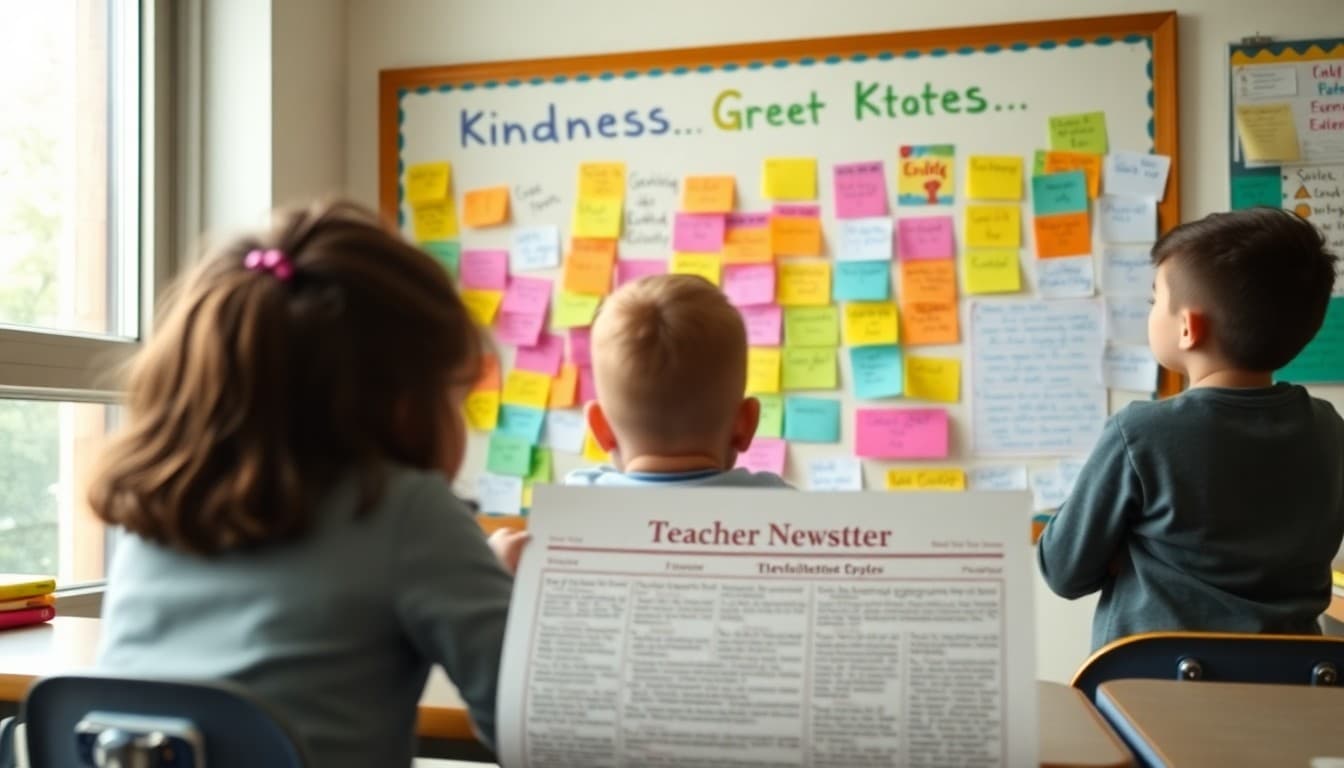
Sharing Your Classroom Kindness Board With Families via Teacher Newsletter
Why the Kindness Board Belongs in Your Newsletter
A kindness board in your classroom captures what is good in the room: the quiet moments of generosity, the small acts of care that happen every day but rarely get named out loud. Your newsletter is what takes that visibility beyond the classroom walls. When families see their child recognized on the board, or read about what their child recognized in a peer, the kindness culture extends into home conversations.
Introduce the Board in Your First Newsletter
Explain what the board is, how it works, and what qualifies as a kindness worth noting. Students (and the teacher) post observations of kind acts they witnessed. Posts are specific: not "Maya is nice" but "Maya stayed after recess to help a student who had lost their notebook." Specificity is what makes the board meaningful rather than decorative.
Families who understand the system will ask their child about it. That conversation is exactly what you want.
Share Weekly Highlights in Your Newsletter
Once a week, pull one or two specific notes from the board and include them in your newsletter. Keep it brief. Two sentences with a name and a specific act is enough. Over the course of the year, families come to look for this section. It becomes one of the most-read parts of your newsletter because it is always specific, always positive, and always tells families something real about who their child is becoming.
Invite Family Nominations
Include a note in your newsletter once a month inviting families to submit kindness nominations. "Did your child do something kind at home or in the community this week? Send me a note and I'll add it to the board." This invitation makes the kindness board a two-way channel and signals to students that kindness outside school also counts. A few families will take you up on it. Those entries are often the most meaningful ones on the board.
Use the Board to Build Social Awareness
The act of noticing kindness is itself a skill. Students who spend a week looking for acts of generosity in their classroom become more attuned to the positive in their environment. Your newsletter can name this directly. "One of the goals of our kindness board is to help students practice noticing what is good. That habit of attention is something we can all use more of." Families who read that understand the deeper purpose.
Adapt the Board for Home
Suggest in your newsletter that families create a simple home version. A piece of paper on the refrigerator, a sticky note on the bathroom mirror, a shared note on a phone. Any place where family members can write one thing they noticed someone do kindly. Even a week of this practice changes how family members pay attention to each other. And students who experience it at home and at school develop a habit that lasts.
End the Year With a Kindness Board Review
At the end of the year, review the board with the class and share a summary in your newsletter. How many notes did the class post? What themes emerged? What types of kindness showed up most? That review honors the year's work and sends students home with evidence of the community they built together. It is one of the most powerful closing-the-year communications you can send.
Get one newsletter idea every week.
Free. For teachers. No spam.
Frequently asked questions
What is a classroom kindness board?
A kindness board is a physical or digital display where students and the teacher post notes recognizing kind acts they observed. It makes positive classroom interactions visible and celebrated rather than invisible and assumed.
How does a kindness board connect to the teacher newsletter?
The newsletter extends the kindness board beyond the classroom. When you share highlights in your newsletter, families see the culture you are building and can celebrate specific acts with their child. It also invites families to submit nominations from home.
How do I prevent the kindness board from becoming a popularity contest?
Encourage students to recognize classmates they do not know well. Rotate who is allowed to post each day. Review posts before they go up to ensure they are genuine and distributed across the class. Mention these practices in your newsletter so families understand the system.
Should I share the content of kindness notes in the newsletter?
Yes, with the student's permission. Brief quotes from actual notes are compelling to families and tell them something real about classroom culture. 'This week, Malik wrote that Sofia shared her supplies without being asked' is more meaningful than a general kindness update.
How does Daystage help teachers share classroom culture highlights like kindness boards?
Daystage makes it easy to include a photo of the kindness board alongside a weekly highlight in your newsletter. Families see the actual board, not just a description, which makes the culture feel real and worth celebrating at home.

Adi Ackerman
Author
Adi Ackerman is a former classroom teacher and curriculum writer with 8 years in K-8 schools. She writes about school communication, parent engagement, and what actually works in real classrooms.
More for Classroom Teachers
How to Share Positive Student Notes Through Your Teacher Newsletter
Classroom Teachers · 6 min read
Introducing Classroom Gratitude Journals to Families in Your Teacher Newsletter
Classroom Teachers · 6 min read
Using a Strength-Based Approach in Your Teacher Newsletter Communications
Classroom Teachers · 6 min read
Ready to send your first newsletter?
3 newsletters free. No credit card. First one ready in under 5 minutes.
Get started free