
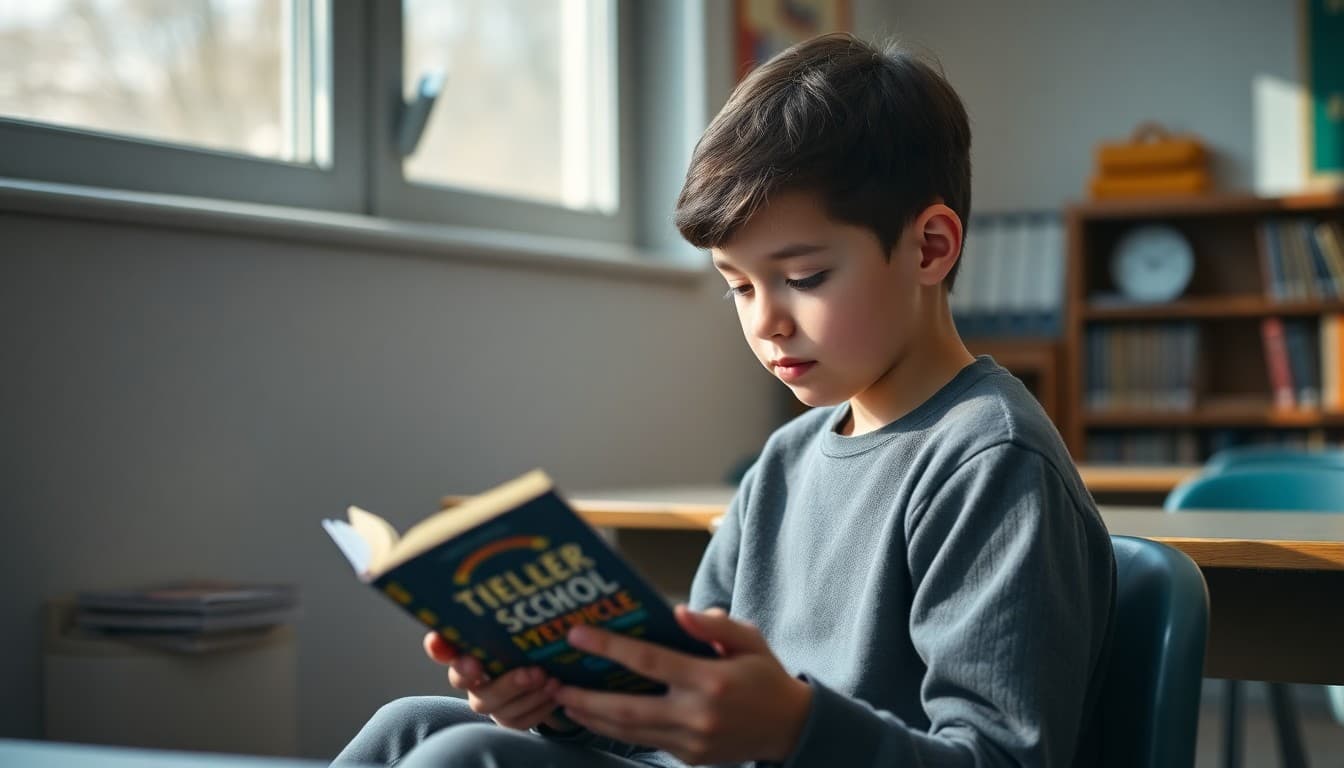
Teacher Newsletter for Independent Novel Reading: Supporting Student Book Choice

Independent reading is the single activity most strongly correlated with long-term reading achievement. Students who read independently and voluntarily build vocabulary, background knowledge, and stamina that no classroom lesson can replicate at scale. A newsletter that helps families understand and support this practice is one of the highest-leverage communications you send all year.
Explain your independent reading program clearly
Tell families how independent reading works in your classroom. Do students read every day during a dedicated block? Do they choose their own books or select from a curated library? Do they keep a reading log? Do you confer with students individually about their books? The more specifically you describe the program, the more families can support it at home rather than working against it with conflicting expectations.
Describe how students choose books
Book choice is one of the most powerful engagement factors in reading. Tell families how you guide students to find books at the right level and in the right genre for them. Explain the five-finger rule or whatever method you use to gauge text difficulty. Give families the confidence to let their student choose their own book at the library rather than defaulting to what they think is "appropriate."
Set home reading expectations explicitly
Tell families how much reading you expect students to do outside of school. Be specific. Twenty minutes per night is a common benchmark. Describe what that looks like in practice and why consistency matters more than intensity. A student who reads for twenty minutes every day builds more skill than a student who reads for two hours on Sundays.
Explain what reading conferences look like
If you confer individually with students about their independent reading, tell families. "I meet with each student one-on-one for about five minutes each week to talk about what they are reading, check their comprehension, and suggest what to read next." When parents understand that you are monitoring and supporting independent reading individually, they feel confident that the program is rigorous and not just free time.
Give families home conversation prompts
The most effective home support for independent reading is a regular conversation about the book. Give families a few questions to use: "What part did you read today and what happened? If you could ask the author one question about why they wrote this, what would you ask? Is there a character you wish you were and why?" These prompts are open-ended enough to work for any book.
Address book abandonment constructively
Students sometimes start a book and decide it is not working for them. Tell families your policy on this. Most reading researchers agree that reading an abandoned book is worse for reading development than finding a new one. If a student is three chapters in and genuinely disengaged, the right move is usually to find a better fit. Say that in the newsletter. Parents who understand this stop forcing their students through books they hate.
Celebrate reading volume milestones
If you track pages or books read throughout the year, share milestones in the newsletter. "Our class has read over three hundred books this year" is the kind of number that produces real pride. Individual milestones, shared with permission, inspire other students and give families a way to celebrate something concrete about their student's reading life.
Get one newsletter idea every week.
Free. For teachers. No spam.
Frequently asked questions
What should I cover in an independent novel newsletter?
Explain your independent reading program, how students choose books, what you expect in terms of reading frequency and volume, how you check in with students during reading conferences, and what families can do at home to support sustained independent reading.
How do students choose the right book for independent reading?
Teach students to use the five-finger rule: open to a random page, read a paragraph, and count how many words you do not know on one hand. Five or more unknown words usually means the book is too challenging for independent reading. Zero challenges may mean it's too easy for growth. Two to four is the sweet spot.
How much independent reading should students do at home?
Most reading researchers recommend twenty to thirty minutes of daily independent reading as a minimum for meaningful skill growth. This does not have to be a formal session. Reading before bed, during a car ride, or after homework all count. Consistency matters more than the time of day.
What if a student cannot find a book they want to read?
This is the most important reading intervention available. Alert parents that their student is stuck so they can visit a library, look at book trailers online, or ask their student what genres or topics they would explore if books were not involved. Interest is the entry point for reluctant readers.
How does Daystage help me send consistent independent reading updates to families?
Daystage makes it easy to share a brief weekly or biweekly independent reading update, including what students are currently reading, reading volume milestones, and tips for home support, all in one organized format.

Adi Ackerman
Author
Adi Ackerman is a former classroom teacher and curriculum writer with 8 years in K-8 schools. She writes about school communication, parent engagement, and what actually works in real classrooms.
More for Classroom Teachers
Teacher Newsletter for Literary Circles: What Families Need to Know
Classroom Teachers · 6 min read
Teacher Newsletter for Reading Conferences: What Families Should Understand
Classroom Teachers · 6 min read
Teacher Newsletter for Reading Response: Helping Families Support Written Thinking
Classroom Teachers · 6 min read
Ready to send your first newsletter?
3 newsletters free. No credit card. First one ready in under 5 minutes.
Get started free