

How to Communicate About Gifted Identification in Your Teacher Newsletter
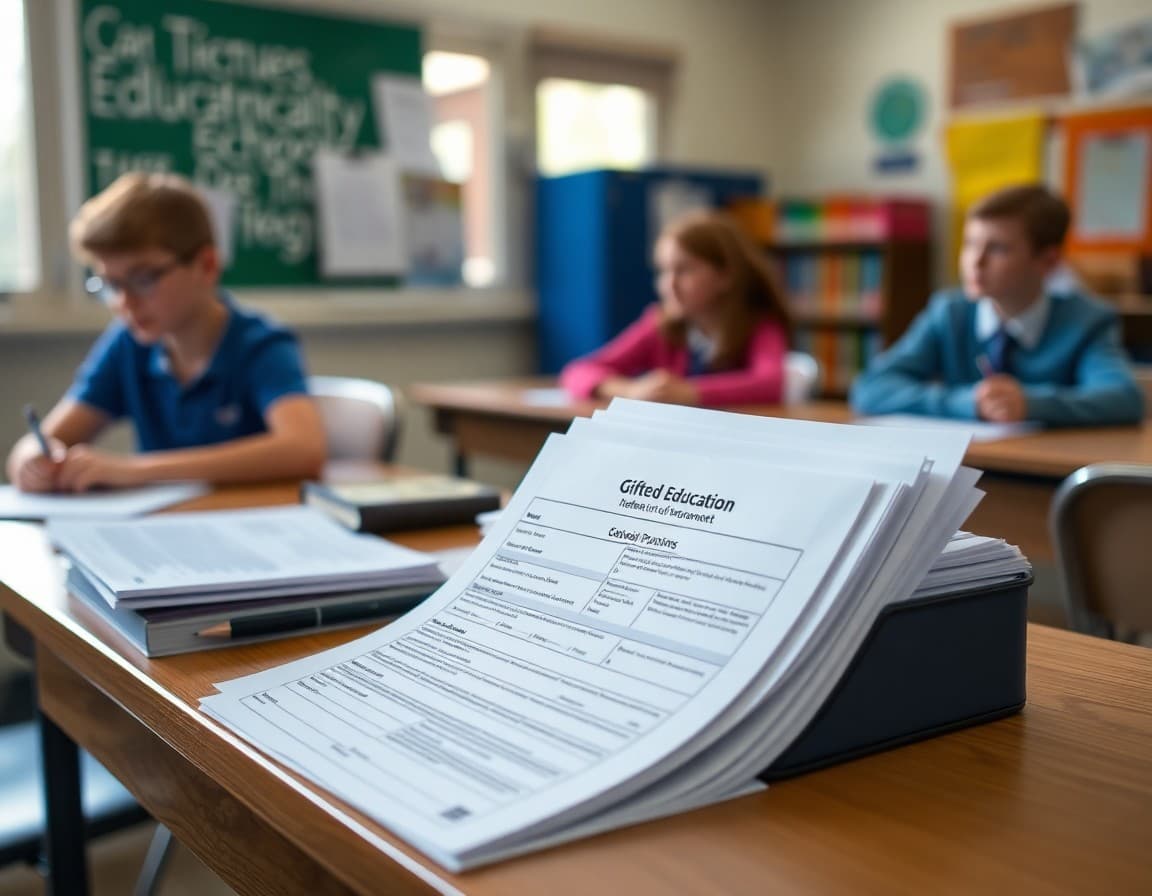
Gifted identification is one of the most inequitably distributed processes in public education because access to it depends so heavily on whether families know it exists and know how to request it. A teacher newsletter that explains the identification process, timeline, and referral options ensures that every family in the class has the same information, regardless of whether they have older children who have been through the process or a background in educational systems.
Announce the referral window when it opens
Most districts have a formal window for gifted referrals. When that window opens, include a brief announcement in the newsletter. "Our district's gifted referral window is open from October 1 through November 15. If you believe your student may benefit from gifted evaluation, now is the time to initiate the process. The referral form is available at the district website and at the main office." A simple announcement like this ensures all families are aware of the timeline.
Explain what gifted identification actually means
Many families have a vague sense of what gifted means but do not understand what the identification actually measures or provides. "Gifted identification is based on cognitive and academic assessments that look for significant performance above grade-level expectations. Identification qualifies a student for specialized programming that goes beyond differentiation within the regular classroom. It is not a measure of effort or character. It is a specific cognitive profile." That explanation is more useful than leaving families to infer.
Describe who can make a referral
In most districts, teachers, parents, and counselors can all initiate a gifted referral. Explain this in the newsletter. "Both teachers and families can initiate a referral. I actively look for students in our class who show indicators of advanced cognitive ability, including students who may not be the highest performers on standard assessments but who demonstrate reasoning or creativity that warrants evaluation. If you have a specific concern or observation, please share it with me."
Address the relationship between grades and gifted identification
Families sometimes assume that high grades automatically translate to gifted identification, or that a student who does not get high grades cannot be gifted. Clarify this. "High grades and gifted identification are not the same thing. Some gifted students underperform for reasons that include perfectionism, twice-exceptional learning profiles, or a mismatch between their interests and the standard curriculum. Grades alone are not a reliable indicator of whether a referral is appropriate."
Share what happens after a referral is submitted
Families who know what to expect after a referral are less anxious during the process. "After a referral is submitted, the gifted coordinator reviews it and schedules an evaluation. Evaluations include cognitive assessments and academic performance review. Families are notified of results and, if identification is confirmed, a meeting is held to discuss programming options. The full process typically takes four to six weeks." A clear timeline reduces the anxiety of an opaque process.
Recommend classroom enrichment for all students
A newsletter about gifted identification should note that enrichment opportunities exist for all students, not just those who qualify for the formal program. "Regardless of gifted identification, every student in our class has access to challenge work, extension projects, and differentiated tasks. Gifted identification opens additional programming but it is not the only path to advanced learning in our classroom."
Daystage newsletters make it easy to include annual gifted referral window announcements that ensure all families have the same access to this information.
Get one newsletter idea every week.
Free. For teachers. No spam.
Frequently asked questions
Should I address gifted identification in my classroom newsletter?
Yes, briefly and at the right time. When gifted referral or identification windows are open, a newsletter mention ensures all families know the process and timeline. Without proactive communication, only families who already know to ask about gifted programs find out. That creates an equity gap in who gets referred.
What information about gifted identification should appear in a newsletter?
The referral process and who can make a referral, what the identification criteria typically include, the timeline for the current identification cycle, what families should do if they believe their student may qualify, and who to contact with questions.
How do I write about gifted identification without implying that not being identified is a deficiency?
Frame gifted programs as one of several pathways available for students with specific learning profiles, not as a prize or hierarchy. 'Gifted identification is a specific designation for students with particular cognitive profiles. Most students benefit from differentiation within the regular classroom, which is our first line of enrichment.'
Can teachers refer students for gifted evaluation or is that only a parent right?
In most districts, both teachers and parents can initiate a gifted referral. A newsletter that explains the teacher referral pathway tells families that their teacher is actively watching for students who may qualify, not just waiting for family requests.
Can Daystage help teachers send gifted identification updates in newsletters?
Yes. Daystage newsletters support informational sections with links to referral forms, district gifted education pages, and evaluation timeline documents.

Adi Ackerman
Author
Adi Ackerman is a former classroom teacher and curriculum writer with 8 years in K-8 schools. She writes about school communication, parent engagement, and what actually works in real classrooms.
More for Classroom Teachers
How to Explain Enrichment Pullout Programs to Families in Your Newsletter
Classroom Teachers · 6 min read
How to Explain Student Choice Menus to Families in Your Teacher Newsletter
Classroom Teachers · 6 min read
How to Explain Progress Monitoring to Families in Your Teacher Newsletter
Classroom Teachers · 6 min read
Ready to send your first newsletter?
3 newsletters free. No credit card. First one ready in under 5 minutes.
Get started free