
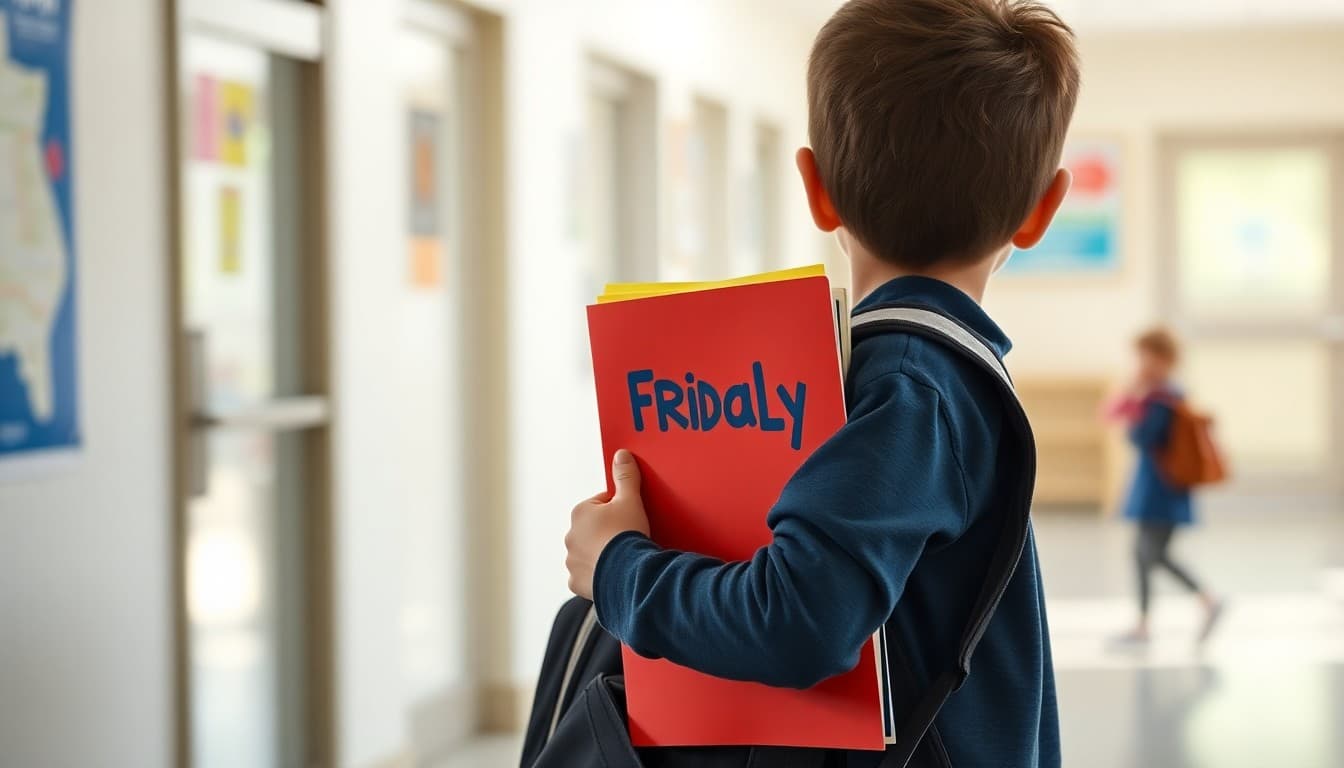
The Friday Folder Newsletter: What to Include and How to Make It Work
The Friday folder has been a classroom institution for decades. The digital version is faster to send, easier for families to search, and can reach every family regardless of whether papers make it home in one piece. A well-written Friday newsletter wraps up the week with enough context to be useful and enough warmth to remind families there is a person behind the classroom.
Open with a week summary that is specific, not vague
Avoid the generic "It was a great week in Room 14!" opening. Instead, name something that actually happened. "This week we finished our animal adaptation unit with a class debate that went longer than expected because students had so much to say. That is a good problem to have." Specific content earns readership. Vague cheerfulness does not.
Explain the papers coming home
If families are receiving graded work, corrected tests, or forms that need a signature, the newsletter should identify each one. "Attached you will find this week's spelling test and the permission slip for our November field trip. Please sign and return the permission slip by Wednesday." Families who get unaccompanied papers are more likely to leave them in the backpack than families who received a heads-up about exactly what they are looking at.
Highlight what students learned this week
A short learning summary helps families ask better questions and understand what their student is working through. "In math this week we shifted from multiplication to long division. Some students found it challenging on day one and by day three the majority had the first steps down." A note like this tells families whether to expect some struggle at the homework table and what kind of support might help.
Preview next week briefly
The Friday newsletter is an opportunity to give families a head start on Monday. "Next week we start our narrative writing unit and we will have a guest author visit on Thursday. Students should wear comfortable clothes that day as we will spend time outside." Short, specific, and actionable previews reduce the volume of Monday morning emails asking questions the newsletter already answered.
Include the one thing families need to do over the weekend
If there is a weekend task, spell it out clearly. "Students were asked to read for twenty minutes each day this weekend and log it in their reading journal." If there is nothing to do, say that too. "No homework this weekend. Enjoy the time." Families appreciate both pieces of information equally.
End with something human
A one-sentence closing that feels like a person wrote it goes further than a formal sign-off. "Have a good weekend, and thank you for all the support this week. It shows up in how your students show up on Monday." A note like that closes the loop between home and school in a way that generic sign-offs never do.
Teachers who use Daystage for their Friday newsletter report that families engage more consistently when the format is clean, the content is personal, and the send time is predictable. Set it up once and let the habit do the work.
Get one newsletter idea every week.
Free. For teachers. No spam.
Frequently asked questions
What is the difference between a Friday folder and a Friday newsletter?
A Friday folder traditionally refers to the physical collection of papers sent home each Friday. A Friday folder newsletter is the digital or printed communication that accompanies it, giving families context for the papers and a summary of the week. Many teachers now send the newsletter digitally and skip the physical folder entirely.
What should a Friday folder newsletter include?
A week summary, a look at what is coming next week, reminders for Monday, and any papers families need to sign or return. You can also include a student spotlight or a short note about something that happened in class that families would appreciate knowing.
Should a Friday newsletter look back or look forward?
Both. A brief look back helps families understand what their student worked on. A look forward prepares them for next week. The ratio can lean toward forward-looking if you also send a Monday memo, or more retrospective if Friday is your only weekly touchpoint.
How do I keep a Friday newsletter from growing too long over the year?
Set a word count limit and stick to it. Three hundred to four hundred words is a practical ceiling. Before you add a new section, decide which existing section it replaces. A growing newsletter signals that you are adding without editing, and that usually means families stop reading the full thing.
Can Daystage help me send a Friday folder newsletter consistently?
Yes. Daystage lets you build a Friday newsletter template and update only the week-specific content. You can schedule it to send Friday afternoon automatically, which means it is waiting in family inboxes when they sit down for the weekend.

Adi Ackerman
Author
Adi Ackerman is a former classroom teacher and curriculum writer with 8 years in K-8 schools. She writes about school communication, parent engagement, and what actually works in real classrooms.
More for Classroom Teachers
Ready to send your first newsletter?
3 newsletters free. No credit card. First one ready in under 5 minutes.
Get started free