
Biweekly Teacher Newsletter: Format, Timing, and What to Include
Not every teacher needs to send a newsletter every week. Some grade levels, some school cultures, and some teacher workloads make biweekly the right cadence. When done well, a biweekly newsletter covers more learning context than a weekly one because it can show the arc of two weeks rather than the snapshot of one. The key is that families know when to expect it and it is good enough that they actually read it when it arrives.
Pick a predictable send day and never deviate
The single biggest risk with biweekly communication is that families forget it is coming or stop trusting that it will arrive. Solve this by sending on the same day every two weeks, at the same time. Every other Friday at 3 p.m. works well. Every other Monday morning works equally well. What does not work is variable timing that leaves families unsure whether they should be expecting something or not.
Cover two weeks of learning in one focused narrative
A biweekly recap is more valuable when it treats the two weeks as a unit rather than two separate weekly summaries combined. "Over the past two weeks we started and finished our plant life cycle unit. Students planted seeds on day one, observed daily, charted growth, and presented their observations on Friday. The progression from curiosity to data to presentation was something I watched happen in real time." That kind of narrative is more useful to families than a day-by-day accounting.
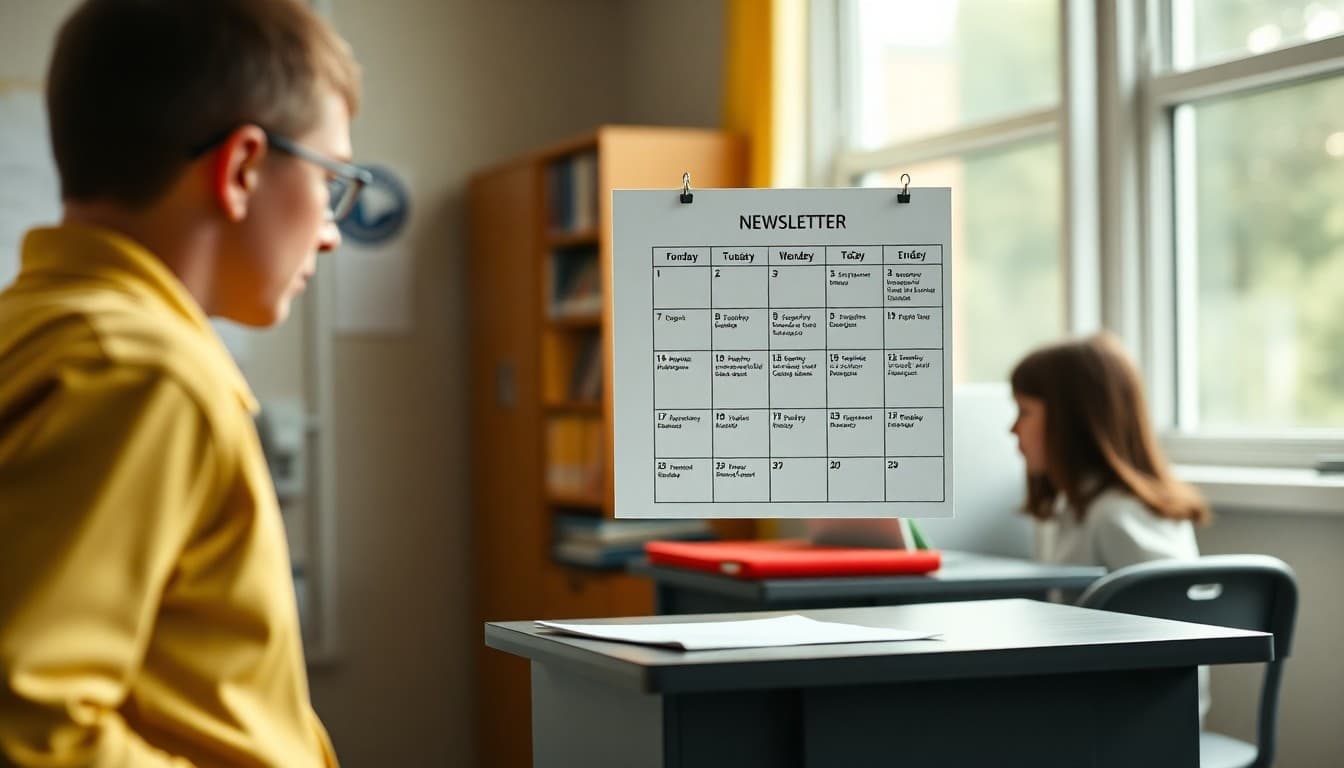
Include a four-week calendar preview
Because families receive the newsletter less frequently, the upcoming events section should look further ahead. A four-week calendar view gives families enough runway to plan around field trips, test days, and special events. "Here is what the next four weeks look like in our class." A simple date list works. Families appreciate the visibility even if they only care about a few items.
Batch your reminders and action items
Because you have more time between sends, the reminder list might include items due in three or four days as well as items due in two weeks. Organize them by urgency rather than listing them in the order they occurred to you. Most urgent at the top. Items with more lead time at the bottom. Families will thank you for not making them parse an unordered list.
Include a student learning spotlight
A biweekly newsletter has room for a bit more depth than a weekly one. Use that space for a student spotlight, a description of a project in progress, or a quote from a class discussion that captured something important. The extra depth is what makes families look forward to the biweekly newsletter rather than treating it as an administrative update.
Keep the overall word count under five hundred
Two weeks of content does not justify twice the length. Aim for four hundred to five hundred words maximum. If you can cover everything in three hundred and fifty, that is better. Every sentence in a parent newsletter should either inform, remind, or connect. If a sentence does none of those three things, cut it.
Daystage supports biweekly scheduling with the same template reliability and delivery consistency it offers for weekly sends. Build your format once and keep the sending simple.
Get one newsletter idea every week.
Free. For teachers. No spam.
Frequently asked questions
Is biweekly frequent enough to keep families informed?
For most classrooms, yes. A biweekly newsletter sent consistently on the same day covers two weeks of content and upcoming events. You may want to supplement it with brief one-topic messages for urgent announcements, but the newsletter itself does not need to be weekly to be effective.
What should I cover in a biweekly newsletter that I would not cover in a weekly one?
A biweekly newsletter covers two weeks of learning content rather than one, which means you can group related topics and show how a learning sequence progressed. You also have more upcoming events to preview, which can make the newsletter more useful as a planning reference for families.
How do I handle urgent announcements between biweekly sends?
Send a short standalone message for anything time-sensitive. One paragraph, one topic, one call to action. Do not wait for the biweekly newsletter to communicate something families need to act on within a day or two. Keep urgent messages separate from the regular newsletter.
Should a biweekly newsletter be longer than a weekly one?
Not necessarily. Two weeks of content does not mean two times the length. Edit ruthlessly. Highlight the most important learning moments from the past two weeks rather than summarizing everything. Families will read a four-hundred-word biweekly newsletter. They will skim or skip an eight-hundred-word one.
Can Daystage help me set up a biweekly newsletter schedule?
Yes. You can save your biweekly template in Daystage and schedule sends two weeks in advance. The format stays consistent across sends and delivery is reliable across all the devices families use.

Adi Ackerman
Author
Adi Ackerman is a former classroom teacher and curriculum writer with 8 years in K-8 schools. She writes about school communication, parent engagement, and what actually works in real classrooms.
More for Classroom Teachers
Ready to send your first newsletter?
3 newsletters free. No credit card. First one ready in under 5 minutes.
Get started free