
How to Explain Classroom Data Walls to Families in Your Newsletter

Data walls and classroom tracking systems are among the most powerful instructional tools available to teachers who use them well. They are also among the most misunderstood by families who encounter them without context. A newsletter that explains your classroom data tracking practice before families see it at a school visit or hear about it from their student removes the possibility of a privacy concern forming before you have had a chance to explain the purpose.
Explain what data is tracked and why
Start with the purpose. "In our classroom I track reading fluency, math fact fluency, and writing growth for each student. This data helps me make decisions about instructional groups, pacing, and when a student is ready to move to the next level of challenge. I review this data every two weeks and use it to adjust my instruction. Without it I am making decisions based on intuition rather than evidence of actual learning."
Describe how the data is displayed or stored
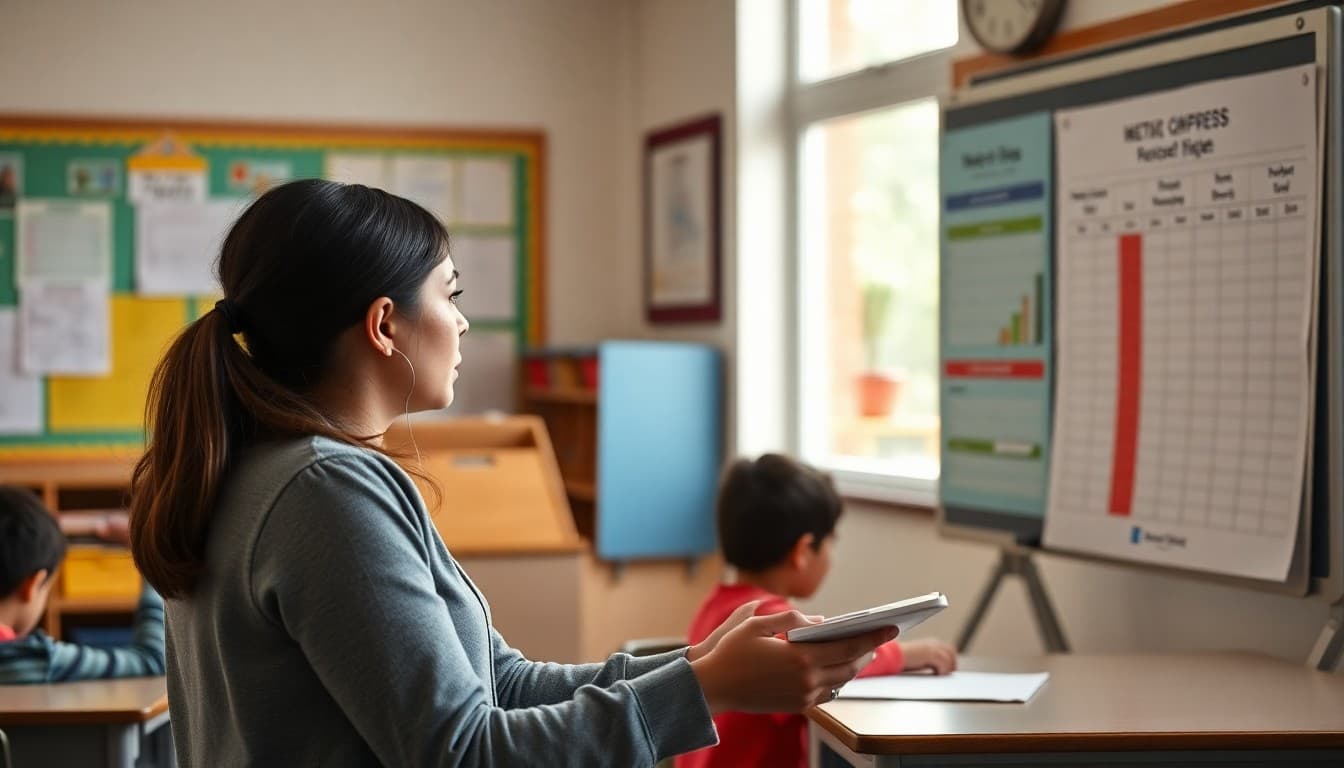
Families have different reactions to data depending on whether it is posted publicly or kept in a private binder. Be specific about your approach. "Each student has their own progress chart in their individual portfolio. Students can see their own data but not other students' data. I also maintain a class-level overview on my planning board that shows how the group is progressing collectively, without individual student names." That kind of specific description removes the ambiguity that generates privacy concerns.
Show students how to read their own data
Students who understand their own progress data are more engaged with their learning goals. Families who know their student has access to this data are usually proud of it rather than concerned. "Students review their own progress charts with me during one-on-one conferences. We set goals together based on where the data shows growth and where more practice is needed. Students who can describe their own learning trajectory are more invested in their progress than students who simply receive a grade."
Address privacy protections clearly
If any data is displayed where other students can see it, explain the privacy protections in place. "Any data displayed in shared classroom spaces uses student numbers or color codes, not names. Students do not have access to each other's data. All student data is stored in compliance with school privacy policy and FERPA." Families who know the privacy rules are applied appropriately are much more comfortable with data tracking practices.
Tell families how to access their student's data
A brief note about access closes the loop. "If you would like to see your student's current data, I am happy to share it at any time. You can request it at a conference or via email. I find that families who review progress data with their student have more specific and productive conversations about learning goals." That invitation turns data tracking from a teacher practice into a family partnership tool.
Connect data tracking to long-term growth
Families who understand that data tracking shows growth over time rather than labeling performance at a single point are more supportive of the practice. "The most meaningful thing a data wall shows is not where a student is today but how far they have come from the beginning of the year. That growth story is often more motivating for students than any single test score."
Daystage newsletters that explain data practices clearly at the start of the year prevent most data-related family concerns from arising later. Families who understand the system support it.
Get one newsletter idea every week.
Free. For teachers. No spam.
Frequently asked questions
What is a classroom data wall and how is it used?
A data wall is a visual representation of student progress data, organized to help teachers and students track growth over time. In some classrooms it is visible to students as a motivational tool. In others it is kept in a teacher binder or staff area. The purpose is to make progress visible and to inform instructional grouping and planning.
Should families be told about data walls in the classroom?
Yes, especially if students will be able to see their own or others' data. Families who understand what data is tracked and how it is used are more comfortable with the practice. Families who discover a data tracking system without context may have privacy concerns.
What privacy considerations apply to classroom data walls?
Student data displayed publicly should comply with FERPA and your school privacy policy. If data is displayed in a way that is visible to other students, use codes or anonymized identifiers rather than full names. Check with your administration before displaying any personally identifiable student data where peers can see it.
How do I explain to families that data tracking is for student benefit, not surveillance?
Lead with the instructional purpose. 'The data we track helps me know which students need more support on a specific skill and which students are ready to move on. It also helps students set goals and see their own progress over time. The data is a tool for teaching better, not a permanent record of performance.'
Can Daystage help teachers communicate data practices to families in newsletters?
Yes. A Daystage newsletter with a clear explanation of classroom data practices builds trust and reduces privacy concerns before they are raised.

Adi Ackerman
Author
Adi Ackerman is a former classroom teacher and curriculum writer with 8 years in K-8 schools. She writes about school communication, parent engagement, and what actually works in real classrooms.
More for Classroom Teachers
How to Explain Progress Monitoring to Families in Your Teacher Newsletter
Classroom Teachers · 6 min read
How to Explain Universal Screening to Families in Your Newsletter
Classroom Teachers · 6 min read
How to Explain Student Self-Assessment to Families in Your Teacher Newsletter
Classroom Teachers · 6 min read
Ready to send your first newsletter?
3 newsletters free. No credit card. First one ready in under 5 minutes.
Get started free