

Current Events Teacher Newsletter: How to Communicate What You Are Covering
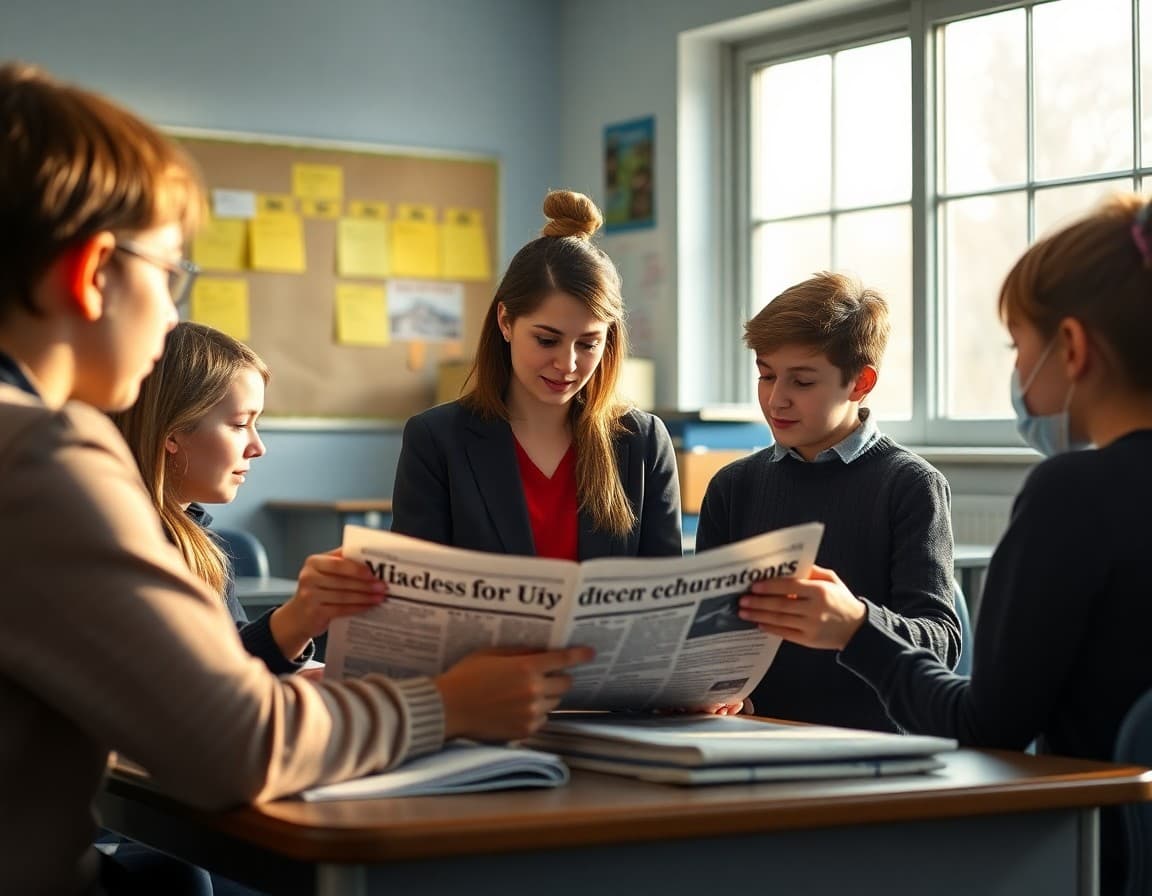
Current events in the classroom makes some families uneasy and others enthusiastic. Both reactions are worth getting ahead of. A newsletter that explains your approach, names your sources, and describes the media literacy skills you are building gives all families a clear picture of what their child is actually learning and why it belongs in school.
Why Current Events Belongs in the Classroom
Start with the academic rationale. "Current events work builds students' ability to read informational text, evaluate sources, distinguish fact from opinion, and understand how news connects to the subjects we study. These are media literacy skills that students need for academic and civic life. In a world where every student will consume news through multiple channels, learning to read critically in school is not optional." Families who see the academic purpose rather than the political potential are more supportive from the start.
The Sources You Use
Name your sources. "We primarily use Newsela and Time for Kids, both of which are designed for school use and provide age-appropriate versions of real news stories with adjustable reading levels. I select articles based on curriculum relevance, age-appropriateness, and informational depth." Families who know the sources can look them up, use them at home, and verify that the content is appropriate. Transparency builds trust here more than any explanation.
How You Select Topics
Explain your selection criteria. "I choose topics that connect to what we are studying, represent a range of subjects, and are appropriate for our grade level. I filter out content that is graphic, highly partisan, or outside the developmental range of nine and ten-year-olds. When a topic has clearly different perspectives, I present those perspectives as different perspectives, not as right and wrong." That sentence about perspectives is worth including explicitly.
When Breaking News Enters the Classroom
Tell families your protocol for significant or upsetting news events. "When a major news event occurs, students often arrive already having heard about it. In those cases, I acknowledge it briefly, answer factual questions in age-appropriate terms, and then decide whether deeper discussion is warranted. For events that are distressing, I follow our school's counselor guidance on age-appropriate processing. I will always let you know when a difficult news topic came up in class so you can continue the conversation at home."
The Media Literacy Skills You Are Building
Be specific about the skills. "This year I am focusing on: identifying the difference between news and opinion, evaluating whether a source is reliable, recognizing when a headline exaggerates or misleads, and asking what evidence supports a claim. Students practice these skills with every article we read." Naming the skills tells families what their child should be getting better at, which gives them a reference for home conversations.
How Families Can Build News Habits at Home
One practical suggestion. "Try watching or reading news with your child once a week and asking 'what is the evidence for that?' about one thing you hear. You do not need to be a media expert to model critical reading. Just modeling the habit of asking for evidence before accepting a claim is enormously valuable." Practical, specific, and accessible for all families regardless of their own media literacy level.
Your Boundary Around Politics
Be honest about what you will and will not do. "I do not express my personal political views to students. When topics have partisan dimensions, I present them as topics where thoughtful people disagree and focus on the factual content. I leave the political conclusions to each student and their family." Families from across the political spectrum appreciate that boundary when it is stated clearly.
Get one newsletter idea every week.
Free. For teachers. No spam.
Frequently asked questions
What should a current events newsletter explain to families?
Which sources you use, how you select topics and what you filter out, the media literacy skills you are building rather than just the content knowledge, how you handle politically sensitive topics, and how families can build news habits at home.
How do I reassure families that I am not promoting a political viewpoint in current events?
Describe your approach to source selection and balanced presentation. 'I use age-appropriate news sources and when topics have multiple perspectives, I present them. My goal is to build students' ability to evaluate sources and identify evidence, not to shape their political views.' That framing is accurate and reassuring.
What age-appropriate news sources work for elementary classrooms?
Newsela, Time for Kids, Scholastic News, and DOGOnews are well-regarded age-appropriate sources. Naming the source in your newsletter lets families verify the content and even access the same articles at home.
How do I handle breaking news that is distressing for young students?
Address it in your newsletter before families hear about it from their children. 'There was a news event this week that came up in our classroom discussion. Here is how I handled it and what language I used. Here is how to continue the conversation at home if your child wants to talk about it.'
How does Daystage help communicate curriculum updates like current events?
Daystage lets you include links to the news sources you use, a summary of recent topics covered, and conversation prompts for families all in one newsletter that lands directly in their inbox.

Adi Ackerman
Author
Adi Ackerman is a former classroom teacher and curriculum writer with 8 years in K-8 schools. She writes about school communication, parent engagement, and what actually works in real classrooms.
More for Classroom Teachers
Ready to send your first newsletter?
3 newsletters free. No credit card. First one ready in under 5 minutes.
Get started free