

Teacher Newsletter for Creative Writing Prompts: Sparking Stories at Home Too
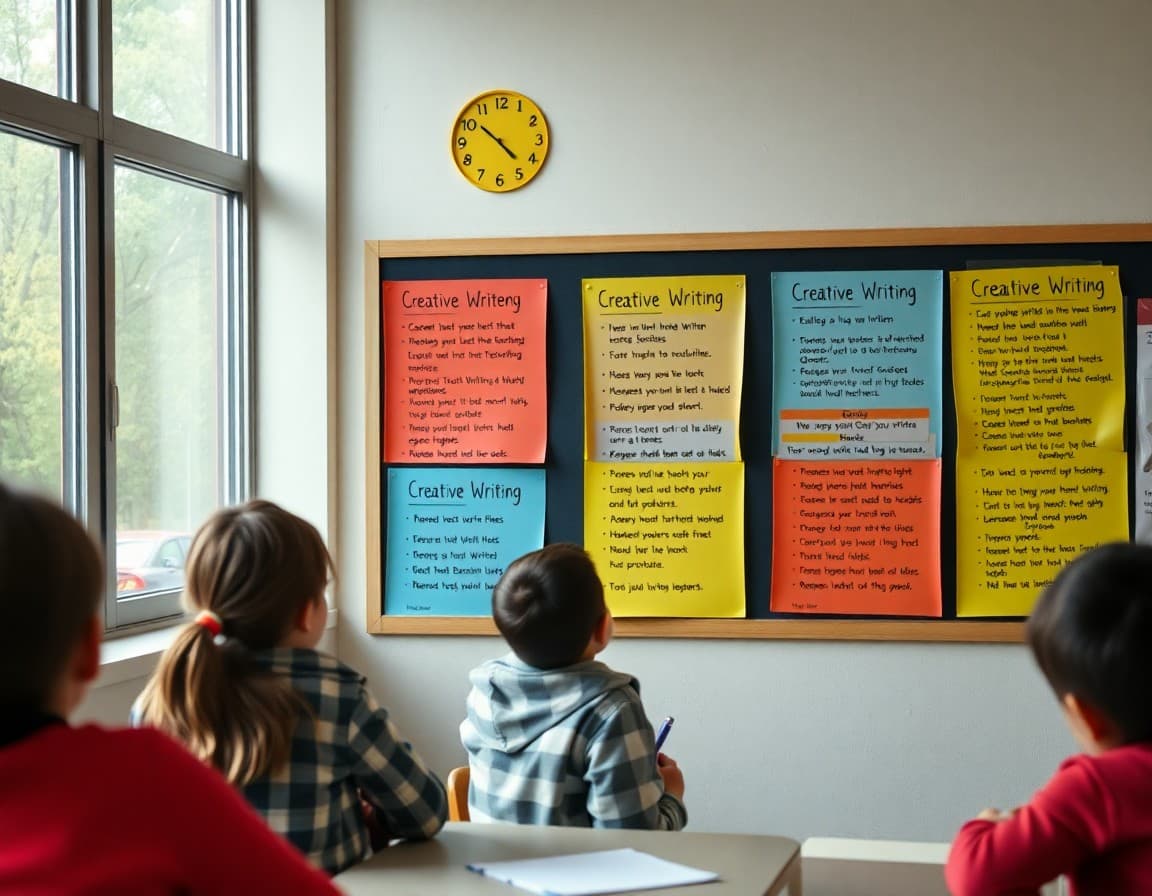
Creative writing prompts are some of the most generative things you can put in front of students. The right prompt opens a door that formal assignments keep closed. It removes the stakes, invites experimentation, and sometimes produces the best writing a student does all year. A newsletter about creative writing gives families a window into that energy and a way to keep it going at home.
Share the current prompt with enthusiasm
Start with the actual prompt you used in class. Tell parents what it was and, if you can share it without identifying students, describe the range of responses you saw. "We started with the prompt 'write the first line of a story that begins with a door opening' and the variety of what students came up with was remarkable." Specifics make the newsletter worth reading and give parents something concrete to bring up with their student at home.
Explain what makes a prompt effective
Not all prompts work equally well. The ones that generate the strongest responses are usually specific rather than broad, unusual rather than expected, and open enough to have multiple possible directions. "Write about a time you felt happy" is a weak prompt. "Write from the perspective of the last bite of food on someone's plate" is a strong one. Parents who understand this can better appreciate the craft behind the invitations you design.
Address the "I don't know what to write" response
Every teacher knows this moment. A student stares at the prompt and says they have no ideas. Tell parents what you do in class: start with the first image that comes to mind, write the most obvious response and then cross it out and write the next one, or start with a physical description of the scene. These strategies get students moving even when the initial resistance is strong. Families can use them too.
Give families a prompt to try at home
Include one or two prompts in the newsletter that families can try together if they want to. Make them short and low-stakes. "Before dinner, everyone writes one sentence starting with 'The strangest thing I have ever seen is...' and reads it aloud." These micro-writing moments build the habit of seeing writing as a normal part of life rather than something that only happens at a desk with lined paper.
Connect creative prompts to formal writing skills
The craft elements you teach through creative prompts are the same ones students need in formal writing. Specific sensory detail is show not tell. Unusual perspectives build voice. The physical act of generating ideas quickly builds fluency. Tell parents that creative writing is not a break from learning. It is where some of the most important writing skills are practiced with the least resistance.
Celebrate unusual and unexpected responses
In creative writing, the response that surprises you is often the one worth celebrating. Share what made you laugh, made you think, or caught you off guard in a student response. With permission and names removed, a line or two from a striking response makes the newsletter genuinely memorable. It also signals to students that surprising you is a form of success.
Build toward a creative writing sharing event
If your class is building toward a reading, a publication, or a celebration of creative writing, mention it early. Students who know their creative writing might be shared with an audience invest more in the process and take more creative risks. Families who know it is coming plan to attend.
Get one newsletter idea every week.
Free. For teachers. No spam.
Frequently asked questions
What should I share about creative writing prompts in a newsletter?
Share the current prompt or prompt theme students are working with, examples of the types of responses you are seeing, how students are responding to the writing invitation, and a prompt families can try at home together if they want to extend the fun.
How do I explain the purpose of creative writing to parents who see it as less rigorous?
Creative writing develops the same core skills as formal writing: voice, audience awareness, structure, word choice, and revision. It also develops imagination and the willingness to take creative risks, which are foundational to all strong writing. Frame it as writing skills with the constraints removed, not writing without rigor.
What are good creative writing prompts to share with families?
What if you woke up and everything was a different color? Write from the perspective of your shoe. Describe a place you have never been but have imagined. What would your bedroom say if it could talk? Short, specific, unusual prompts generate better responses than open-ended ones.
How do I handle students who do not think they are creative writers?
Address this in the newsletter. Creativity is not a fixed trait. It is a skill that responds to practice and permission. Students who believe they are not creative have usually not been given the right kind of invitation. Low-stakes prompts and a non-judgment-first environment change that.
How does Daystage support sharing creative writing moments with families?
Daystage makes it easy to include student excerpts, with permission, alongside writing prompts and classroom updates in a polished newsletter format families actually enjoy reading.

Adi Ackerman
Author
Adi Ackerman is a former classroom teacher and curriculum writer with 8 years in K-8 schools. She writes about school communication, parent engagement, and what actually works in real classrooms.
More for Classroom Teachers
Teacher Newsletter for Narrative Writing: Connecting Families to Personal Stories
Classroom Teachers · 6 min read
Teacher Newsletter for Writers Celebration: Honor Student Work
Classroom Teachers · 6 min read
Teacher Newsletter for Memoir Unit: Personal Memory as Literature in the Classroom
Classroom Teachers · 6 min read
Ready to send your first newsletter?
3 newsletters free. No credit card. First one ready in under 5 minutes.
Get started free