
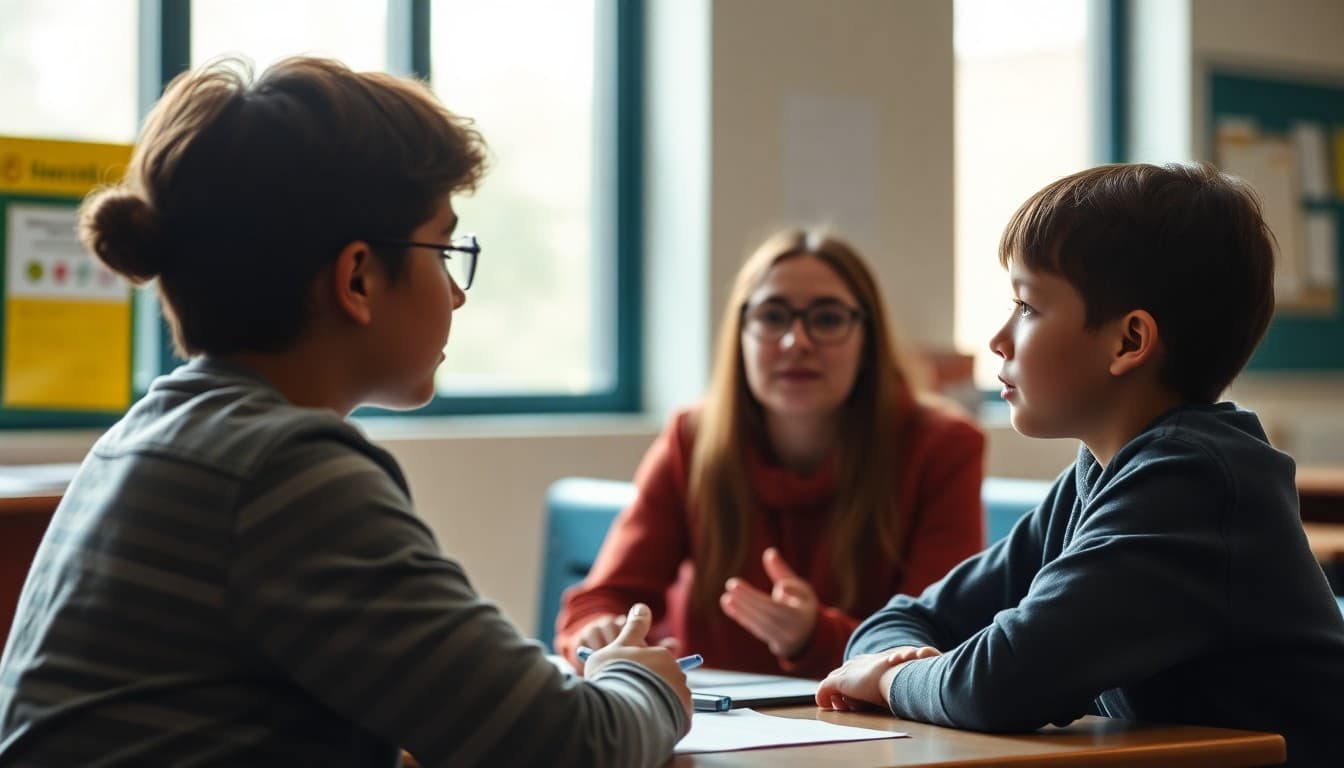
How to Write a Conflict Resolution Unit Newsletter to Families
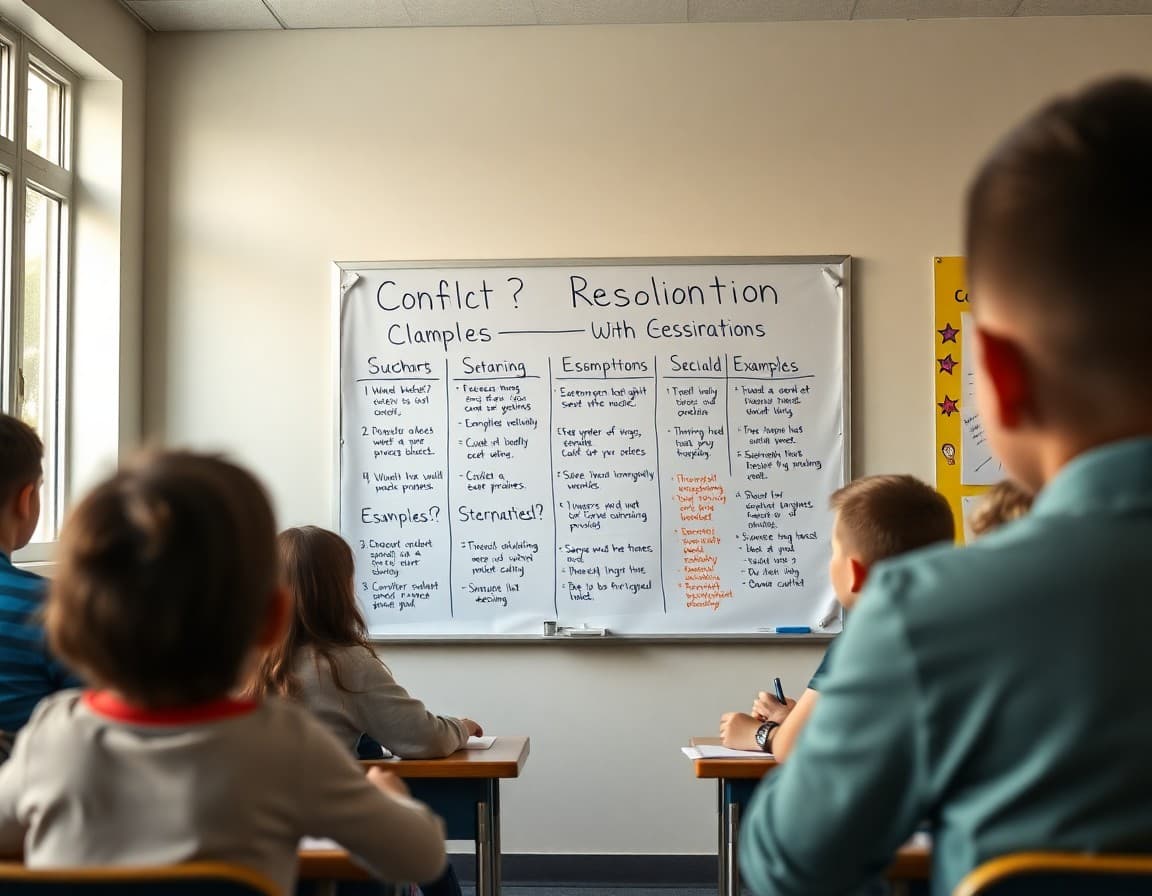
Conflict resolution unit newsletters have an impact beyond the school building. The skills students learn in this unit, how to identify what they need, how to listen to someone else's perspective, how to find solutions that work for everyone, are skills they will use for the rest of their lives. A newsletter that shares the specific language and steps your class uses invites families to reinforce those skills at home, which is where many of the most important conflict resolution moments actually happen.
Explain what conflict resolution means
Start by clarifying what the unit is and is not. Conflict resolution is not about avoiding disagreements or always being agreeable. It is about addressing disagreements directly, understanding what each person actually needs, and finding solutions that work for everyone involved. Students who leave this unit understanding this distinction are better equipped for friendships, group projects, family life, and eventually the workplace.
Share the specific steps or framework your class uses
Whatever conflict resolution framework your class practices, share the steps with families. Whether it is a five-step process, a peer mediation structure, or a specific script students have practiced, giving families the actual language creates the possibility of consistency between school and home. A student who hears "what does each person need?" at home as well as in class internalizes the framework much faster than one who only encounters it at school.
Introduce I-statements and active listening
Two of the most practical and transferable conflict resolution tools are I-statements and active listening. An I-statement describes the speaker's feeling and need without blaming the other person: "I feel frustrated when my materials are used without asking because I need to know where my things are." Active listening means reflecting back what you heard before responding: "So you felt excluded when we started without you, is that right?" Both tools require practice and are learned through repetition in real situations.
Address the difference between resolution and avoidance
Many children develop avoidance as their primary conflict response: walking away, going silent, or telling an adult every time there is friction. Avoidance leaves the underlying issue unresolved and the relationship strained. One of the key lessons of a conflict resolution unit is that engaging with a conflict directly, while uncomfortable, produces better outcomes than avoiding it. Families who model this in their own behavior teach it more powerfully than any lesson.
Suggest home conflict coaching
When sibling conflicts or disagreements between family members arise, families can coach students through the same framework rather than solving the conflict for them. What does each person need? What are three solutions that could work? Could you try one and see what happens? These questions do not require families to be trained mediators. They just require slowing down and asking instead of resolving.
Note when adult help is appropriate
An important part of the unit is knowing when a conflict is beyond peer resolution and when to involve an adult. Safety concerns, power imbalances, repeated patterns despite attempts to resolve, and situations involving threats all require adult involvement. Students who understand this distinction are not expected to handle everything on their own, and families should know that the unit teaches this boundary clearly.
Connect to social and academic outcomes
Conflict resolution skills directly affect classroom learning. Students who manage group project disagreements constructively produce better collaborative work. Students who can advocate for their needs without escalating have more productive relationships with teachers and peers. Families who understand this connection treat the unit as the academic content it genuinely is.
Daystage makes it easy to send a conflict resolution unit newsletter with the specific language your class uses so families can reinforce the same framework at home and give students consistent practice with one of the most important skill sets they will carry into adulthood.
Get one newsletter idea every week.
Free. For teachers. No spam.
Frequently asked questions
What conflict resolution skills are taught in elementary and middle school?
Core skills include identifying the emotion behind a conflict, using I-statements to express needs without blame, active listening to understand the other person's perspective, identifying the actual issue versus the surface argument, brainstorming solutions both parties can accept, and knowing when to seek adult help. These skills develop over years and are practiced in every grade.
How does conflict resolution instruction connect to academics?
Conflict resolution is foundational to collaborative learning. Students who can manage disagreements constructively participate more fully in group work, produce better collaborative outcomes, and spend less classroom time in unproductive social friction. Schools that invest in conflict resolution skills typically see improvements in both social climate and academic engagement.
How can families reinforce conflict resolution at home?
Using the same language and steps at home that students use in school creates consistency. When siblings argue, asking 'what does each person need?' and 'what are three solutions you could both live with?' applies the same framework. Modeling calm conflict resolution between adults, rather than avoiding or escalating disagreements, is the most powerful teaching available.
What is the difference between conflict resolution and avoiding conflict?
Avoiding conflict means walking away from disagreements without resolving the underlying issue, which leaves needs unmet and usually makes the conflict recur. Conflict resolution means addressing the issue directly, understanding both perspectives, and reaching an outcome that works for everyone involved. Students who avoid conflict do not develop the skills they need for adult life.
What tool helps teachers communicate about conflict resolution units?
Daystage makes it easy to send a conflict resolution unit newsletter with the specific language and steps used in class so families can reinforce the same skills at home and create a consistent environment for students practicing these strategies.

Adi Ackerman
Author
Adi Ackerman is a former classroom teacher and curriculum writer with 8 years in K-8 schools. She writes about school communication, parent engagement, and what actually works in real classrooms.
More for Classroom Teachers
Ready to send your first newsletter?
3 newsletters free. No credit card. First one ready in under 5 minutes.
Get started free