
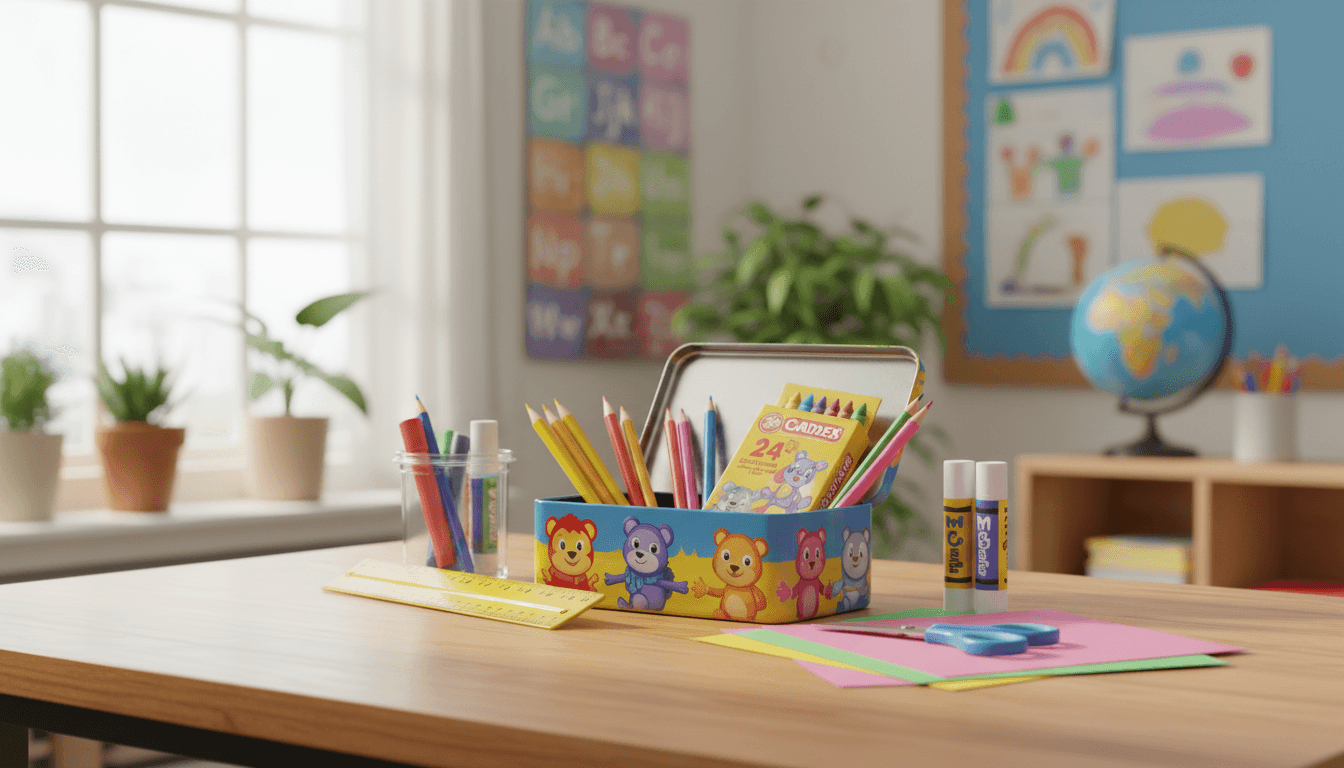
Second Grade Supply List Newsletter: How to Communicate What Families Need to Buy

The supply list newsletter sounds like the simplest communication a teacher sends all year. It is just a list. But done poorly, a supply list generates weeks of back-to-school questions, leads to families buying the wrong things, causes first-day chaos when students arrive unprepared, and adds unnecessary stress to families who are already overwhelmed by the start of school. Done well, it prevents almost all of that.
Here is how to write a second grade supply list newsletter that actually works.
Send It Early Enough to Matter
The single biggest mistake teachers make with supply lists is sending them too late. If your school starts in early September, your supply list needs to go out no later than the first week of August. Families with multiple children are shopping for all of them at once, often on a specific budget, and doing it during the peak back-to-school sale period. If your list arrives in the last week of August, some families will have already finished shopping and will need to make a second trip.
If your school has a formal registration or orientation event, consider making the supply list part of that communication bundle so families receive it the moment they think about getting ready for the year.
Be Specific Where It Matters
Second graders use supplies in specific ways that adults do not always anticipate. Here are some places where specificity prevents problems:
Pencils: specify the quantity (twelve to eighteen for the year) and whether you prefer pre-sharpened or standard. Second graders go through pencils quickly and having the right count prevents constant requests.
Crayons: specify the count (24 is standard for second grade) rather than just saying crayons. A 96-count box creates chaos at small desks.
Folders: specify colors if your classroom system depends on it. If every student needs a red folder for reading and a blue folder for math, say that. Otherwise parents will buy whatever is available and you will spend the first week sorting.
Composition notebooks versus spiral notebooks: these are not interchangeable for many classroom activities. Name the format you need.
Separate the Individual Supplies from the Shared Supplies
Many second grade classrooms ask families to contribute to a shared supply pool in addition to individual supplies. Things like tissues, hand sanitizer, dry erase markers, and extra pencils often fall into this category. Make it explicit which items are for your child specifically and which items go into the shared classroom supply.
Some families object to buying shared supplies for other students' children. The more transparent you are about what goes where and why, the fewer complaints you get. A brief note explaining that shared supplies support all students throughout the year, including yours, goes a long way.
List What the School Provides
Parents often do not know what the school already provides. Including a short section in your newsletter titled "You do not need to buy these" or "Provided by the school" saves families money and prevents duplicate purchases. Common school-provided items in second grade include textbooks, workbooks, reading leveled books, scissors, and sometimes calculators or math tools.
This section also functions as a small act of trust-building. It signals that you are thinking about families' finances and not just adding to their list unnecessarily.
Address the Brand Question
Some teachers have genuine reasons to specify brands. Certain brands of dry erase markers erase more cleanly. Some crayons hold up better to heavy use. If you have a brand preference with a real reason behind it, mention it briefly. But make clear that the generic or store-brand version is absolutely fine if budget is a concern.
The last thing you want is a family skipping a supply because they cannot afford the name brand, when the off-brand version would have worked perfectly.
Include a Note About Labeling
Every teacher has spent time sorting through thirty identical pencil boxes on the first day trying to figure out whose is whose. Save yourself that problem by including a clear request in the newsletter: please label all supplies with your child's first and last name, especially items like pencil boxes, scissors, and folders.
Tell parents how you prefer labels applied. Pre-made name labels, permanent marker directly on the item, and masking tape with a name written on it all work differently on different supply types. A little specificity here pays dividends on day one.
Acknowledge That Cost Adds Up
Back-to-school supply costs hit some families harder than others. Include a single, brief paragraph in your newsletter that acknowledges this directly and tells families what to do if they need support. Something like: "If the supply list presents a financial challenge, please reach out to me directly and I will connect you with school resources. No child in our classroom will go without what they need."
This is not soft language. It is practical. Families who know help is available will ask for it. Families who have to guess whether help exists will often go without rather than risk embarrassment. Your newsletter can prevent that outcome before school even starts.
Close With Enthusiasm
A supply list newsletter can easily read as a flat administrative document. Add a sentence at the end that reminds families what all these pencils and folders are actually for: a year of learning together. Something as simple as "I cannot wait to meet your second grader and get this year started" makes the list feel like the beginning of something real rather than a checklist to dread.
Get one newsletter idea every week.
Free. For teachers. No spam.
Frequently asked questions
When should I send the second grade supply list newsletter?
Send it at least two to three weeks before school starts, ideally alongside or right after registration. Families need enough lead time to shop during sales, and many parents plan their back-to-school shopping in late July and early August.
How specific should the supply list be in the newsletter?
Specific enough to prevent wrong purchases but not so rigid that families feel stuck. For example, 'a pack of 24 crayons' is more useful than 'crayons,' but listing a specific brand is only necessary if the generic version genuinely does not work for your classroom.
How should I handle families who cannot afford all the supplies?
Address this directly and privately. In your newsletter, include a brief note that families who need support should reach out confidentially and that the school has resources available. Avoid making it obvious or shame-inducing. Many teachers also note that shared classroom supplies are available so no child goes without.
Should the supply list newsletter include items the classroom or school will provide?
Yes. Listing what the school provides alongside what families need to bring prevents duplicate purchases and shows families you have thought about what they actually need to spend money on. Parents appreciate this context.
What is the easiest way to send a supply list newsletter to second grade families?
Daystage makes it straightforward to format a supply list as a proper newsletter with sections, send it to all your families at once, and track who has viewed it. That visibility matters because you can follow up directly with families who have not yet seen the list, which reduces first-week supply chaos significantly.

Adi Ackerman
Author
Adi Ackerman is a former classroom teacher and curriculum writer with 8 years in K-8 schools. She writes about school communication, parent engagement, and what actually works in real classrooms.
More for Classroom Teachers
Second Grade Curriculum Overview Newsletter: What to Share With Families at the Start of the Year
Classroom Teachers · 6 min read
Second Grade Classroom Rules Newsletter: How to Share Your Expectations With Families
Classroom Teachers · 5 min read
August Newsletter Ideas for 2nd Grade Teachers: What to Send This Month
Classroom Teachers · 6 min read
Ready to send your first newsletter?
3 newsletters free. No credit card. First one ready in under 5 minutes.
Get started free