
Second Grade Science Unit Newsletter: How to Share What Your Class Is Exploring

Science is one of the subjects second graders are most excited to talk about at home. A child who has spent the morning investigating what happens to seeds in the dark versus the light arrives at the dinner table with something real to say. A science unit newsletter gives families the background they need to turn that after-school energy into a genuine conversation.
Beyond conversation-starting, science newsletters help parents support vocabulary development, encourage observation habits at home, and understand the hands-on, investigation-based approach that characterizes good elementary science instruction. Here is how to write one that does all of that effectively.
Lead With the Big Question
Every good science unit is organized around a driving question or central idea. That question is the best opening for your newsletter. Something like: "For the next three weeks, our class is investigating: what do plants need to grow and survive?" gives families an immediate hook. It is the same question their child is sitting with in class, and it is a question most parents find genuinely interesting.
Starting with a question also signals to families that science in your classroom is inquiry-based, not just fact delivery. That distinction matters to parents who may have had a very different science education experience themselves.
Describe the Hands-On Investigations
Second grade families often have limited visibility into what science class actually looks like. If your students are going to plant seeds and track growth over three weeks, use measuring tools to compare plant heights, design a fair experiment to test light versus no-light conditions, and draw scientific observations in a journal, describe all of that. Parents love knowing the specifics.
When families know what their child is physically doing in science, they ask better questions at home. "Did you measure your plant today? Was it taller than last week?" beats "How was science?" every time.
Include Key Vocabulary
Science units introduce new words at a density that can feel overwhelming for students who are also still building their reading vocabularies. Including five to eight key vocabulary words in your newsletter does two things. It helps parents reinforce those words naturally in conversation. And it helps students who are English language learners when their families can look up or translate the terms before students encounter them in class.
Keep the vocabulary list simple. Word, brief definition in plain language. Not a glossary document. Just the terms students will use most frequently in the unit, explained in a way any adult can read and use.
Connect the Science to Everyday Life
Second graders learn science content more deeply when they can connect it to the world around them. Your newsletter can accelerate that connection-making by pointing families toward observable examples in daily life.
If your unit is on weather patterns, suggest that families look at cloud formations together and try to predict the next day's weather. If the unit covers animal adaptations, suggest a zoo or nature walk with the question "why does that animal look that way?" If the unit is on properties of matter, suggest sorting household items by whether they are solid, liquid, or gas.
These suggestions do not require any special equipment or preparation. They just redirect the attention families are already paying to the world around them.
Describe the Culminating Project or Assessment
If your unit ends with a project, presentation, science fair entry, or other tangible outcome, tell families about it at the start of the unit. This gives families time to plan their support, understand what the final product should look like, and know what dates to put on their calendar.
Be specific about the role families are expected to play. Is this a project done entirely at school? A project with a home component? Something students present to parents? Clarity here prevents the common scenario where a parent does ninety percent of a project the night before it is due because they found out about it at the last minute.
Acknowledge Safety When It Is Relevant
Some science units in second grade involve things that require brief safety notes: using tools, working with plants that should not be eaten, handling live animals, or using materials that require hand-washing afterward. If your unit involves anything like this, mention it directly and briefly in the newsletter.
This is not about alarming parents. It is about keeping them informed so they are not surprised if their child comes home and announces they held a caterpillar today, and so any relevant allergy or health information gets flagged before the investigation begins rather than during it.
Share Student Work or Photos If Possible
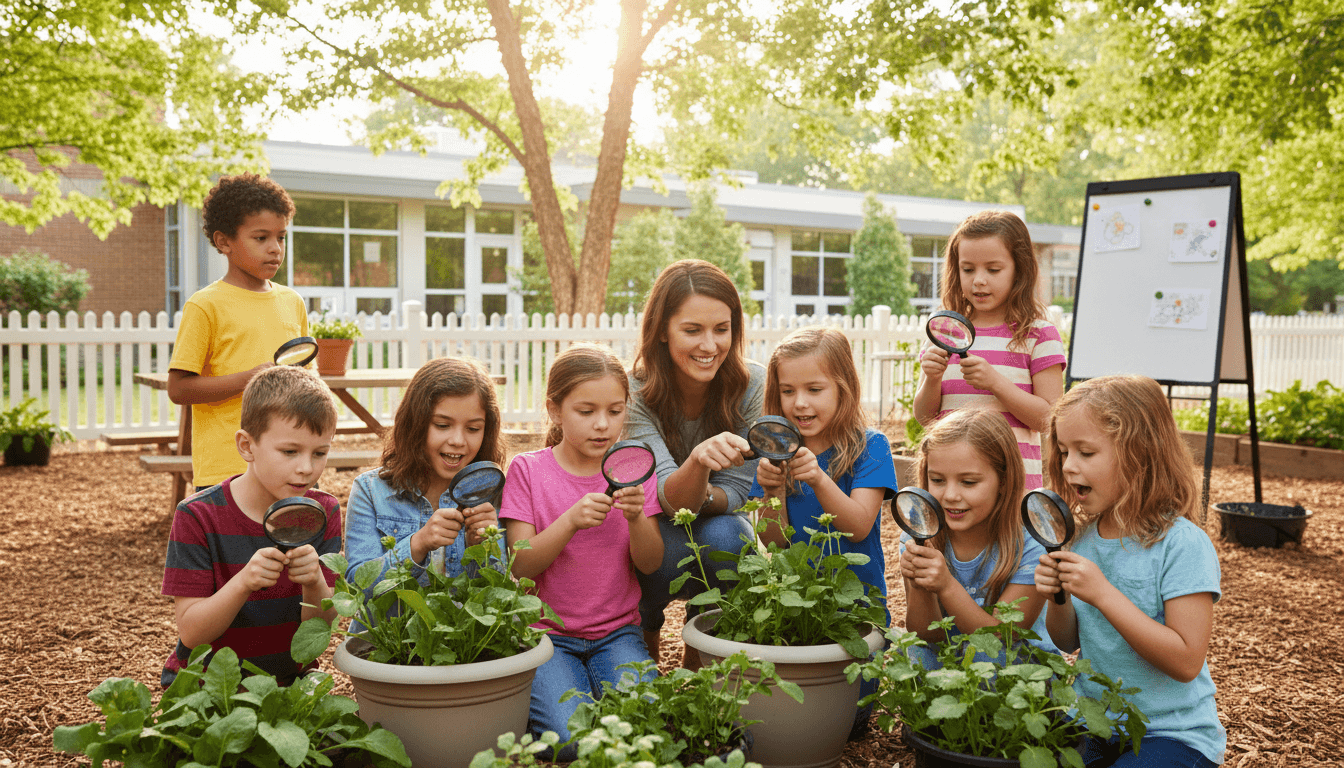
One of the most powerful additions to a science unit newsletter is a photo or a quote from student science journals. Parents who see their child's handwritten observation or a photo of the class investigating something together connect to the newsletter in a completely different way than they do when reading text alone.
Even one image of students engaged in a hands-on activity signals that this is a real, active, joyful learning environment. That signal matters for family engagement and for building the kind of trust that sustains strong home-school communication over the course of the year.
End With What Is Coming Next
Close the science unit newsletter with a brief mention of what unit follows this one. This creates a sense of continuity and helps families see the arc of the year's science learning. It also gives students something to look forward to and talk about, and it signals that your curriculum is intentionally designed, not just a series of disconnected activities.
Get one newsletter idea every week.
Free. For teachers. No spam.
Frequently asked questions
How often should I send a science unit newsletter to second grade families?
Once per unit is usually enough, sent at the start of the unit so families know what is coming. If the unit involves a major project or culminating event, a follow-up newsletter near the end is also valuable. Two to three per year is a sustainable pace for most teachers.
What should a second grade science unit newsletter include?
A brief overview of the science topic, the key questions or ideas students will explore, any hands-on investigations planned, vocabulary students will learn, ways families can extend the learning at home, and upcoming dates for projects or presentations.
How do I write about science for parents who are not science confident?
Keep the language simple and concrete. Focus on what students are doing and observing, not on abstract concepts or technical standards language. Most adults connect more naturally to 'we are investigating how plants get water and nutrients' than to 'we are exploring NGSS standard 2-LS2-1.' Translate everything into plain terms.
Should I ask families to contribute materials for science units?
You can, but be thoughtful about what you ask for and acknowledge that not all families can contribute. If you need specific materials, list options at different price points or effort levels. Many science units work well with things families already have at home, like recycled containers, seeds, or newspapers.
What newsletter platform do second grade science teachers use to communicate with families?
Daystage is well-suited for science unit newsletters because you can include photos of student investigations, format vocabulary lists cleanly, and send the newsletter to all families in one step. Sharing an image of students doing hands-on science work alongside the written update makes families feel genuinely connected to what is happening in the classroom.

Adi Ackerman
Author
Adi Ackerman is a former classroom teacher and curriculum writer with 8 years in K-8 schools. She writes about school communication, parent engagement, and what actually works in real classrooms.
More for Classroom Teachers
Second Grade Curriculum Overview Newsletter: What to Share With Families at the Start of the Year
Classroom Teachers · 6 min read
Second Grade Social Studies Newsletter: Connecting Classroom Learning to Family Conversations
Classroom Teachers · 6 min read
Art Project Updates in Your Classroom Newsletter: What to Share
Classroom Teachers · 5 min read
Ready to send your first newsletter?
3 newsletters free. No credit card. First one ready in under 5 minutes.
Get started free