

Newsletter for Your Space Unit: A Parent Communication Guide
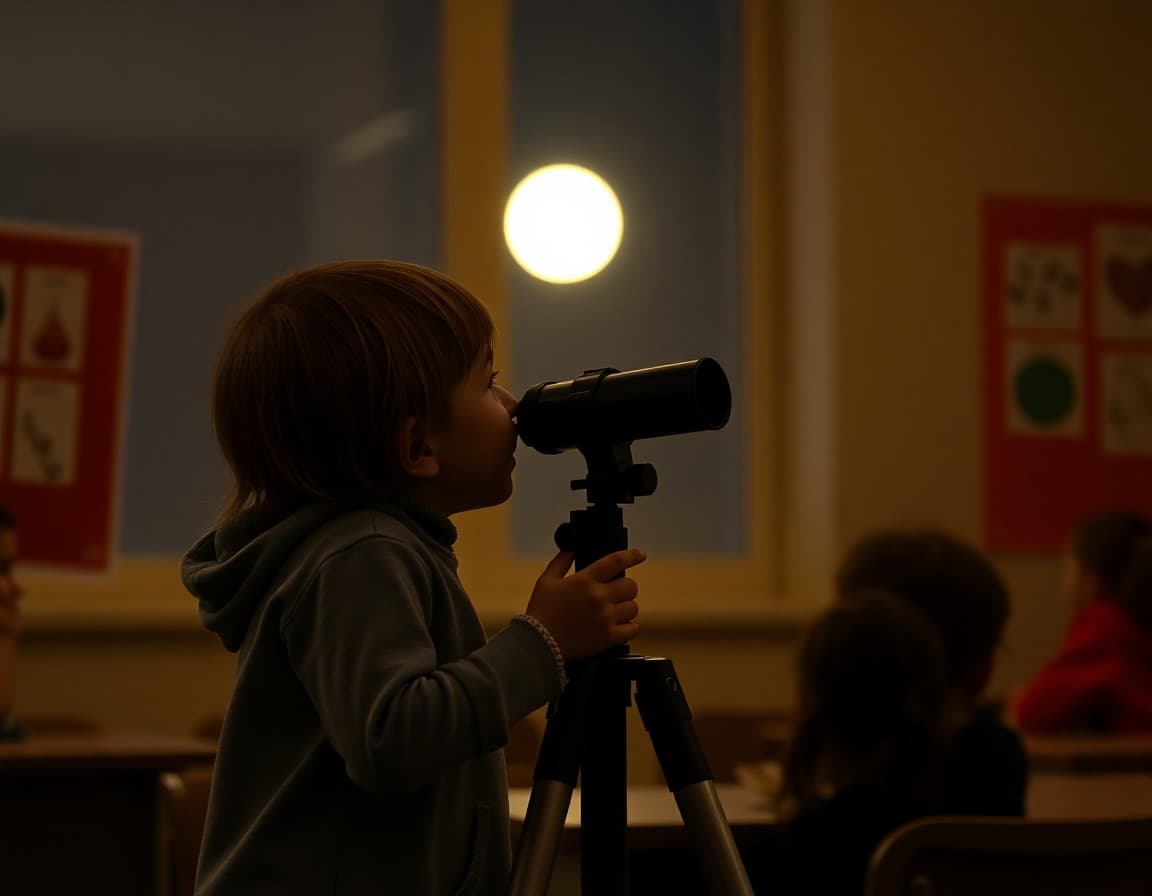
Space is one of the few science topics that students can observe directly from their backyard, and it is often the unit that generates the most genuine excitement. A newsletter that channels that excitement and gives families specific things to look for in the night sky turns the space unit into something that continues well beyond the school day.
What Your Space Unit Covers
Be specific about your scope. If you are covering the solar system, name the planets, their order from the sun, and the key differences between them (rocky vs. gas, size, number of moons). If you are covering moon phases, explain the pattern. If your unit touches on stars, gravity, or space exploration, name those too. Families who know the scope can ask their child the right questions and watch for those concepts when stargazing.
Vocabulary for the Unit
Planet, orbit, revolution (how a planet travels around the sun), rotation (how a planet spins on its axis), solar system, star, asteroid, moon, and galaxy are the foundation terms. The rotation vs. revolution distinction is one of the most commonly confused, so flag it: "Earth rotates (spins) once every 24 hours, which gives us day and night. Earth revolves (travels around the sun) once every 365 days, which gives us one year."
Moon Phases: The Best At-Home Activity
Moon phase tracking is genuinely scientific and requires nothing beyond going outside and looking up. Ask families to observe the moon each night for two weeks and draw its shape. After two weeks, ask their child to predict what shape it will be tomorrow. That prediction is science. If you have a moon phase chart from class, include a small version in your newsletter as a reference. Students who watch the moon from home understand the phases far better than students who only see diagrams in a textbook.
Free Apps Families Can Use
Recommend one or two free stargazing apps. NASA has an official free app. Star Walk and SkyView are popular and free on both iOS and Android. These apps let you point a phone at the sky and see what star or planet you are looking at. Suggest families try this on a clear night during the unit: point the phone at a bright object and ask their child to name it and describe one fact they know about it. That activity connects the unit to the actual night sky.
Scale and Size: The Hardest Concept
Students struggle to grasp the actual scale of the solar system. The distances between planets are so vast that models always compress them dramatically. A useful activity: use a roll of toilet paper to make a scaled solar system. Put the sun at one end and walk the length of the roll placing planets at scaled distances. This activity (instructions are widely available online) makes the scale visceral in a way no diagram can.
Sample Newsletter Excerpt
Here is language you can adapt: "This month we are starting our space unit. We will cover the planets of our solar system, the moon's phases, and how Earth's rotation and revolution create day and night and the seasons. At home, try this: go outside on a clear night and look for the moon. Draw its shape. Do this every night you can for two weeks. After two weeks, ask your child to predict what tomorrow's moon will look like. That prediction is exactly the kind of thinking we practice in class."
Space Exploration and Current Events
NASA and SpaceX make space science current and exciting. If there is a recent mission, launch, or discovery in the news, mention it in your newsletter and ask families to watch a short clip with their child. Connecting classroom content to real events happening right now makes the unit feel live rather than historical. Space is actively happening, and families who share that with their child during the unit add a layer of engagement that no textbook can replicate.
Sending the Space Unit Newsletter
Daystage makes it easy to add a solar system image, a moon phase chart, and your vocabulary list to a newsletter and send it to all families at once. Visual content is especially valuable for the space unit because diagrams communicate scale and sequence better than text. Write your update, add the visuals, and send before the unit begins. Families who start moon tracking before the lessons start arrive with data and observation experience already in hand.
Get one newsletter idea every week.
Free. For teachers. No spam.
Frequently asked questions
What should a space unit newsletter include?
Cover the specific topics your unit addresses (planets, moon phases, solar system, stars, or beyond), vocabulary students will use, any projects or models involved, and activities families can do at night with just their eyes or a phone app.
What space topics are typically taught at different grade levels?
K-2 typically covers the sun, moon, and basic day and night. Grades 3-5 cover planets, the solar system, and the moon's phases. Middle school adds stars, galaxies, gravity, and space exploration. Name your specific topics so families know what to expect.
What vocabulary should a space unit newsletter include?
Planet, orbit, revolution, rotation, solar system, star, asteroid, moon, galaxy, and gravity are the core terms. For upper grades, add light-year, ellipse, terrestrial and gas giant planets, and the difference between a star and a planet.
How can families support space learning at home?
Moon phase tracking is the best at-home activity: observe and record the moon's shape each night for a month. Free apps like NASA's official app or Star Walk show constellation maps, satellite passes, and current night sky views. These activities cost nothing and connect directly to classroom content.
What tool do teachers use to send science unit newsletters?
Daystage makes it easy to send a formatted space unit newsletter with a moon phase diagram, vocabulary list, and activity suggestions to all families. Teachers send it before the unit begins so families can start observing the sky before the formal lessons begin.

Adi Ackerman
Author
Adi Ackerman is a former classroom teacher and curriculum writer with 8 years in K-8 schools. She writes about school communication, parent engagement, and what actually works in real classrooms.
More for Classroom Teachers
Ready to send your first newsletter?
3 newsletters free. No credit card. First one ready in under 5 minutes.
Get started free