
Newsletter for Your Measurement Unit: Helping Parents Support Learning at Home

Measurement is one of the most practical math units you will teach all year. It connects directly to cooking, building, sports, and everyday life. A newsletter that frames it that way and gives families concrete activities can turn the measurement unit into one of the most engaging of the year for students at home.
What Your Measurement Unit Covers
Start by being specific. Tell families whether you are covering length, weight, liquid volume, time, temperature, or some combination. Name the units students will use: inches and feet, or centimeters and meters, or both. If conversions are part of the unit, mention that. Families who know the scope can gather the right tools at home before the unit even starts.
Vocabulary Families Need
Keep the word list short and practical. Estimate: a thoughtful guess before measuring. Unit: the standard size used for measuring (inch, centimeter, liter). Conversion: changing from one unit to another. Perimeter: the distance around the outside of a shape. Area: the amount of space inside. Those five terms cover most measurement homework conversations. Add the metric prefixes if your grade uses them: milli means one thousandth, centi means one hundredth, kilo means one thousand.
Common Mistakes to Watch For
The most common measurement mistake at every grade is starting from the end of the ruler instead of from the zero mark. Some rulers have a small gap before the zero, and students measure from the physical edge. Warn families specifically: "When your child uses a ruler, check that they are starting from the 0, not the end of the ruler. That is the most common error we see." That one tip prevents a lot of wrong answers.
Home Activities That Use Real Tools
Get families measuring actual things. Suggest they have their child measure the length of their bed, the weight of a bag of flour, or the volume of water in a water bottle. Then ask: how many of this unit would fit into a bigger one? If the water bottle holds 500 milliliters, how many full bottles would it take to fill a one-liter jug? Hands-on measurement with real objects is more effective than any worksheet.
Connecting Measurement to Everyday Life
Every recipe, every piece of furniture, every road trip involves measurement. Cooking is measurement. Building is measurement. Buying fabric for a costume is measurement. Framing the unit this way in your newsletter helps families understand why it matters. Ask them to involve their child the next time they measure something at home: point it out, name the unit, and ask an estimation question first.
Estimation Is a Skill
Many students skip estimating because they want to get to the answer. But estimation builds number sense and measurement intuition. Tell families to ask for an estimate before every measurement activity: "How long do you think the table is? Let's check." Practicing estimation builds the mental benchmarks students need to catch unreasonable answers on tests and in real life.
A Sample Newsletter Section
Here is language you can adapt: "This week we are starting our measurement unit. Students will measure length using both inches and centimeters, and they will practice estimating before they measure. At home, find a ruler or tape measure and have your child measure three objects in the house. Before each one, ask them to estimate. Then compare the estimate to the actual measurement. That habit of estimating first is one of the most important things we build in this unit."
Sending the Measurement Newsletter With Ease
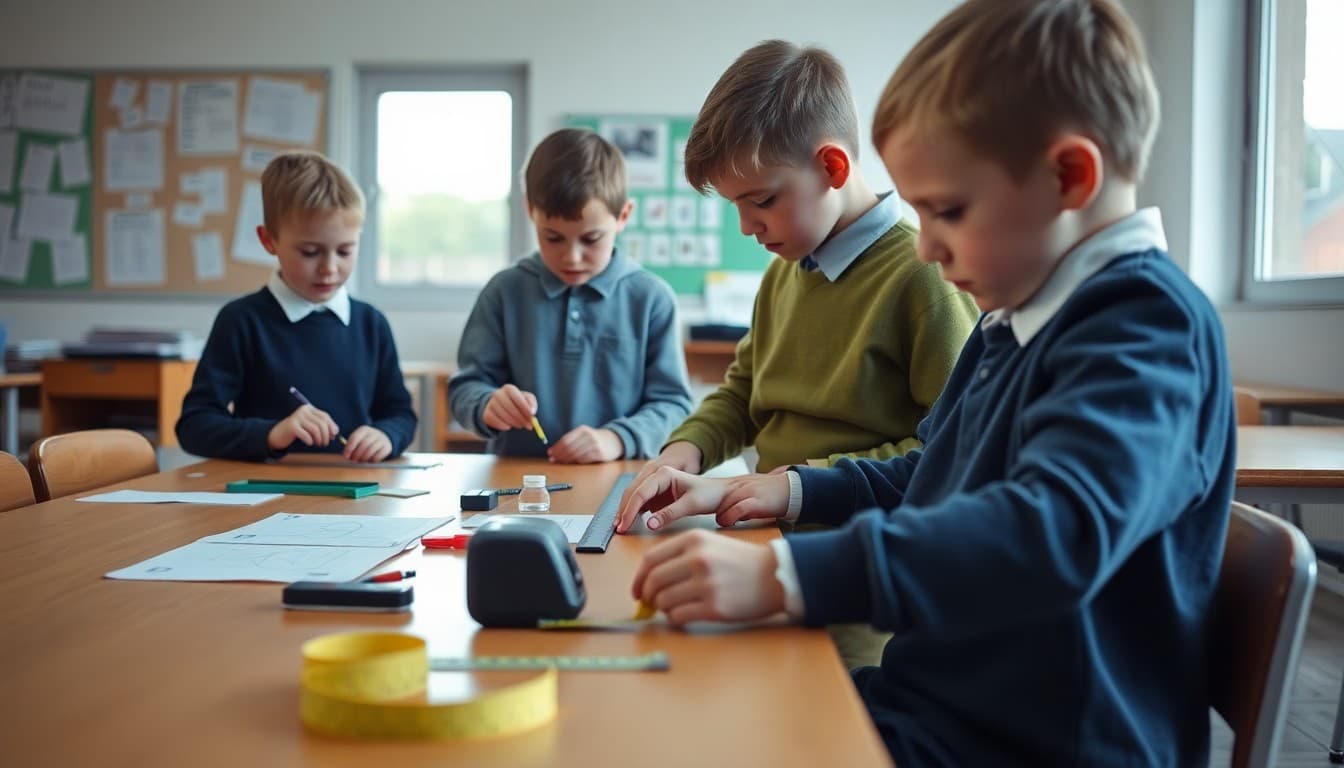
Daystage lets you include a photo of students measuring in class, a vocabulary list, and a home activity all in one clean newsletter. Write it once and send to every family at once. It lands in their inbox before the unit starts, so they have time to gather tools and try an activity before the homework comes home. That kind of preparation makes a measurable difference in how students experience the unit.
Get one newsletter idea every week.
Free. For teachers. No spam.
Frequently asked questions
What topics should a measurement unit newsletter cover?
Describe which aspects of measurement your unit addresses: length, weight, volume, time, temperature, or conversions. At elementary grades, this usually includes both standard and metric units. For upper grades, add area and perimeter, or unit rates.
What tools do students use in measurement class?
Rulers, tape measures, graduated cylinders, scales, and thermometers are the main tools depending on grade level. Naming these in the newsletter lets families pull out measuring tools at home for practice activities that connect directly to classroom work.
What are common mistakes in measurement that I should warn parents about?
Students often start measuring from the edge of the ruler rather than from the zero mark. They also struggle with measuring in mixed units, such as 2 feet and 5 inches. Naming these in your newsletter helps families watch for them and redirect instead of reinforcing the error.
What vocabulary should I include in a measurement newsletter?
Estimate, measure, unit, conversion, length, weight (or mass), volume, and perimeter are the core terms. For metric measurement, include millimeter, centimeter, meter, gram, and liter. Brief definitions make a big difference for families trying to help with homework.
What tool helps teachers communicate measurement unit content to families?
Daystage is a teacher newsletter platform that makes it easy to send unit updates with formatted sections and photos. Many teachers use it to send a newsletter at the start of each math unit so families know what is coming and how to support it.

Adi Ackerman
Author
Adi Ackerman is a former classroom teacher and curriculum writer with 8 years in K-8 schools. She writes about school communication, parent engagement, and what actually works in real classrooms.
More for Classroom Teachers
Ready to send your first newsletter?
3 newsletters free. No credit card. First one ready in under 5 minutes.
Get started free