
Minnesota Literacy Newsletter: Local Resources and Reading Guide
Minnesota consistently ranks among the top states in reading outcomes. That success is not an accident. It reflects strong schools, engaged families, and a culture that values literacy. A classroom literacy newsletter that keeps families informed, connected, and active participants in their child's reading development contributes to that culture directly.
Minnesota Academic Standards for Reading
Minnesota uses its own ELA standards, distinct from Common Core. These standards set clear grade-level expectations for reading across genres and text types. In your newsletter, describe the reading standard your class is addressing this month with a concrete, practical description. "We are working on how to explain the central idea of a nonfiction article and identify the details the author used to develop it. Ask your child to summarize the main point of the last informational text they read."
Minnesota Comprehensive Assessments
Minnesota uses the MCA for reading in grades 3 through 8 and 10. Before testing season, your newsletter should explain the assessment and connect it to daily reading habits. "The MCA tests reading comprehension and written response. The reading work we do every day is the preparation. There is no substitute for consistent daily reading." Families who see the connection between daily habits and assessment performance support both more reliably.
Hennepin County Library and Minnesota Library Resources
Hennepin County Library is one of the most used library systems in the country. Saint Paul Public Library is exceptional as well. The Minitex network connects Minnesota libraries statewide, allowing patrons to request books from anywhere in the system. Digital lending through Libby is available to all Minnesota library cardholders. Include a digital library mention in your newsletter at least once per semester, especially before summer.
Minnesota's Diverse Communities
Minnesota has one of the most diverse immigrant and refugee populations in the country, particularly in the Twin Cities. Somali, Hmong, Karen, Spanish, and many other languages are spoken in Minnesota homes. Your literacy newsletter can reach those families by affirming home language reading. "Reading in Somali, Hmong, or Spanish at home develops the comprehension skills that support English literacy. Your home language is a reading resource." Hennepin County Library has multilingual collections in dozens of languages.
A Template for Your Minnesota Literacy Newsletter
Reading focus this month: [skill or strategy the class is working on]
Minnesota standard: [plain-language description of the relevant benchmark]
MCA connection: [brief note on how this skill appears in the spring assessment]
Minnesota resource: [one library, digital tool, or community program available to families]
Home practice: [one specific reading activity for the week]
Minnesota's Long Winters and Reading Habits
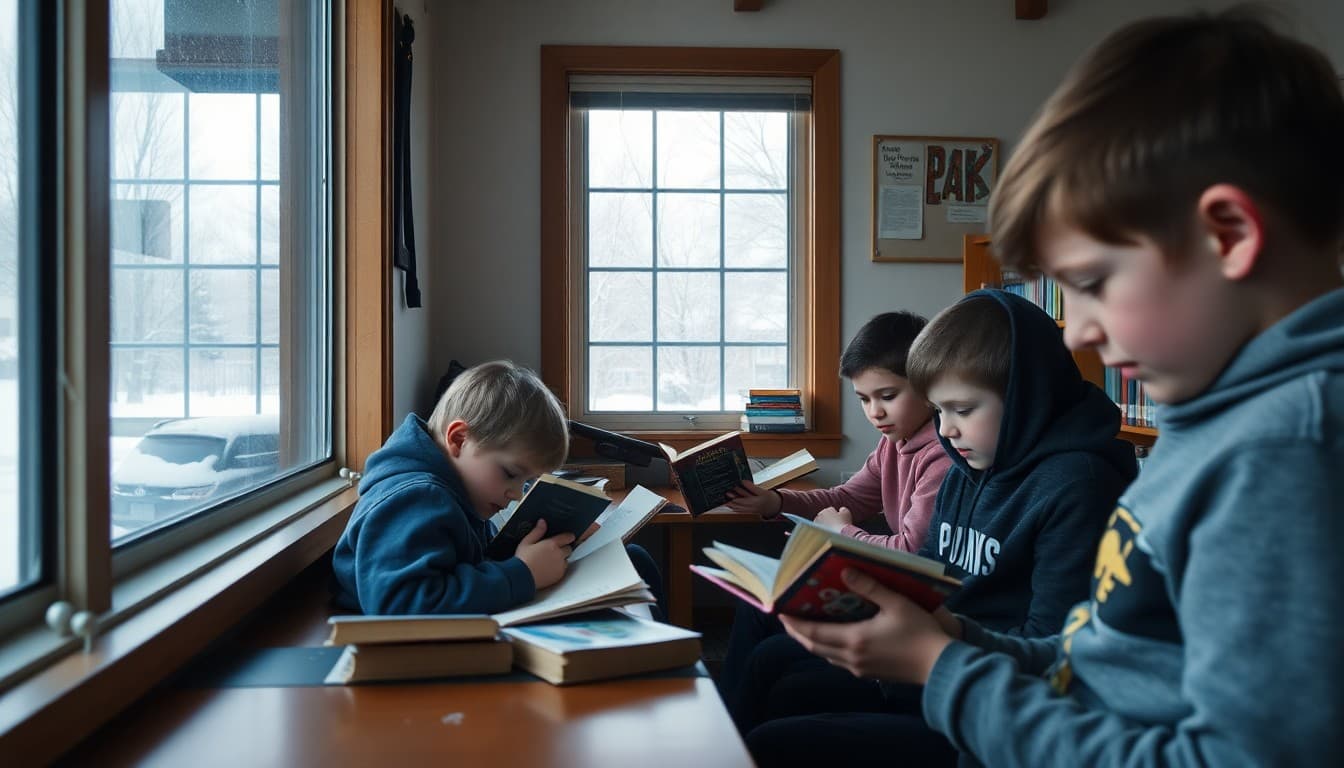
Minnesota winters are long, cold, and dark. That creates one of the best natural reading environments in the country. Your newsletter can lean into this: "Minnesota winters are reading season. This is the best time of year to build a nightly reading habit. Long evenings plus good books is a combination that pays off all year long." Seasonal framing connects literacy to the life families actually live.
Minnesota Authors and Local Literature
Minnesota has a distinguished literary tradition. F. Scott Fitzgerald was born in St. Paul. Sinclair Lewis was from Sauk Centre. More recently, authors like Kate DiCamillo, who grew up reading Minnesota winters, and Louise Erdrich, who writes about Native American life in the Upper Midwest, connect Minnesota to a powerful literary tradition. Including Minnesota authors in your reading lists connects literacy to local pride and geography.
Building a Reading Culture in Your Classroom Community
The most powerful literacy newsletters do not just share information. They build culture. End every newsletter with one prompt that invites families into the reading conversation. "Ask your child tonight what they think will happen in the next chapter and why." Or "Have your child recommend a book to you. Then ask them to convince you it is worth reading." Those conversations are the foundation of a reading culture, and they start with a single prompt in a weekly newsletter.
Get one newsletter idea every week.
Free. For teachers. No spam.
Frequently asked questions
What literacy standards does Minnesota use?
Minnesota uses its own Minnesota Academic Standards for Language Arts, which are not Common Core but share similar expectations for reading foundational skills, literature, informational text, writing, speaking, and listening. In your newsletter, translate the reading standard you are teaching into plain language families can act on.
What reading assessments are used in Minnesota schools?
Minnesota uses the Minnesota Comprehensive Assessments (MCA) for reading in grades 3 through 8 and 10. Many schools also use classroom tools like iReady or DIBELS for progress monitoring. Your newsletter should explain the assessment schedule and what score levels mean before results come home.
What free literacy resources are available in Minnesota?
Hennepin County Library, Saint Paul Public Library, and many county libraries across Minnesota offer strong children's programming and digital lending. The Minitex network connects Minnesota libraries statewide. The Minnesota Center for the Book supports literacy events. Reach Out and Read operates through pediatric practices in Minnesota as well.
How do I support Minnesota's growing immigrant and refugee communities?
Minnesota has significant Somali, Hmong, Karen, Latino, and other communities, particularly in the Twin Cities metro area. Your newsletter can acknowledge home language literacy as a bridge to English reading and link to multilingual library resources. Hennepin County Library and Saint Paul Public Library both have extensive multilingual collections.
Can Daystage help Minnesota teachers create literacy newsletters?
Yes. Daystage is a school communication platform that Minnesota teachers can use to send consistent, professional literacy newsletters with reading tips, resource links, and classroom updates. Whether you teach in Minneapolis or a rural northern Minnesota district, Daystage provides a reliable digital newsletter tool.

Adi Ackerman
Author
Adi Ackerman is a former classroom teacher and curriculum writer with 8 years in K-8 schools. She writes about school communication, parent engagement, and what actually works in real classrooms.
More for Classroom Teachers
Ready to send your first newsletter?
3 newsletters free. No credit card. First one ready in under 5 minutes.
Get started free