
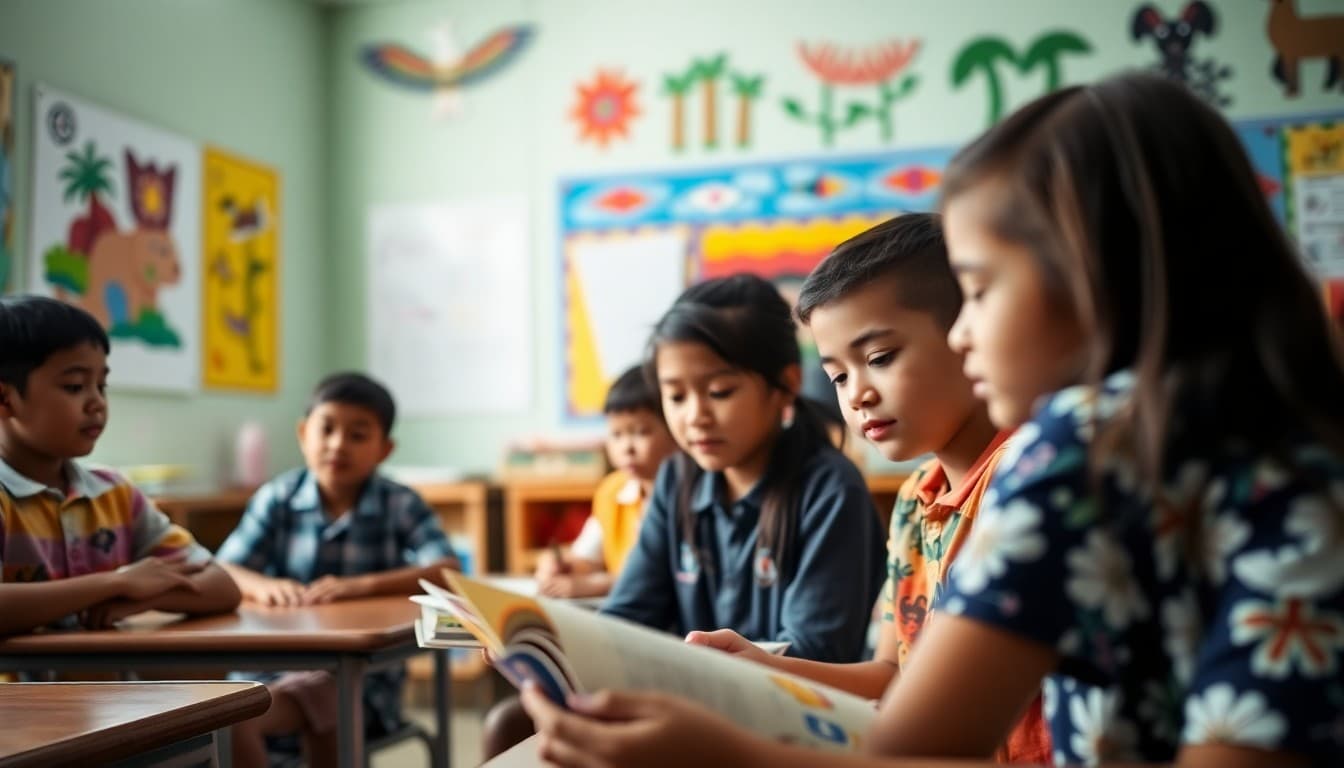
Hawaii Literacy Newsletter: Local Resources and Reading Guide
Hawaii classrooms are among the most culturally diverse in the United States. A literacy newsletter that speaks only to English-dominant families leaves out a significant portion of the people in your room. One that acknowledges the multilingual reality of Hawaii and connects families to the resources around them does something far more valuable.
Hawaii Content and Performance Standards for Reading
Hawaii's ELA standards set clear grade-level expectations that shape your daily reading instruction. In your newsletter, translate the current focus standard into a plain-language description. "This month we are working on comparing how different texts about the same topic are similar and different. Ask your child to tell you two things they read that said different things about the same subject."
Hawaii's Multilingual Families
Hawaii classrooms include students whose families speak Hawaiian, Ilocano, Tagalog, Japanese, Korean, Chuukese, Marshallese, and many other languages. Strong oral language in any language builds the cognitive foundation for reading. Your newsletter can affirm this directly: "Reading in Tagalog, Japanese, or Hawaiian with your child at home is valuable. The comprehension skills they build transfer to English reading. We welcome all of those languages as part of literacy development."
Native Hawaiian Language and Culture
Hawaiian language revitalization is an active and important movement in Hawaii. Punana Leo and Kula Kaiapuni immersion schools support Native Hawaiian language literacy. Even in non-immersion classrooms, including references to Hawaiian language and literature in your reading recommendations honors the cultural context that many students live in. The intersection of literacy and cultural identity is especially meaningful in Hawaii.
Hawaii State Public Library System
Hawaii's public library system covers all islands and provides free digital lending through Libby for all Hawaii residents. The Hawaii State Library in Honolulu is the flagship branch. Neighbor island libraries serve Maui, Kauai, Hawaii Island, Molokai, and Lanai. Before summer, mention the statewide summer reading program in your newsletter and include the signup link. Participation in summer reading is one of the most effective ways to prevent summer reading loss.
A Template for Your Hawaii Literacy Newsletter
Reading focus this month: [skill or strategy the class is working on]
Hawaii standard connection: [plain-language version of the relevant benchmark]
For multilingual families: [affirmation of home language literacy and a multilingual resource]
Hawaii resource: [library, program, or digital tool available to Hawaii families]
Home practice: [one specific reading activity for the week]
Hawaii's Summer Reading Challenge
Hawaii summers are long and warm. Students who stop reading in June often arrive in August measurably behind where they were in May. The Hawaii State Library summer reading program gives students goals, prizes, and community connection to keep reading through the break. In your end-of-year newsletter, make a strong recommendation. "Sign up for the library summer reading challenge. It takes five minutes and it keeps your child reading all summer."
Hawaii-Connected Books and Authors
Hawaii has a rich tradition of local literature. Including Hawaii-set books and books by local authors in your reading recommendations connects literacy to the world students know. Books about the Pacific, island ecosystems, Hawaiian legends, and the multicultural communities of Hawaii give students reading material that reflects their lives. That recognition is a powerful motivator for reluctant readers.
Keeping the Family Connection Strong
In Hawaii, family and community relationships tend to be central to daily life. A literacy newsletter that invites family participation rather than just reporting on standards lands differently here. End each newsletter with a family reading prompt. "Tonight, ask your child to read something out loud to the whole family. It can be a page, a paragraph, or even one sentence. The practice of reading aloud builds fluency and confidence." That kind of invitation honors the family dynamic many Hawaii students live in.
Get one newsletter idea every week.
Free. For teachers. No spam.
Frequently asked questions
What literacy standards does Hawaii use?
Hawaii uses the Hawaii Content and Performance Standards for ELA, which align with Common Core. These set grade-level expectations for reading foundational skills, literature, informational text, writing, and language. In your newsletter, describe the standard you are currently teaching in plain language families can use at home.
How do I support Hawaii's multilingual families in a literacy newsletter?
Hawaii has families whose home languages include Hawaiian, Ilocano, Tagalog, Japanese, Korean, Mandarin, Chuukese, and many others. Your newsletter can acknowledge home language literacy as valuable and include resources that support multilingual reading development. Affirming that bilingual reading counts builds trust with the diverse families in Hawaii classrooms.
What free literacy resources are available in Hawaii?
Hawaii State Public Library System provides free digital lending through Libby for all Hawaii residents. Many branch libraries offer children's programming and summer reading. The Hawaii Book and Music Festival celebrates local authors. Native Hawaiian language immersion programs like Punana Leo connect literacy to cultural identity for Native Hawaiian students.
How does Hawaii's single unified school district affect literacy communication?
Hawaii has one statewide school district, the Hawaii Department of Education, which means standards, assessments, and resources are consistent across the state. This makes it easier to reference statewide programs in your newsletter without worrying about district-by-district variation.
Does Daystage work for Hawaii school family communication?
Yes. Daystage is a digital school newsletter platform that Hawaii teachers can use to send professional, consistent literacy newsletters to all families. For a state with a geographically dispersed population across multiple islands, digital communication tools are especially important for keeping families connected to the classroom.

Adi Ackerman
Author
Adi Ackerman is a former classroom teacher and curriculum writer with 8 years in K-8 schools. She writes about school communication, parent engagement, and what actually works in real classrooms.
More for Classroom Teachers
Ready to send your first newsletter?
3 newsletters free. No credit card. First one ready in under 5 minutes.
Get started free