
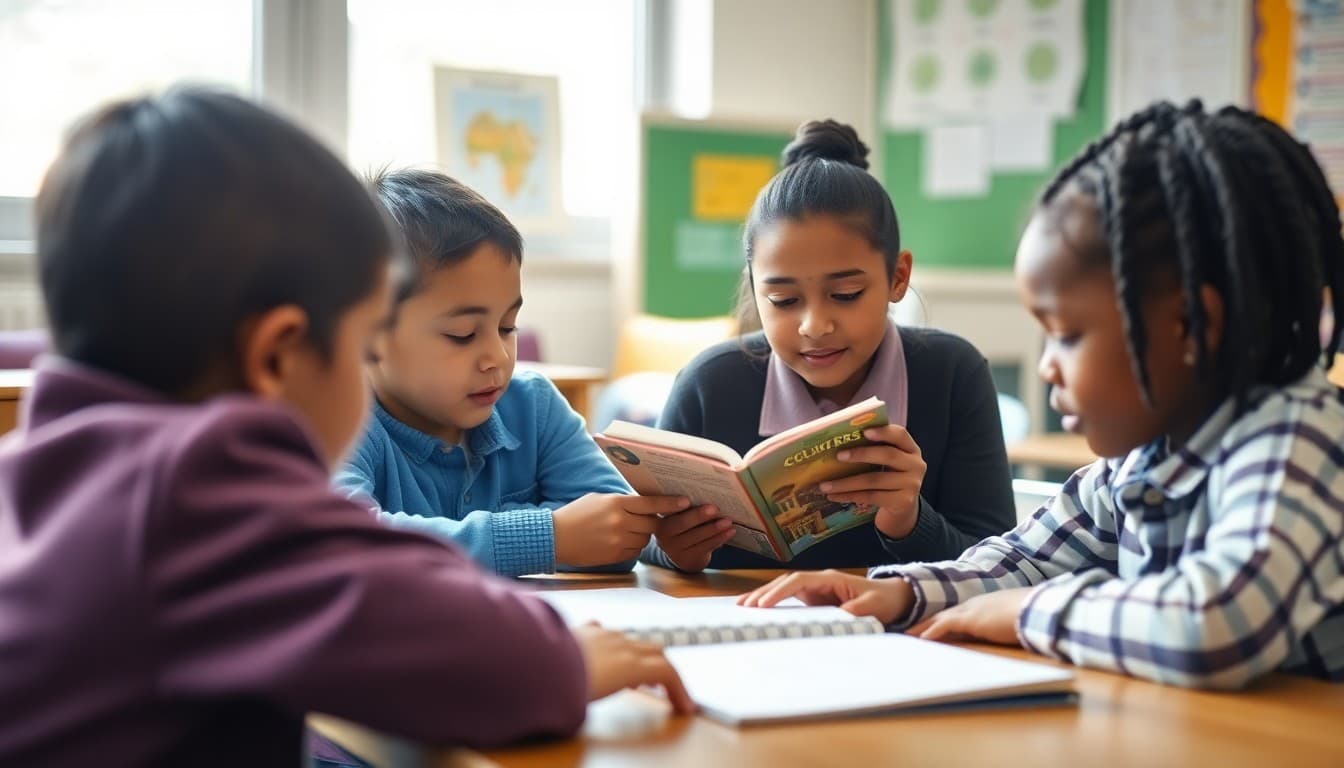
Georgia Literacy Newsletter: Local Resources and Reading Guide
Georgia has made significant investments in literacy instruction over the past decade. Families whose children are in Georgia classrooms deserve to understand what those investments mean in practice. A direct, clear literacy newsletter from the classroom teacher bridges the gap between state policy and the kitchen table conversation about reading.
Georgia Standards of Excellence for Reading
Georgia's GSE for ELA set grade-level expectations that guide everything from daily reading instruction to end-of-year assessments. In your newsletter, connect your current teaching focus to one of these expectations in a way families can understand. "This quarter we are working on asking and answering questions about stories using details from the text, a second-grade GSE standard." That connection gives families a framework for what reading looks like in your room.
Georgia's Literacy for Learning Initiative
Georgia's Literacy for Learning initiative supports teachers in using structured, evidence-based reading instruction, particularly in K through 5 classrooms. If your school has literacy coaches or has adopted a structured literacy curriculum through this initiative, a brief mention in your newsletter helps families understand why your reading instruction looks different from what they experienced as students. "We use a research-based approach that teaches phonics, fluency, vocabulary, and comprehension in a structured sequence."
Georgia Milestones and Reading Readiness
Georgia uses the Georgia Milestones Assessment System for grades 3 and up. Reading comprehension and literary analysis are tested in the ELA section. Before testing season, your newsletter should explain the assessment and describe how daily reading habits prepare students for it. "The Milestones reading section tests the same skills we practice every day: reading carefully, asking questions about the text, and explaining our thinking with evidence."
Georgia Public Library Resources
Georgia's public library system is robust. The Atlanta-Fulton Public Library is one of the largest in the Southeast. Digital lending through Libby is available to all Georgia residents with a library card. Before summer, include your local library's summer reading program information and the signup link in your newsletter. A teacher mention dramatically increases participation among families who might otherwise not know the program exists.
A Template for Your Georgia Literacy Newsletter
Reading focus this month: [skill or strategy the class is working on]
GSE connection: [plain-language description of the relevant standard]
Assessment note: [next Georgia Milestones or classroom assessment and what to expect]
Georgia resource: [one library, program, or digital tool available to families]
Home practice: [one specific, time-limited reading activity for the week]
Georgia's Cultural and Literary Heritage
Georgia has a rich literary tradition. Authors like Flannery O'Connor, Alice Walker, and newer voices like Jason Reynolds grew up in Georgia or write about the South. Including Georgia-connected authors in your reading lists connects literacy to students' own geography and culture. Books about Georgia history, Atlanta, the coastal plain, or Appalachian Georgia give students reading material rooted in the world they already know.
Building Reading Routines in Georgia Homes
Georgia families vary widely in how much structured reading time is part of the home routine. Your newsletter is the right place to make the ask concrete and achievable. "Ten minutes of reading tonight. Any book your child picks. Reading aloud together counts." A specific, low-bar ask is more likely to get done than a vague recommendation to read more. Repeated consistently across your newsletter, that message becomes the expectation.
Connecting Families to Reading
End every literacy newsletter with one question families can ask their child about reading. Something specific to what the class is working on. "Ask your child to tell you the main idea of the last chapter they read." Or "Ask them what they think will happen next in the story and why." These conversation prompts turn the newsletter from a one-way update into a tool that generates real reading talk at home, which is one of the most powerful things you can create.
Get one newsletter idea every week.
Free. For teachers. No spam.
Frequently asked questions
What literacy standards does Georgia use?
Georgia uses the Georgia Standards of Excellence (GSE) for English Language Arts, which align closely with Common Core. These cover reading foundational skills, literature, informational text, writing, language, and speaking. In your newsletter, translate the relevant standard into a concrete description of what students are practicing in class.
What is Georgia's Literacy for Learning initiative?
Georgia has invested in literacy coaching and structured reading programs through its Literacy for Learning initiative, which supports K through 5 teachers in using evidence-based reading instruction. If your school participates, mentioning it briefly in your newsletter helps families understand the framework behind your reading instruction.
What free literacy resources are available for Georgia families?
The Georgia Public Library Service provides digital lending through Libby for all Georgia residents. The Atlanta-Fulton Public Library, Chatham County Public Library, and DeKalb County Public Library all offer extensive children's programming. Georgia also participates in the Reach Out and Read program through pediatric offices.
How do I support bilingual families in my Georgia literacy newsletter?
Georgia has growing Latino, Korean, Vietnamese, and other language communities, especially in metro Atlanta. Including a note that reading in the home language supports English literacy, or linking to bilingual digital resources through the Georgia public library system, makes your newsletter more inclusive and effective.
Can Daystage help Georgia teachers create literacy newsletters for families?
Yes. Daystage is a school communication tool that Georgia teachers can use to create professional, consistent literacy newsletters with reading tips, resource links, and progress updates. You can set up a monthly template and send it quickly without needing additional technical tools.

Adi Ackerman
Author
Adi Ackerman is a former classroom teacher and curriculum writer with 8 years in K-8 schools. She writes about school communication, parent engagement, and what actually works in real classrooms.
More for Classroom Teachers
Reading Updates in Classroom Newsletters: What Parents Want to Know
Classroom Teachers · 5 min read
School Newsletter for National Literacy Month: Ideas and Template
Classroom Teachers · 6 min read
ELA Curriculum Update in Your Classroom Newsletter: What Parents Need to Know
Classroom Teachers · 6 min read
Ready to send your first newsletter?
3 newsletters free. No credit card. First one ready in under 5 minutes.
Get started free