
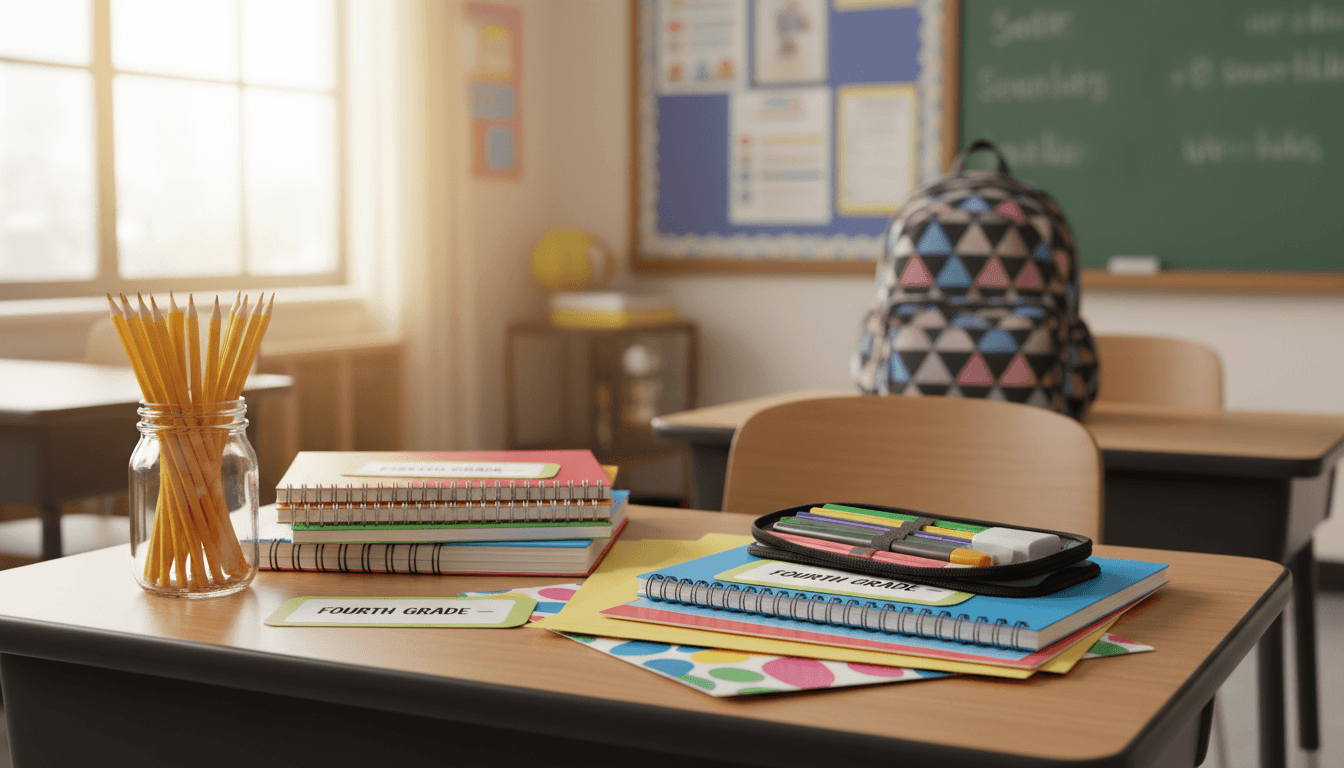
Fourth Grade Supply List Newsletter: What to Include and How to Communicate It to Families

A supply list newsletter sounds like one of the simpler communications teachers send home. In practice, it is one of the most read. Families rely on it to know exactly what to buy before school starts, and a clear, specific supply list newsletter reduces confusion, prevents last-minute runs to the store, and sets the tone for organized, thoughtful communication all year.
Send It Early
The window for back-to-school shopping gets earlier every year. By mid-July, families are already browsing supply sections, and by early August, specific items start selling out. If you can get your supply list newsletter out in late July or the first week of August, you are doing families a real favor.
Early communication also signals that you are organized and prepared, which builds family confidence before the school year even begins. A newsletter that arrives three days before the first day of school is less useful and creates unnecessary stress.
Be Specific About Every Item
The most common supply list complaint from families is vagueness. "Folders" could mean a dozen different products. "Notebooks" could be composition books, spiral notebooks, or section dividers. When you are specific, families can shop efficiently and you end up with exactly what you need in your classroom.
For each item, include the quantity, the type or format, and any color or size specification that matters. If you genuinely do not care about color, say so. If you do care, say that too. "Three two-pocket folders, any color" is perfectly clear. "One red and one blue two-pocket folder" is also clear. "Folders" is not.
Separate Required Items From Optional Ones
If some items on your list are required while others are nice to have, make that distinction explicit. Families with limited budgets need to know what is essential. A supply newsletter that mixes required materials with optional ones forces families to guess, and they may skip something critical or spend money on something you did not actually need.
A simple two-section format works well: Required Supplies and Optional or Bonus Items. That structure is easy to follow and removes ambiguity.
Explain Unusual or Specific Requests
If something on your list is specific in a way that might seem unusual, a brief explanation helps. If you need wide-ruled composition notebooks rather than college-ruled because students are still developing handwriting size, mention that. If you need a specific type of pencil because you use a particular sharpening method, families will appreciate knowing why.
These small explanations signal intentionality and build trust. Families who understand the reasoning behind your requests are more likely to follow them precisely.
Note What Is Provided by the School
If your school or classroom provides certain items, include that information clearly in the newsletter. Families sometimes buy things the school already supplies, which wastes money. And students sometimes arrive without items they expected to find in the classroom.
A brief note like "The school provides art supplies and science materials. You do not need to purchase those." saves confusion and helps families focus their shopping on what they actually need to bring.
Include a Note About Supply Assistance
If your school has a program that helps families who cannot afford the full supply list, include a brief, matter-of-fact mention of it. Frame it as a resource available to any family who needs it, without making it feel targeted or stigmatizing.
"If the supply list is a hardship for your family, please reach out to the front office. Resources are available." is enough. Normalizing the conversation reduces the barrier for families who need help and would otherwise arrive without materials rather than ask.
Make the Newsletter Easy to Reference on the Go
Most families will consult your supply list while standing in a store aisle. That means the format matters almost as much as the content. Use a clean list format with clear headers. Keep related items grouped together. Avoid running supply details into dense paragraphs that are hard to scan quickly.
A digital newsletter families can pull up on their phone is especially useful here. If the list is well-organized and easy to read on a small screen, families can check items off as they shop without needing to print anything or remember what was on the paper they left on the kitchen counter.
Get one newsletter idea every week.
Free. For teachers. No spam.
Frequently asked questions
When should I send the supply list newsletter for fourth grade?
Send it as early in August as possible, ideally three to four weeks before the first day of school. Families shop earlier and earlier each year, and stores run out of specific supplies quickly. Early communication means families can shop at their own pace and take advantage of back-to-school sales.
How specific should I be on a supply list?
Very specific. If you need a one-inch three-ring binder with pockets, say so. If you need composition notebooks rather than spiral ones, specify that. Vague requests lead to returns, wrong purchases, and families who show up with supplies you cannot use. Specificity saves everyone time.
Should I explain why students need certain supplies?
A brief explanation for any unusual or specific item is helpful. If you need a specific type of notebook because of how you organize student work, a one-sentence note goes a long way. It also signals that you have thought through the supply list intentionally, which builds family confidence in your organization.
How do I handle supply list requests for families who may not be able to afford everything?
Keep the list focused on genuine needs rather than nice-to-haves. Note which items are provided by the school if any are. If your school has a supply assistance program, mention it briefly and include how to access it. Doing this in the newsletter normalizes the conversation and removes the barrier for families who need support.
What is the best way to send a supply list newsletter to fourth grade families?
Daystage lets you send a clean, well-formatted digital newsletter that families can reference on their phone while they shop. Unlike a paper list that gets lost, a digital newsletter is searchable and easy to return to. Many teachers send their supply list as part of a broader back-to-school newsletter that also includes classroom information and the first-day schedule.

Adi Ackerman
Author
Adi Ackerman is a former classroom teacher and curriculum writer with 8 years in K-8 schools. She writes about school communication, parent engagement, and what actually works in real classrooms.
More for Classroom Teachers
Fourth Grade Classroom Newsletter Ideas: What to Include Every Month
Classroom Teachers · 7 min read
Fourth Grade Curriculum Overview Newsletter: What Families Need to Know About the Year Ahead
Classroom Teachers · 7 min read
Fourth Grade Classroom Rules Newsletter: How to Share Expectations With Families
Classroom Teachers · 6 min read
Ready to send your first newsletter?
3 newsletters free. No credit card. First one ready in under 5 minutes.
Get started free