

Fourth Grade Progress Report Newsletter: Give Scores the Context They Need
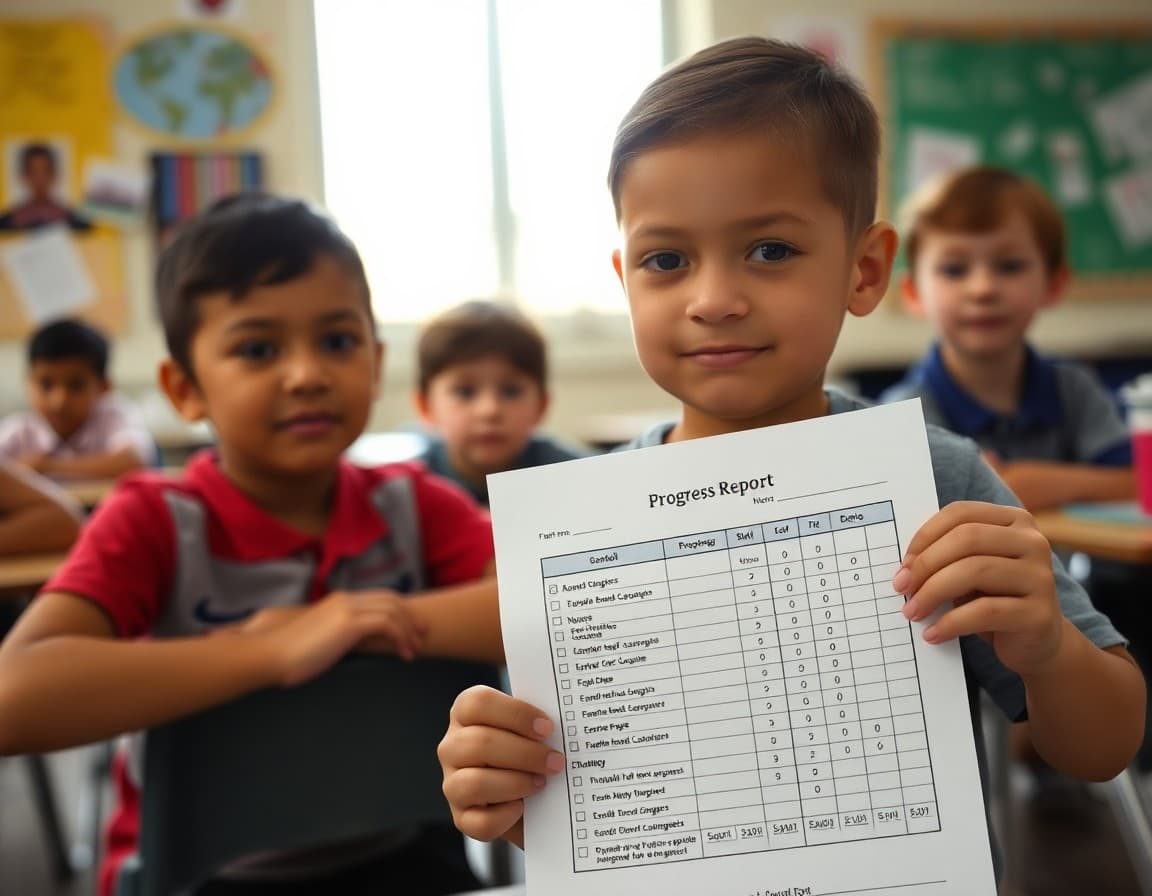
Fourth grade progress reports carry more detail and nuance than earlier ones, and families often do not know how to read them. A newsletter that demystifies the report before it arrives produces more useful parent-teacher conversations and fewer emails that begin with "I don't understand what this means."
The Grading Scale, Defined Again
Include the scale every time. In fourth grade, a standards-based scale is common: 4 (exceeds), 3 (meets), 2 (approaches), 1 (does not yet meet). Be explicit: 3 is the target. A student with mostly 3s is doing exactly what the grade level requires. A student with a 4 has demonstrated skills above the grade-level standard. Neither is better than "on grade level."
Reading: What Each Mark Reflects
The reading section of a fourth grade report may have 4-6 separate marks. Explain each. Literary comprehension: understanding and analyzing fiction and literary nonfiction. Informational text: extracting and applying information from nonfiction. Vocabulary: using context and word parts to determine meaning. Foundational skills: fluency and word recognition. Writing: organization, development, and conventions. Each of these can be different, and each has a different intervention.
Math: The Fractions Section Deserves Attention
Fourth grade math reports often include a fractions section, which is new to many families. The fraction concepts assessed: equivalence, ordering, addition and subtraction of fractions with like denominators, and introduction of fractions greater than 1. A below-expectations mark in fractions at fourth grade warrants specific home practice because fraction understanding is foundational to fifth and sixth grade math.
Work Habits: The Leading Indicator
Emphasize the work habits section to families. Effort, organization, time management, and task completion are strong predictors of fourth grade outcomes. A student who scores below expectations on academic skills but above expectations on work habits will typically show strong growth. The reverse pattern is worth addressing directly.
How to Have a Useful Conversation With Your Child
Give families a framework. Ask about areas of growth, not just areas of concern. "Your teacher says your writing has gotten much stronger this quarter. What have you been working on?" For below-expectations areas: "This is something we are going to work on together. What do you think would help?" Fourth graders can participate in goal-setting in a meaningful way.
Get one newsletter idea every week.
Free. For teachers. No spam.
Frequently asked questions
What does a fourth grade progress report typically assess?
Fourth grade reports cover: ELA (reading literature, informational text, foundational skills, writing, language), math (operations and algebraic thinking, numbers and operations, fractions, measurement and data, geometry), science and social studies (if reported), and work habits/social-emotional skills. Fourth grade reports are more detailed than earlier grades because academic differentiation is more pronounced.
How do fourth grade report marks connect to state testing performance?
Progress report marks reflect ongoing classroom performance while state tests measure a single-day assessment against standards. A student can have a 3 (meeting expectations) on the progress report and score below state proficiency on the state test, or vice versa. Both are valid but measure different things. The progress report reflects consistent daily performance; the state test reflects test-taking skill alongside academic knowledge.
What should a fourth grade parent do if their child receives an unexpected low mark?
Request a conference with a specific question: 'Can you show me examples of the work that led to this mark?' Seeing actual work samples is far more informative than a numerical score. Ask what targeted practice at home would be most useful. A specific, concrete action plan is more useful than a general 'we need to work harder' takeaway from the conference.
What does it mean if a fourth grader scores well academically but below expectations on work habits?
Work habits marks below expectations in fourth grade often indicate executive function challenges: difficulty with organization, time management, task initiation, or completing work independently. These are addressable with specific strategies rather than just trying harder. A conversation with the teacher and potentially the school counselor can identify the specific habit to focus on.
Does Daystage let me attach a glossary of report card terms to the pre-report newsletter?
Yes. Linking a PDF glossary or including a plain-text explanation section in the Daystage newsletter gives families a reference they can return to after receiving the report. Many teachers create this once and reuse it each quarter with minor updates, which significantly reduces the time spent on individual explanations.

Adi Ackerman
Author
Adi Ackerman is a former classroom teacher and curriculum writer with 8 years in K-8 schools. She writes about school communication, parent engagement, and what actually works in real classrooms.
More for Classroom Teachers
What to Write in Your Classroom Newsletter During Report Card Season
Classroom Teachers · 6 min read
Parent-Teacher Conference Reminders in Your Classroom Newsletter
Classroom Teachers · 5 min read
Third Grade Progress Report Newsletter: Context Makes the Scores Make Sense
Classroom Teachers · 6 min read
Ready to send your first newsletter?
3 newsletters free. No credit card. First one ready in under 5 minutes.
Get started free