

Third Grade Progress Report Newsletter: Context Makes the Scores Make Sense
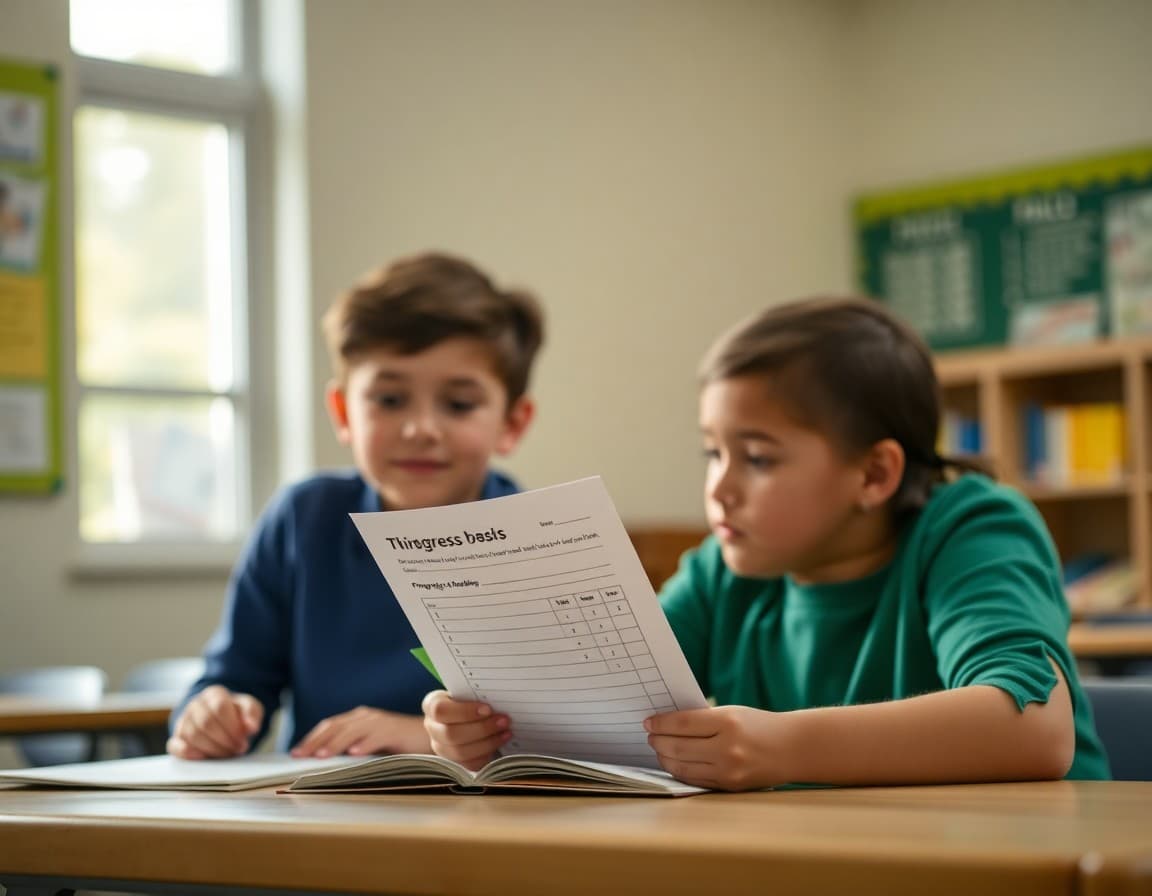
Third grade progress reports carry more weight than earlier reports because the academic differentiation is more visible and the connection to state standards is more direct. A newsletter that contextualizes the scores before they arrive reduces panic and produces more productive parent-teacher conversations afterward.
What This Report Covers and When
Remind families which reporting period this is and what it covers. First quarter reports reflect September through early November. Students are still building routines and stamina. Second quarter reports show what students can do after months of instruction. Spring reports reflect the most growth. Each report means something different in context.
Your Grading Scale, Again
Include the grading scale every time, even if you sent it last quarter. Families do not always remember, and the stakes feel higher in third grade. Define each level clearly and make sure families understand that 3 (meeting expectations) is the goal, not a mediocre outcome.
Reading: What the Marks Reflect
Third grade reading marks reflect a wider range of skills than earlier grades. Break down the section: fluency means how smoothly and accurately the student reads connected text. Comprehension means how deeply they understand and can discuss what they read. Word study means how well they apply phonics and morphological knowledge to decode and spell. A student can be strong in one area and still developing in another.
Writing: The Most Common Source of Concern
Writing marks often produce the most questions. Third grade writing expectations include: organized multi-paragraph responses, use of text evidence, clear introduction and conclusion, and grade-appropriate conventions. If a student is below expectations in writing, they are likely missing one of these specific components. The teacher comments section should identify which one.
Math: Breaking Down the Sections
Third grade math reports may have 4-6 separate marks: multiplication/division, addition/ subtraction with regrouping, fractions, measurement, geometry, and problem solving. Families who receive a below-expectations mark in "math" need to know which specific strand to focus on at home. If your report separates these, explain each section briefly.
Effort and Work Habits: Why These Matter
Families sometimes skip the non-academic section. Explain why it matters: a student who scores 2 on content skills but 4 on effort is likely to show strong growth by end of year. A student who scores 3 on content but 1 on effort has underlying habits that will limit their progress. Effort and work habits are among the strongest predictors of academic outcomes across elementary school.
Get one newsletter idea every week.
Free. For teachers. No spam.
Frequently asked questions
What is typically assessed in a third grade progress report?
Third grade progress reports cover reading (fluency, comprehension, word study), writing (composition, organization, conventions), math (operations and algebraic thinking, number and operations in base ten, fractions, measurement), and non-academic skills (effort, work habits, collaboration, organization). Third grade adds more specific skill markers than earlier reports because the academic demands are more clearly differentiated.
How do state test scores relate to progress report scores?
Progress report scores and state test scores measure related but different things. Progress reports reflect ongoing classroom performance including effort, participation, and formative assessment. State test scores measure a snapshot of skill against state standards on a specific day. It is possible for a student to have strong progress report marks and average state test scores, or vice versa. Neither fully captures the other.
What does a below-expectations mark in writing mean in third grade?
Below expectations in writing typically means the student is struggling with one or more of: generating ideas independently, organizing writing into coherent paragraphs, using grade-level conventions (capitalization, punctuation, basic sentence variety), or producing writing of adequate length. The teacher's comments should specify which aspect needs the most attention. Ask for specifics if the mark is not explained.
How should third grade parents respond to a progress report with several concerns?
Request a conference with specific questions prepared: Which skill is the highest priority to address? What is being done in class to support this area? What can we do at home that would be most useful? How will we know if progress is happening? These four questions produce a concrete action plan rather than a general 'try harder' conversation.
Does Daystage let me attach a progress report explanation guide to the newsletter?
Yes. You can link a PDF explainer, include a glossary of terms directly in the newsletter body, or embed a conference sign-up link. Many teachers create a one-page 'how to read your progress report' guide once and link to it every quarter, which saves significant time on individual explanations.

Adi Ackerman
Author
Adi Ackerman is a former classroom teacher and curriculum writer with 8 years in K-8 schools. She writes about school communication, parent engagement, and what actually works in real classrooms.
More for Classroom Teachers
What to Write in Your Classroom Newsletter During Report Card Season
Classroom Teachers · 6 min read
Parent-Teacher Conference Reminders in Your Classroom Newsletter
Classroom Teachers · 5 min read
Second Grade Progress Report Newsletter: Help Families Read the Report Right
Classroom Teachers · 6 min read
Ready to send your first newsletter?
3 newsletters free. No credit card. First one ready in under 5 minutes.
Get started free