

How to Write a Food Allergy Classroom Newsletter to Parents
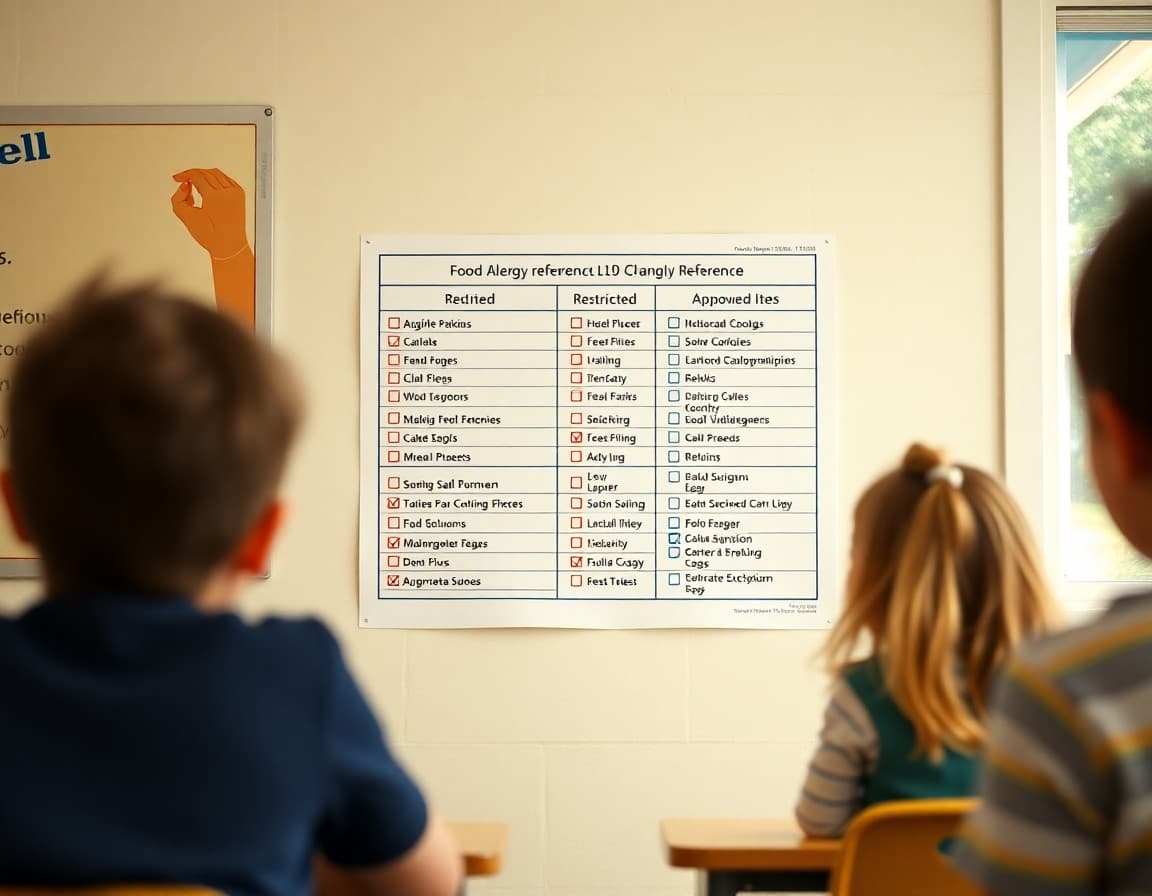
Food allergy newsletters are not primarily about policies. They are about prevention. The goal is to give families enough specific information that they can make safe choices at the grocery store, at a birthday party planning session, and at a classroom celebration without having to call you for guidance every time. Specific information prevents accidental exposures. Vague warnings do not.
Name every restricted allergen specifically
Do not assume families know what falls under a category. "No peanuts" is not the same as "no peanuts, peanut butter, peanut oil, or products that list peanuts or may contain traces of peanuts." "No tree nuts" needs to list the specific nuts included: almonds, cashews, walnuts, pecans, pistachios, and others. Families who are reading labels at the store need the same level of specificity that a medical allergy list would provide.
Provide a concrete safe list
A list of restricted items without alternatives is harder to act on than a list that includes both. "The following items are consistently safe for our classroom: fresh fruit, plain crackers like Goldfish, pretzels, baby carrots, raisins, and [specific brand] cookies." Families who have a shopping-ready safe list are more likely to comply than families who have to do independent research every time they buy a snack.
Explain label reading for cross-contamination
Cross-contamination warnings on labels are confusing to many families. Explain what to look for. "'May contain traces of' or 'processed in a facility that also processes' means the item is not safe for a severe allergy. Both of these warnings should be treated as a hard stop for our classroom." Most families want to do the right thing and appreciate guidance on how to read a label correctly.
Address birthday and celebration treats directly
Birthday treats are the highest-risk food event in most classrooms. Give families a clear plan. "If you would like to bring something for your child's birthday, please choose from the approved safe list below, or bring a non-food item like a small book, stickers, or pencils. I celebrate every birthday and every option is welcome." A positive alternative to restrictions prevents resentment and still keeps every student safe.
Describe what happens if restricted food enters the classroom
Families need to know what you do if a restricted item arrives. "If a snack or treat arrives that does not meet our allergy policy, I will store it safely until dismissal and will reach out to the family. I do not send students home with unopened food as a penalty. I simply save it for pickup." This protocol is both practical and reasonable, and communicating it in advance prevents families from feeling blindsided.
Acknowledge that compliance requires effort
Families who feel their effort is recognized are more consistent about it. "I know this policy requires an extra moment of thought every time you pack a snack. Thank you for making that effort. It directly protects a student in our community who cannot protect themselves from exposure in this environment."
Update families when circumstances change
Allergy status can change within a school year. A student's allergy may be removed from the plan, a new allergy may be added, or the severity level may be updated. Tell families at the start of the year that you will communicate any changes as they occur. "If the allergy policy changes at any point this year, I will send a newsletter update immediately."
Daystage makes it simple to send a food allergy reminder before every classroom event. Families receive a targeted reminder that takes thirty seconds to send and prevents hours of problem-solving after an accidental exposure.
Get one newsletter idea every week.
Free. For teachers. No spam.
Frequently asked questions
What should I include in a food allergy classroom newsletter?
The specific allergens to avoid, a list of commonly safe alternatives, what to check on labels, how to handle uncertainty about a specific item, and your process for classroom events involving food. The more specific your guidance, the fewer accidental exposures you will have.
How do I communicate the severity of a food allergy without frightening families?
Be factual rather than dramatic. 'Exposure to [allergen] can cause a life-threatening reaction in one of our students' is accurate and appropriately serious without being alarmist. Families who understand the stakes without feeling panicked are more reliable partners in prevention.
How should I handle classroom birthday treats under a food allergy policy?
Give families a specific approved option and a non-food alternative. 'If you would like to celebrate your child's birthday in class, please choose from the approved list below or bring a non-food item like a book or pencils. I will always appreciate and celebrate any choice.' Most families are happy to comply when they have clear options.
What if a student has multiple allergies?
Address each one specifically in your newsletter rather than making a general statement. Families who need to avoid both peanuts and eggs need to know both are restricted. Grouping everything under 'some food allergies exist' does not give families enough to act on.
Can Daystage help me send food allergy reminders before classroom events?
Yes. A quick Daystage reminder sent a few days before a holiday party or classroom celebration prevents families from bringing restricted items by accident.

Adi Ackerman
Author
Adi Ackerman is a former classroom teacher and curriculum writer with 8 years in K-8 schools. She writes about school communication, parent engagement, and what actually works in real classrooms.
More for Classroom Teachers
Ready to send your first newsletter?
3 newsletters free. No credit card. First one ready in under 5 minutes.
Get started free