
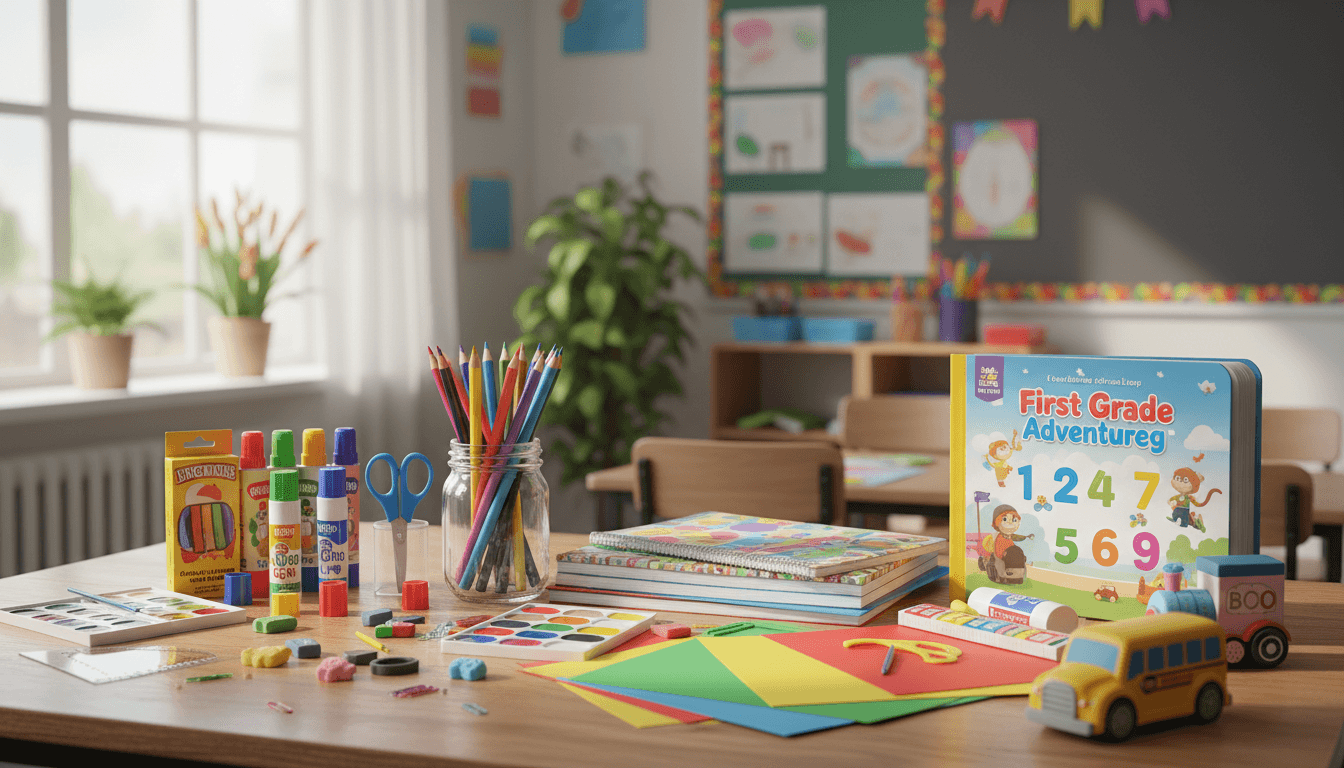
1st Grade Supply List Newsletter: What to Tell Parents Before the First Day
The supply list newsletter is one of the first impressions parents get of you as a teacher. Send a vague list and you will spend the first two weeks of school redirecting wrong supplies or quietly filling gaps. Send a clear, thoughtful newsletter and parents show up ready, confident, and already feeling connected to your classroom.
Here is what to put in that newsletter and how to write it so families actually read it.
Start With a Warm, Brief Introduction
Before the list, write two or three sentences introducing yourself. Parents are handing you their six-year-old for six hours a day. A quick sentence about why you love first grade or what you are most excited about this year makes the list feel less like a purchase order and more like the start of a relationship.
Keep it short. The supply list is the point of this newsletter. You will have more to say at orientation.
Be Specific About Pencils, Crayons, and Glue Sticks
These three items cause the most confusion every year. Here is what to ask for:
- 24 pre-sharpened yellow No. 2 pencils (not mechanical, not colored)
- One box of 24-count crayons, standard size (Crayola works best for 1st grade grip strength)
- Four to six glue sticks, large size
Mechanical pencils are not appropriate for 1st grade. The tips break constantly, and replacing leads is a distraction students cannot manage independently yet. Colored pencils are fine as an add-on but should not replace regular pencils on your list.
Folder vs. Binder: Pick One and Explain Why
First graders do not have the fine motor coordination to manage binder rings reliably. A two-pocket folder is almost always the better choice for take-home papers, reading logs, and homework. If you use multiple folders (one per subject area), specify the colors so you can quickly scan which folder a student has out.
Example: "One red two-pocket folder for reading log and homework. One blue two-pocket folder for math."
Include the Reading Log and Homework Folder Expectations Early
First grade is often the first time families deal with a nightly reading log. Your supply list newsletter is a good place to introduce the concept, even if you will explain it more fully at orientation. A sentence like, "Your child will bring home a reading log each Monday. More details are coming, but please make sure the red folder stays in the backpack each night," sets the expectation without overwhelming parents with information before school starts.
What Not to Send
Experienced first grade teachers know that some well-intentioned supplies create problems. Consider adding a short "please do not send" section to your newsletter:
- Mechanical pencils (tips break, lead is a small-parts hazard)
- Glitter glue (it does not dry in time and gets on everything)
- Scented markers or scratch-and-sniff stickers (strong scents trigger sensory issues for some students)
- Personal toys or fidgets not specifically approved by the teacher
- Snacks beyond what is on the approved snack list
Parents are not trying to send problem items. They often just do not know what works in a classroom. A brief list removes the guesswork.
Community vs. Personal Supplies: Clarify the Difference
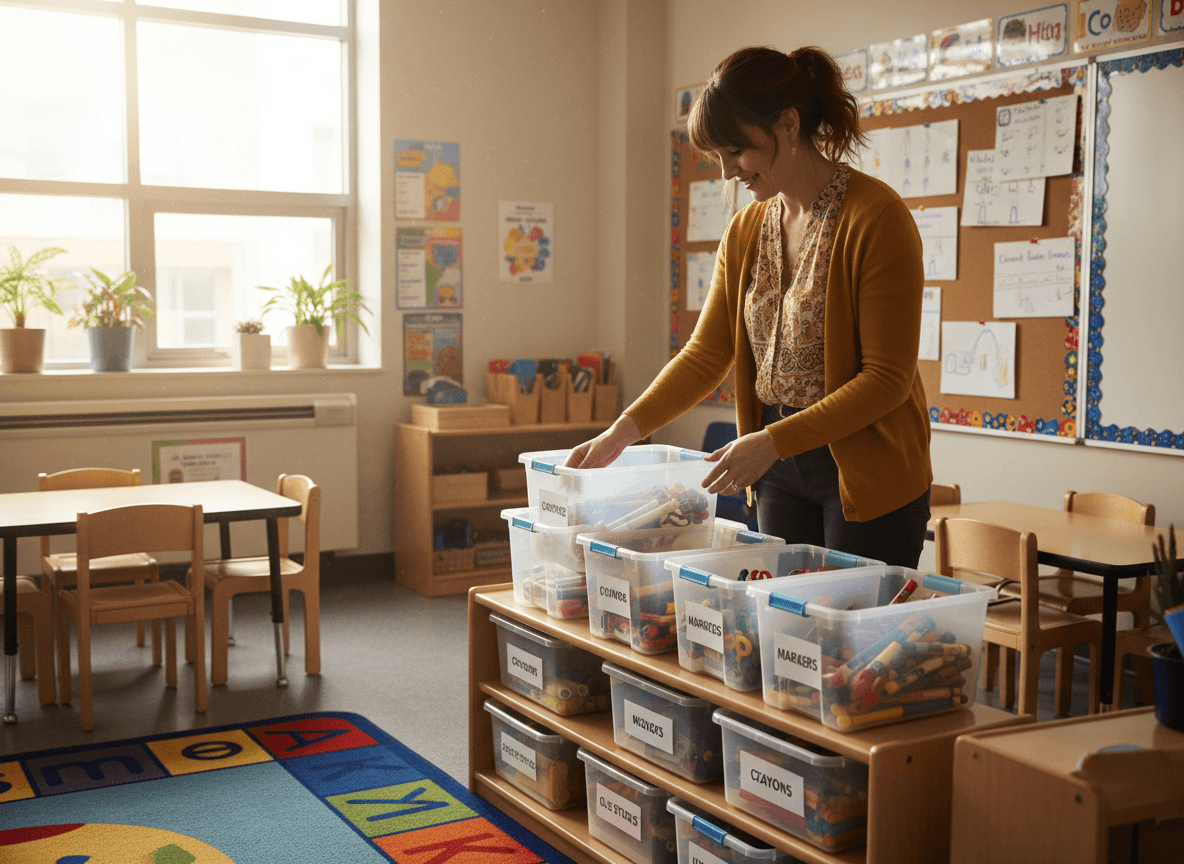
Many first grade classrooms use a community supply model, where items like glue sticks, markers, and copy paper go into shared bins rather than individual cubbies. If that is your system, say so clearly. Ask parents not to label communal items, and explain that this teaches students to share and care for shared materials.
Personal items (backpack, water bottle, headphones, spare clothes) should be labeled with the child's first and last name, including items inside the backpack.
Handling Families Who Cannot Afford Supplies
Include a discreet, welcoming note at the bottom of your supply list. Something like: "If any item on this list is out of reach right now, please email me. We will make sure your child has everything they need before the first day." Do not call attention to it in a meeting or a group message. Just put it in writing and be ready to follow through.
Know your school's process before you send the newsletter. Is there a supply fund in the front office? A local organization that donates kits? A teacher resource room? When a family reaches out, you want a specific answer ready, not a vague reassurance.
End With the Next Step
Close the newsletter with one clear action: when orientation is, where to ask questions, or what to expect in the next newsletter. Parents who know what comes next feel more settled, and settled parents make for a smoother first week.
Get one newsletter idea every week.
Free. For teachers. No spam.
Frequently asked questions
When should I send the first grade supply list newsletter?
Send it at least two weeks before the first day of school. Families need time to shop, and many parents buy supplies during back-to-school sales that run in late July and early August. If your school holds a meet-the-teacher night, hand it out then and follow up with a digital version the same day so nothing gets lost in a backpack.
How specific should I be about supply quantities?
Very specific. Instead of writing 'pencils,' write '24 pre-sharpened pencils, yellow No. 2.' Parents appreciate the precision, and you avoid ending up with a box of carpenter pencils or a single pack of three. First graders go through pencils fast, especially in the first semester, so err on the side of requesting more rather than fewer.
Should I ask for supplies to be labeled with the child's name?
For personal items like water bottles, headphones, and backpacks, yes. For shared community supplies like glue sticks, crayons, and copy paper, ask parents not to label them. Labeling communal items creates confusion and can lead to arguments over ownership. Be explicit about which category each item falls into so families know what to expect.
How do I handle families who cannot afford the supplies?
Keep it private and keep it simple. Include a line like, 'If any items on this list are out of reach, please reach out to me directly. We will make sure your child has everything they need.' Do not single anyone out. Most schools have a supply fund, a local donation program, or a community partner who can help. Knowing the process before you send the newsletter means you can respond quickly when a family contacts you.
What newsletter tool works best for 1st grade teachers?
Daystage is built for exactly this kind of communication. You can send the supply list as a formatted newsletter with images, links to purchase items, and a clear layout that is easy to read on a phone. Parents get a shareable link, so even families who miss the email can find it later. It takes less time to set up than a PDF and looks far more professional than a plain text email.

Adi Ackerman
Author
Adi Ackerman is a former classroom teacher and curriculum writer with 8 years in K-8 schools. She writes about school communication, parent engagement, and what actually works in real classrooms.
More for Classroom Teachers
1st Grade Classroom Rules Newsletter: How to Communicate Expectations to Parents
Classroom Teachers · 5 min read
1st Grade Homework Policy Newsletter: Setting Expectations Parents Can Actually Follow
Classroom Teachers · 5 min read
How to Explain Your Classroom Behavior Policy in a Newsletter
Classroom Teachers · 6 min read
Ready to send your first newsletter?
3 newsletters free. No credit card. First one ready in under 5 minutes.
Get started free