

First Grade Social Skills Newsletter: What Families Need to Reinforce at Home
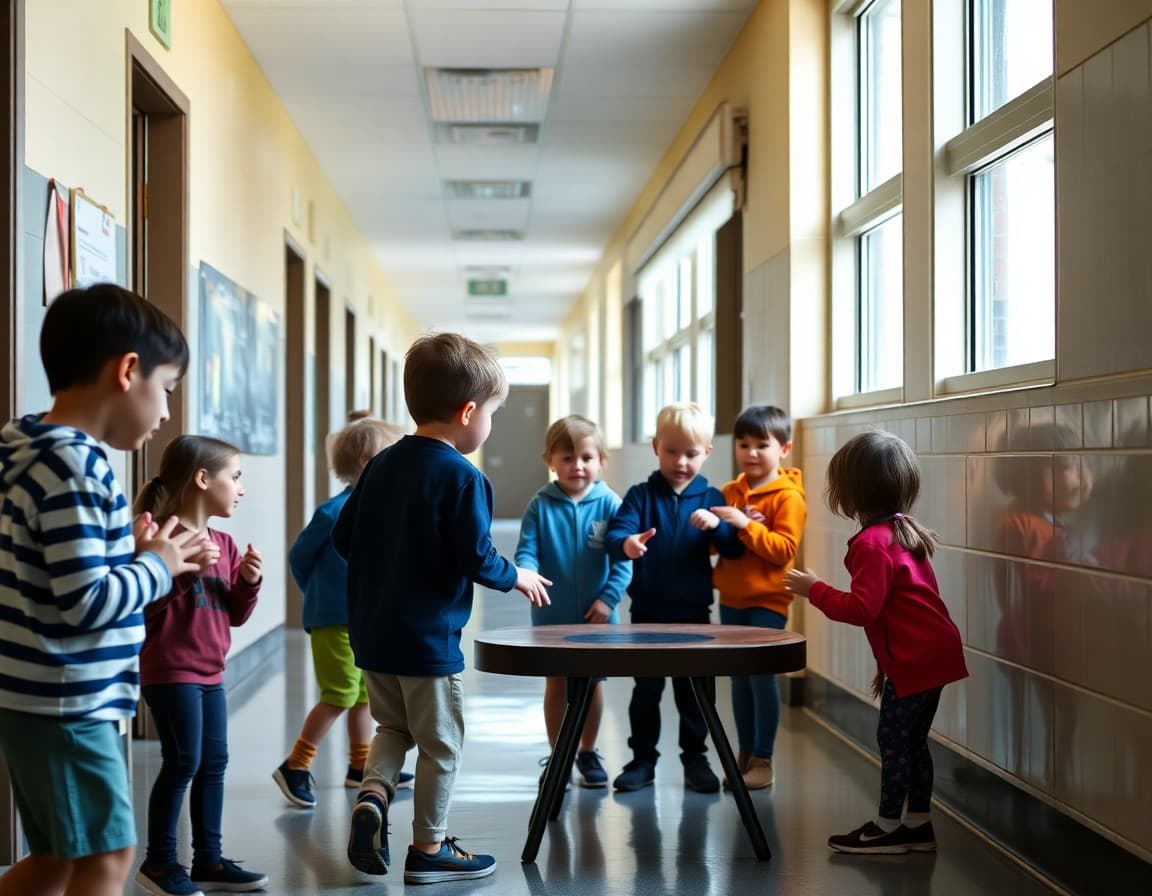
Social skill development in first grade is not separate from academic development. Students who can manage conflict, join group activities, and communicate their feelings are more available for learning. A newsletter that shares your social curriculum with families and gives them concrete home practice strategies doubles the reinforcement your students receive.
The Social Skills You Are Teaching This Quarter
Name the specific skills you are working on right now. Vague descriptions like "we are working on being kind" are less useful to families than specific skill targets: "This month we are practicing entering group activities, which includes asking to join, waiting for an appropriate moment, and accepting when the answer is not right now."
Connect each skill to a situation first graders encounter daily. The more concrete the description, the more specifically parents can reinforce it.
Entering Group Activities
Many first graders struggle with this skill. They either stand on the edge of a group unsure how to enter, or barrel in regardless of what the group is doing. The skill sequence: observe what the group is doing, find a role you can fill, ask to join using words, and accept the response gracefully.
Give families a practice script: "Can I play too?" or "Can I be on your team?" are simple, direct entry requests. Practice these at home before a playdate or park visit.
Turn-Taking in Conversation
First graders often talk over each other, interrupt, or monopolize conversations. Turn-taking in conversation is a learned skill that needs deliberate practice. The key behaviors: wait until the speaker pauses, stay on the topic the other person introduced, ask a question about what they said before sharing your own thought.
Home practice: use a talking stick at dinner. Only the person holding the object speaks. Practice this for one meal a week.
Handling Disappointment and Losing
Losing a game gracefully is a specific skill, not a character trait. Some children at this age have had very few experiences with losing and lack the vocabulary and strategies to manage it. Teach families the language: "That was hard to lose. What's something you did well in that game?" Then play games specifically to practice losing: card games, board games, and sports all provide regular practice.
Reading Social Cues
Some first graders miss social cues that seem obvious to adults. They do not notice that a classmate looks upset, or that the group is deeply engaged and does not want to be interrupted. Narrate social situations explicitly in your newsletter and suggest parents do the same: "Before you ask Maya to play, look at her face. Does she look busy? Does she look happy to see you?"
What to Do When Conflict Happens
Give families the same conflict resolution process you teach in school. Three steps that work: stop and breathe, name the problem in one sentence, and suggest one solution. "I feel frustrated because you took my book. Can you give it back and I will share it with you in 5 minutes?" That structure is teachable and children this age can use it with practice.
Get one newsletter idea every week.
Free. For teachers. No spam.
Frequently asked questions
What social skills do first graders need most?
Key social skills for first grade include: taking turns in conversation and games, reading basic social cues (someone looks upset, someone is not interested in playing), solving peer conflicts without adult intervention, joining a group activity appropriately, and understanding and managing basic emotions like frustration, disappointment, and excitement. These skills are prerequisites for the more complex social demands of elementary school.
How can parents support social skill development at home?
Role-play is the most effective home strategy. Practice specific scenarios: how do you ask to join a game, what do you say when someone takes your pencil, how do you handle losing a board game gracefully. Narrating social situations during everyday activities also helps: 'Did you notice that Maya looked sad when you moved to a different spot? How could you help?' Deliberate coaching in real-time builds the skill faster than abstract conversation.
What if a first grader seems to have no friends at school?
This warrants a direct conversation with the teacher before assuming a problem exists. Some children have one or two close friends and appear isolated but are not socially struggling. Others may need targeted support with specific skills. Common causes of social difficulty at this age: underdeveloped conversation skills, difficulty with turn-taking, or missing social cues. Each has a different intervention approach.
Is social skill development assessed in first grade?
Most first grade progress reports include a social-emotional section covering skills like follows directions, works cooperatively, resolves conflicts appropriately, and shows empathy for others. These are typically marked separately from academic skills. Below-expectation marks in this section are worth discussing with the teacher because they often indicate a specific skill gap rather than a character problem.
Can Daystage help me communicate social skill goals to first grade families?
Yes. A monthly social skills focus section in your Daystage newsletter, describing the skill you are working on and giving families 2-3 ways to practice at home, takes about 10 minutes to write and significantly improves home-school alignment. Families who know you are working on 'joining group activities' can prompt that skill on the playground or at a birthday party.

Adi Ackerman
Author
Adi Ackerman is a former classroom teacher and curriculum writer with 8 years in K-8 schools. She writes about school communication, parent engagement, and what actually works in real classrooms.
More for Classroom Teachers
Social-Emotional Learning Updates in Your Classroom Newsletter
Classroom Teachers · 6 min read
First Grade Classroom Community Newsletter: Bring Families Into Your Classroom Culture
Classroom Teachers · 6 min read
How to Explain Your Classroom Behavior Policy in a Newsletter
Classroom Teachers · 6 min read
Ready to send your first newsletter?
3 newsletters free. No credit card. First one ready in under 5 minutes.
Get started free