

First Grade Science Fair Newsletter: What Families Need to Know
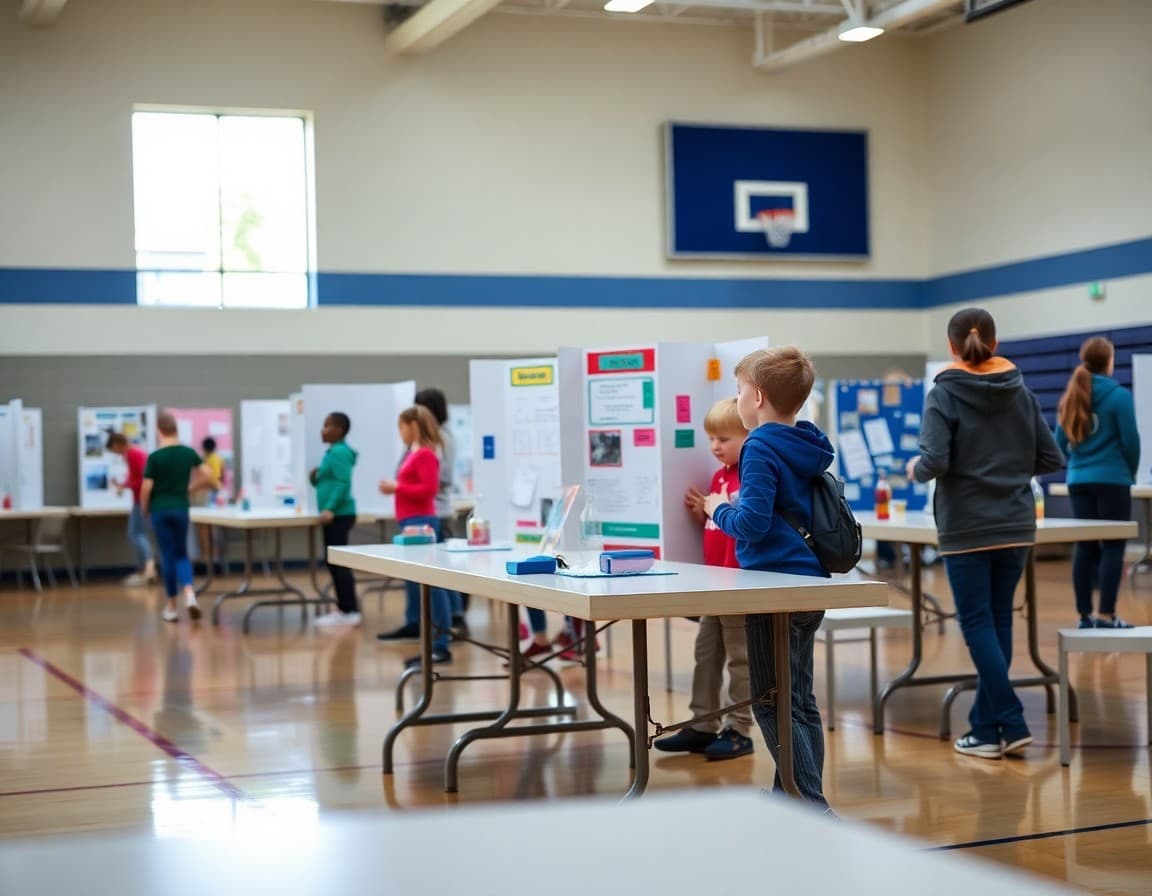
First graders are genuinely curious scientists. They want to test things, observe results, and tell people what they found. Your science fair newsletter channels that energy into a project families can actually execute without it becoming a parent project with a child standing next to it.
Set the Expectations in the First Paragraph
Be explicit about what a first grade science fair project looks like: a question, a test, results, and a simple display. What it is not: a diorama, a report, or a demonstration of a phenomenon the child watched on YouTube. First grade projects should have a variable the child actually changed and results they actually observed. That distinction matters.
The Scientific Method for First Graders
Many families remember the scientific method as a formal 6-step process. For first grade, simplify it to 4 steps that families can walk through together: question (what do you want to find out?), prediction (what do you think will happen?), test (what did you try?), and results (what actually happened?). Your newsletter can include this simplified framework so families know the structure without being overwhelmed.
Project Ideas That Work at This Level
Include 5-6 concrete project ideas in the newsletter. First graders do well with projects that produce visible results quickly. Options that consistently work: which magnet is strongest (test different sizes), does water temperature affect how fast sugar dissolves, which bridge design (cardboard, popsicle sticks, straws) holds the most pennies, does music affect plant growth, what surface does a toy car roll fastest on.
Each idea should include: the question, the materials needed, and roughly how long it takes. A materials list prevents last-minute panics.
Display Requirements
Specify exactly what you expect on the display board. A first grade display typically includes: the question at the top, the prediction in the child's words, a materials list, photos or drawings of the experiment, the results, and one sentence about what the student learned. If your school provides display boards, say so. If families need to purchase one, give the dimensions.
A Sample Timeline
Week 1: Choose a question and make a prediction. Gather materials.
Week 2: Run the experiment and take photos. Record what you noticed.
Week 3: Create the display board. Practice explaining the project in 2-3 sentences.
Fair Day: Arrive by 8:00 AM to set up. Judging at 10:00 AM. Families welcome 1:00-2:30 PM.
What Happens on Fair Day
Describe the day in detail: setup time, judging or presentation schedule, family visit window, and teardown time. If students will present their project to a judge or visiting class, tell families to practice the 2-3 sentence explanation at home. "I tested which surface a toy car rolls fastest on. I found out that tile was fastest and carpet was slowest. I think that is because carpet has more friction."
What You Are Looking For
Tell families what you are assessing. For first grade, most teachers look at: whether the child can explain their project, whether the experiment had a testable question, and whether the display shows the process rather than just the conclusion. You are not grading scientific accuracy; you are celebrating curiosity and effort.
Get one newsletter idea every week.
Free. For teachers. No spam.
Frequently asked questions
What makes a good first grade science fair project?
A good first grade science fair project starts with a question the child genuinely wonders about, tests it with a simple method, and produces visible or measurable results. The child should be able to describe what they did and what they found in 2-3 sentences. Examples: does food coloring spread faster in hot or cold water, which paper towel soaks up the most water, do seeds grow faster in sand or soil.
How should first grade science fair projects be displayed?
A tri-fold display board is standard for first grade. It should include the question, the materials used, what the student did (with photos), what they found out, and what they think it means. Student-written or student-dictated text is important; the display should look like it was made by a 6 or 7-year-old with parent support, not a parent who outsourced the presentation to Canva.
How involved should parents be in a first grade science fair project?
Parents should guide the process, help set up the experiment, take photos during testing, write down the child's observations if needed, and assist with the display. The child's job is to ask the question, make observations, and present the results. A first grader can absolutely cut out pictures, write their name, and tell you what they noticed. That level of ownership is the goal.
When should the science fair newsletter go home?
Three weeks before the fair is the minimum. Two weeks gives a tight turnaround, especially if families need to gather materials or wait for plants to grow. Send an initial newsletter with project guidelines, a reminder at the one-week mark, and a logistics-only email the day before. Three touchpoints, each with a different focus, works well without feeling spammy.
Can I use Daystage to manage science fair RSVPs and communication?
Yes. Daystage lets you send the initial newsletter with the project guidelines, embed a family attendance RSVP, and follow up with reminder emails using the same newsletter thread. You can also share a photo gallery after the event so families who could not attend can still see the displays. It consolidates everything that would otherwise require 3-4 separate emails.

Adi Ackerman
Author
Adi Ackerman is a former classroom teacher and curriculum writer with 8 years in K-8 schools. She writes about school communication, parent engagement, and what actually works in real classrooms.
More for Classroom Teachers
Ready to send your first newsletter?
3 newsletters free. No credit card. First one ready in under 5 minutes.
Get started free