

First Grade Math Facts Newsletter: Help Families Support Fluency at Home
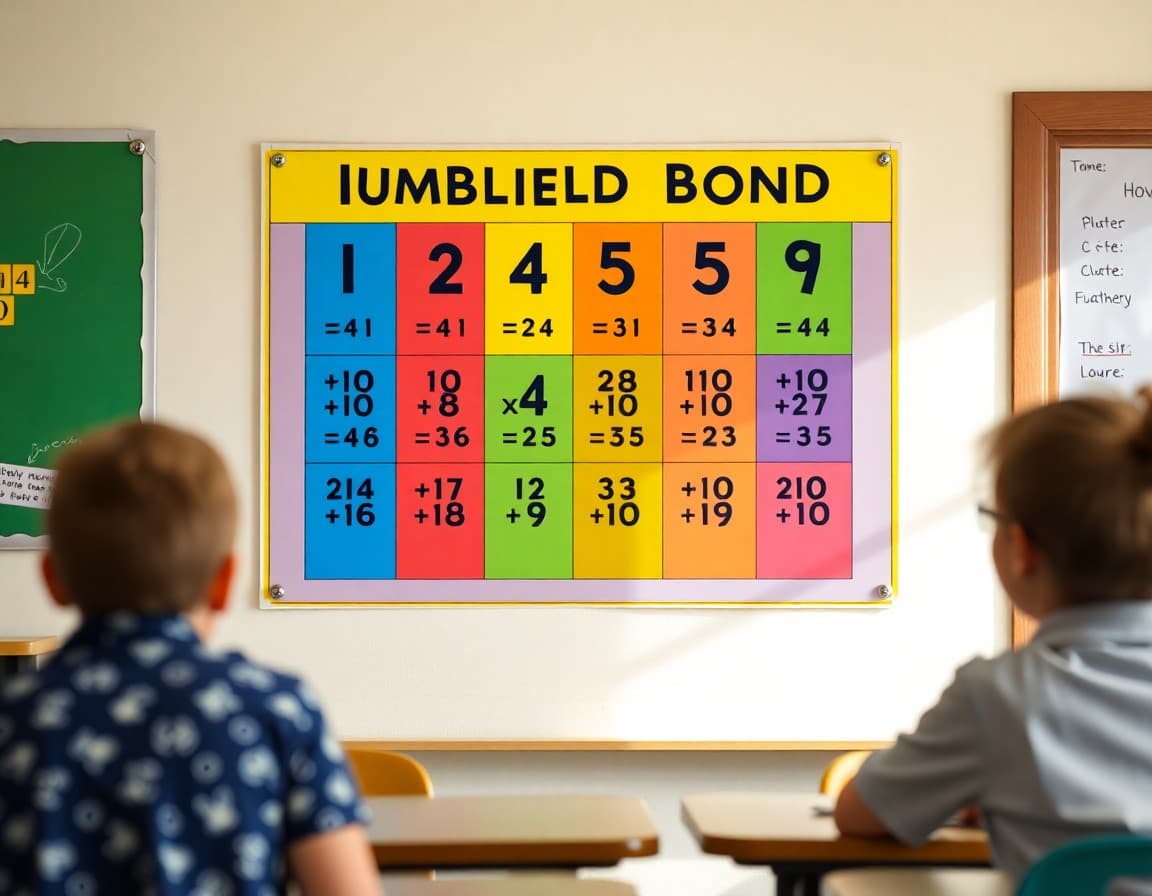
First grade is the year math fact fluency begins in earnest. Students move from counting everything on their fingers to developing strategies and eventually automatic recall. Your newsletter helps families understand what stage their child is in, what to practice, and how to make those 5-10 minutes of daily practice actually stick.
Where First Graders Are in Math Fact Development
Most first graders start the year using counting strategies: counting on from the larger number, using fingers, or counting all objects from scratch. By mid-year, students begin developing more efficient strategies like making ten (8+2+3 becomes 10+3), using doubles (6+6=12, so 6+7=13), and recognizing related facts. By end of year, many facts within 10 should be automatic.
Telling families what stage to expect, rather than just listing facts to memorize, helps them support the right kind of practice.
The Strategies Worth Teaching at Home
Share 3-4 strategies families can use in home practice. Knowing the strategy you teach in class prevents parents from using conflicting methods.
Count on: Start with the larger number and count up. For 7+3, start at 7 and count up 3: 8, 9, 10.
Make ten: Find what number you need to reach 10, then add the rest. For 8+5, notice 8 needs 2 to reach 10, then add the remaining 3: 10+3=13.
Doubles plus one: If you know 6+6=12, then 6+7 is just one more: 13.
What to Practice This Month
Align your newsletter to current classroom instruction. Include a specific focus for the month: "This month we are working on addition within 10 using making-ten strategies. Practice these 10 fact combinations at home: 1+9, 2+8, 3+7, 4+6, 5+5, and their related subtraction facts." A targeted list is more useful than "practice all facts."
Games to Build Automaticity
Describe 3 specific games families can play without purchasing anything. Sum War:Each player flips two cards, adds them, and the higher sum wins both pairs. Number bond go fish: Instead of matching numbers, collect pairs that add to 10. Roll and record: Roll two dice, write the addition sentence, see how many different sums you can get in 5 minutes. These build the same skills as drilling but feel like playing.
How to Know If Your Child Needs More Support
Give families a simple benchmark: by the end of first grade, your child should be able to solve any addition or subtraction fact within 10 without counting on fingers, taking about 3-5 seconds per fact. If your child is still counting from 1 for every problem by March, that is worth mentioning to the teacher. Catching a gap early makes the intervention much simpler.
The Subtraction Connection
Many families focus all their practice on addition and skip subtraction. Address this directly: subtraction within 10 is equally important and directly connected to addition. If a child knows 6+4=10, they should know 10-4=6. Practicing fact families (6+4=10, 4+6=10, 10-6=4, 10-4=6) is more efficient than practicing addition and subtraction separately.
Get one newsletter idea every week.
Free. For teachers. No spam.
Frequently asked questions
What math facts do first graders need to know by end of year?
First grade math standards typically require fluency with addition and subtraction within 10, and familiarity with sums and differences within 20. By the end of first grade, most students should be able to add and subtract within 10 without needing to count on their fingers, and should understand the relationship between addition and subtraction. Fluency within 20 typically solidifies in second grade.
How long should first graders practice math facts at home?
Five to ten minutes daily is sufficient and sustainable. Short daily practice is far more effective than a long session once or twice a week. The goal is moving from counting strategies (counting on, using fingers) toward automatic recall through repeated encounters with the same fact combinations. Consistency is the most important factor.
What is the best way to practice math facts with first graders?
Concrete-to-representational-to-abstract is the research-supported progression. Start with physical objects (count 5 blocks plus 3 blocks), then pictures or drawings, then abstract number sentences. Flashcards work for students who have already developed conceptual understanding, but using them before the concept is solid produces memorization without understanding.
Should first graders be timed on math facts?
Research on math anxiety suggests timed drills can be harmful for students who are still developing conceptual understanding. A better approach is untimed practice with an emphasis on strategy rather than speed. If you do use timed practice, keep it short (1-2 minutes) and frame it as a personal best challenge rather than a comparison to peers.
Can Daystage newsletters include printable math fact practice sheets for families?
Yes. You can link to downloadable PDFs directly from a Daystage newsletter. A number bond practice sheet or a tens frame activity linked in your monthly math newsletter gives families a tangible tool without requiring them to search for resources on their own.

Adi Ackerman
Author
Adi Ackerman is a former classroom teacher and curriculum writer with 8 years in K-8 schools. She writes about school communication, parent engagement, and what actually works in real classrooms.
More for Classroom Teachers
1st Grade Math Progress Newsletter: How to Communicate Number Sense and Fact Fluency to Parents
Classroom Teachers · 6 min read
Math Curriculum Overview in Your Classroom Newsletter: What Parents Need to Know
Classroom Teachers · 6 min read
Second Grade Math Facts Newsletter: Help Families Build Real Fluency
Classroom Teachers · 6 min read
Ready to send your first newsletter?
3 newsletters free. No credit card. First one ready in under 5 minutes.
Get started free