
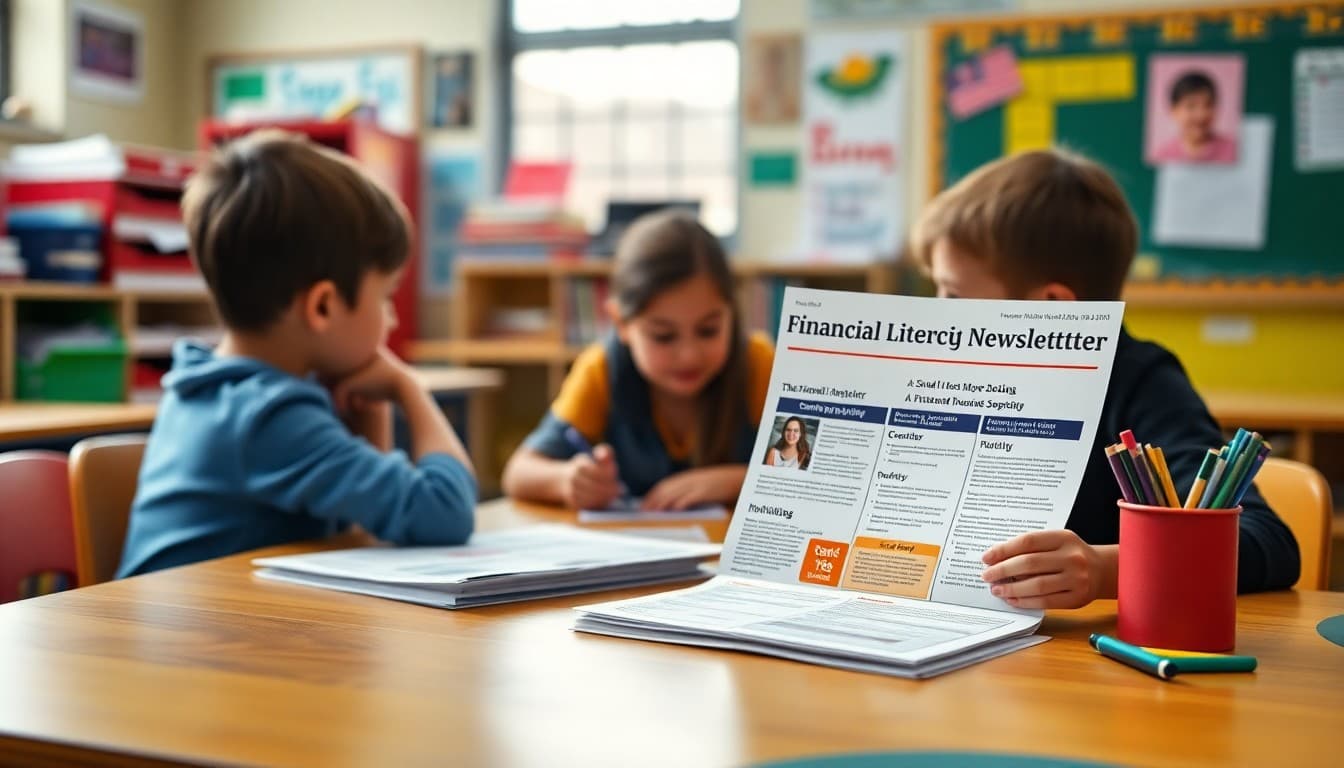
Financial Literacy Newsletter Examples That Work: 5th Grade Guide
Good financial literacy newsletters for 5th grade don't require financial expertise to write. They require specificity, a clear structure, and examples that connect to 10 and 11 year olds' actual lives. These examples show what that looks like across the three most common newsletter types for this grade and subject.
Example 1: Unit Kickoff Newsletter (Needs vs. Wants)
This newsletter launches the first major unit and orients parents to what's coming. It should run about 200 words and include the unit overview, key vocabulary, and one home activity.
"We're starting our first financial literacy unit this week: Needs vs. Wants. Students will learn to tell the difference between things we require to live (needs: food, shelter, clothing, transportation) and things we desire but could live without (wants: video games, candy, new sneakers when our current pair works fine).
At home: walk through five items in your grocery cart or shopping bag this week and ask your student to sort each one. Expect some debate on the borderline cases, like whether brand-name cereal is a want when store-brand cereal would serve the same need. Those conversations are where the real learning happens."
Example 2: Test Prep Newsletter
A test prep newsletter should be direct and calm. Name what's on the test, describe the format, and give one or two study strategies that don't require special preparation.
"Our Financial Literacy Quiz is on [DATE]. The quiz covers needs vs. wants, building a simple budget, and savings goals. Format: 12 multiple-choice questions and one scenario where students answer questions about a fictional kid's spending decisions.
To study: ask your student to explain what a budget is in their own words, then give them this scenario: 'Maya has $30. She wants a book for $8 and a game for $25. What should she do?' See if they can walk through the trade-off."
Example 3: Parent Home Support Newsletter (Saving Goals)
This newsletter focuses entirely on what parents can do at home. Three activities with specific prompts is the right amount.
"This week we're practicing savings goals. Students are learning to identify a goal, calculate how long it takes to reach it at a given rate, and track progress over time.
Try one of these: (1) Help your student pick a real savings goal, even a small one. Write down the target and the date. (2) Ask them: 'If you save $4 a week, how many weeks to save $28?' Let them calculate. (3) If your student has any savings, look at it together and ask 'How much closer are you to your goal this month than last month?'"
What Makes These Examples Work
Each example uses specific numbers, names a concrete activity, and connects to situations that 5th graders and their parents can recognize. None of them require financial expertise from the parent. None require the parent to share private financial information. They're accessible, actionable, and directly tied to what's being taught in class that week.
Building a Newsletter Schedule for the Year
Map your sends at the start of the school year. For a typical 5th grade financial literacy curriculum: one beginning of year newsletter, one per major unit (usually 4 to 5), and one test prep newsletter before each assessment. That's roughly 10 to 12 newsletters per year. With a saved template, each one takes about 10 minutes to write.
Tone and Length
Fifth grade financial literacy newsletters should be warm, direct, and brief. 200 to 300 words is enough. Parents of elementary students are reading a lot of classroom communication and they appreciate conciseness. One main message per newsletter, one clear activity suggestion, and a friendly close. That formula consistently performs better than longer, more comprehensive newsletters that cover too much ground at once.
Get one newsletter idea every week.
Free. For teachers. No spam.
Frequently asked questions
What are the most useful types of financial literacy newsletters for 5th grade?
Four types cover most situations across the year: a beginning of year newsletter that orients families to the curriculum, unit kickoff newsletters that launch each major topic, test prep newsletters before assessments, and parent support newsletters with home activities. Together, these keep parents informed and create natural opportunities for students to apply what they're learning at home.
How do I make financial literacy newsletters feel relevant to 5th grade parents?
Use concrete examples from your students' lives rather than adult financial scenarios. Reference allowances, birthday money, saving for toys or games, and grocery shopping trips. These examples are familiar to parents and immediately recognizable to 5th graders, which makes the newsletters more engaging for both audiences.
Should financial literacy newsletters for 5th graders use any visuals?
Simple visuals like a short list, a brief table, or a clear heading structure help parents scan quickly. For 5th grade newsletters specifically, a short example scenario set off in its own paragraph can be more memorable than a plain paragraph of description. You don't need graphics, but structure matters more than it might for other subjects.
How do I write newsletters for a mixed financial literacy curriculum that also covers social studies or math?
Focus each newsletter on the financial literacy concepts specifically, even if the unit covers related subjects. Parents who receive a newsletter called 'Financial Literacy: Budgeting Unit' know exactly what to reinforce at home. If the unit is integrated with math, briefly mention the connection but keep the financial literacy skills front and center.
What makes Daystage a good fit for 5th grade financial literacy newsletters?
Daystage is designed for classroom communication, which means the tools match what a 5th grade teacher actually needs: a clean template, easy formatting, the ability to send to all parents at once, and a record of past newsletters. You spend your time on content, not on layout.

Adi Ackerman
Author
Adi Ackerman is a former classroom teacher and curriculum writer with 8 years in K-8 schools. She writes about school communication, parent engagement, and what actually works in real classrooms.
More for Classroom Teachers
Ready to send your first newsletter?
3 newsletters free. No credit card. First one ready in under 5 minutes.
Get started free