
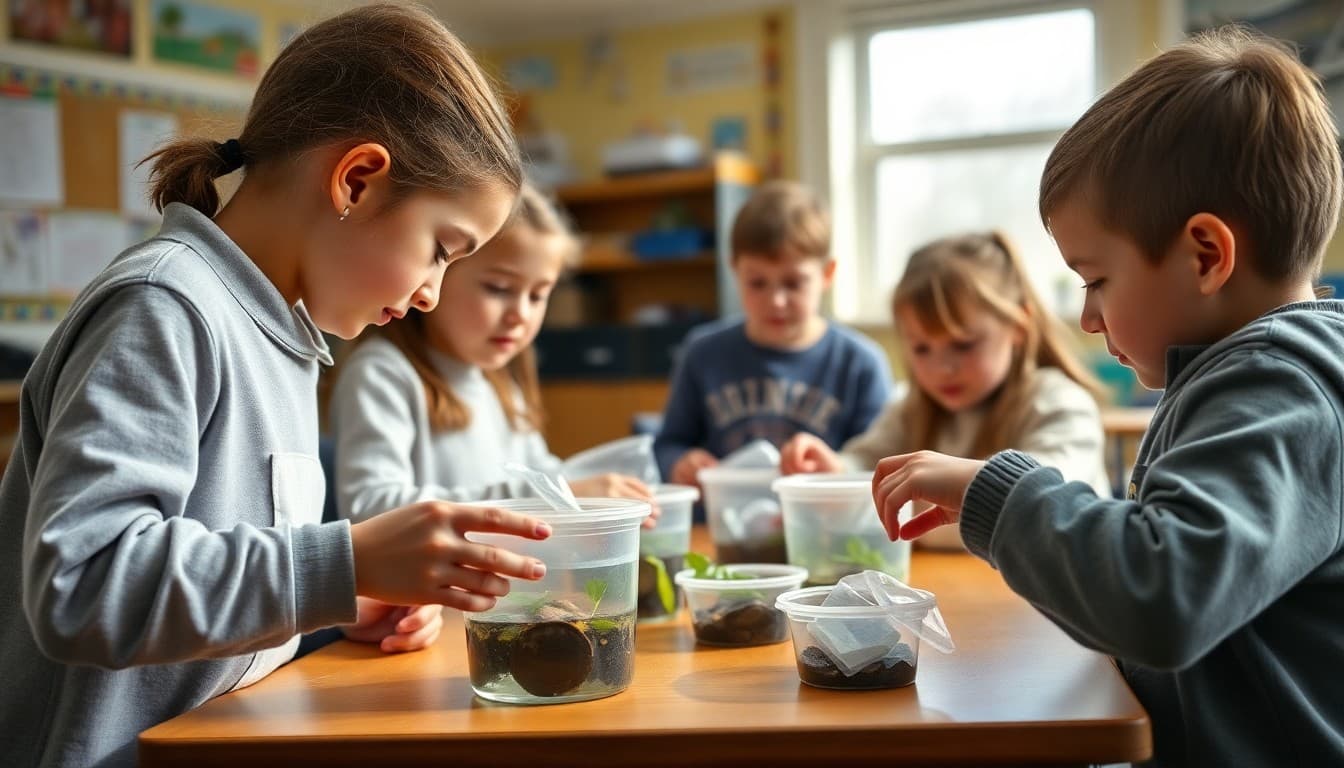
Environmental Science Unit Newsletter for Parents: 5th Grade Guide
When you send a newsletter at the start of a new environmental science unit, you give 5th grade families a window into your classroom. They know what their student is learning, what to look for in homework and projects, and how to support at home. Without that newsletter, most parents hear fragments and fill in the gaps themselves.
Why Unit Newsletters Work for 5th Grade Science
Fifth graders are at an age where their curiosity about the natural world is high but their ability to summarize what they are learning in school is variable. One student comes home and explains the entire food web concept with enthusiasm. Another says "we did science" and opens a video game. A unit newsletter gives every parent the same starting point regardless of their student's communication style at the end of a school day.
How to Open the Newsletter
Lead with the unit topic and connect it to something students have already experienced or will recognize. For a unit on ecosystems: "We are starting our ecosystems unit this week. Students will learn how plants, animals, and decomposers all depend on each other and what happens when one part of an ecosystem changes." For an earth systems unit: "This unit looks at how water moves through our environment. Students will track the water cycle from precipitation through rivers and groundwater back to the atmosphere."
That opening tells parents the topic, what their student will learn, and why it matters. It takes three sentences.
Key Vocabulary Section
Fifth grade environmental science introduces vocabulary that students will use throughout middle and high school. A short vocabulary preview in your unit newsletter helps parents know which terms to ask about. For an ecosystems unit, your list might include: producer, consumer, decomposer, food chain, food web, habitat, and adaptation.
Keep the definitions plain. "Decomposer: an organism that breaks down dead plants and animals and returns nutrients to the soil, like fungi and bacteria" is exactly the right level of detail. Parents will use these definitions when they ask their student to explain the terms.
A Template You Can Adapt
Here is a simple structure that works for any 5th grade environmental science unit:
"We are starting our [UNIT TOPIC] unit this week. Over the next [X] weeks, students will learn [2-3 main concepts]. They will complete [main activity or project] as their unit assessment. Key vocabulary to know: [4-6 terms with brief definitions]. At home, try [one simple activity]. If you have questions, please reach out at [contact info]."
That template covers everything parents need in under 200 words.
Connecting the Unit to Your Students' World
Fifth graders connect best to environmental science concepts they can see around them. A sentence in your newsletter that bridges the classroom to the real world pays off at home. For a water cycle unit: "Next time it rains, ask your student where the puddles go after the sun comes out." For a food web unit: "On your next walk, try identifying producers (plants) and consumers (animals) you see. Your student will know a lot about how they connect."
These suggestions cost nothing to include and they make the newsletter feel like practical guidance rather than a form letter.
What to Say About Projects and Assessments
Fifth grade environmental science units often include hands-on projects: an ecosystem model, a food web diagram, or a research report on an endangered species. If your unit includes a major project, introduce it in the unit newsletter even if details are still coming. "This unit will end with a project on a local habitat. More details will come home next week, but students will need to gather some natural materials for the model." That preview gives families time to plan.
Keeping Parents in the Loop on Labs and Activities
If the unit includes a dissection, a soil sample analysis, or any activity requiring specific materials or parent permission, note it early. A line like "We will be doing a worm observation activity in week three. No materials are needed from home, but students who want to can bring in a clean plastic container for closer observation" is the kind of detail that builds trust with families.
Closing the Newsletter
End with your contact information and a brief invitation to reach out. Something like "I am available by email Monday through Friday and would love to hear if your student is making connections between our unit and the world outside school" is warm without being over-formal. A specific invitation is more likely to generate actual responses than a generic "feel free to contact me."
Get one newsletter idea every week.
Free. For teachers. No spam.
Frequently asked questions
What should I include in a 5th grade environmental science unit newsletter?
Cover the unit topic in plain language, the key vocabulary students will learn, the main activities or projects included in the unit, and one way parents can connect the topic to their student's daily life. Fifth grade parents appreciate a brief explanation of why the topic matters rather than just a list of standards. Two or three sentences of context goes a long way.
How do I introduce an environmental science unit to parents who may not have studied science recently?
Use everyday language and real-world examples. Instead of 'we are studying matter cycles and energy transfer in ecosystems,' try 'we are learning how plants, animals, and decomposers are all connected and what happens to an ecosystem when one piece is removed.' The concept is the same but the second version gives parents a mental image they can work with.
Should I include hands-on activities in the unit newsletter for parents to do at home?
Yes, one simple activity is a strong addition. For a 5th grade ecosystems unit, suggesting that parents and their student observe and list every living and non-living thing in their backyard or a nearby park takes 15 minutes and directly reinforces classroom learning. The activity does not need to be elaborate to be effective.
How long should a 5th grade unit newsletter be?
200 to 300 words is the sweet spot. Parents of 5th graders are busy and a newsletter that fits on one phone screen is more likely to be read completely than one that requires scrolling. Use a short paragraph for the unit overview, a bullet list for vocabulary, and a sentence or two for the at-home activity.
Can Daystage help me create a 5th grade environmental science unit newsletter quickly?
Daystage makes building a unit newsletter fast. You can set up a template with sections for your unit overview, vocabulary, activities, and family connections, then fill in the details at the start of each unit. Most teachers using a saved template finish a unit newsletter in about 10 minutes.

Adi Ackerman
Author
Adi Ackerman is a former classroom teacher and curriculum writer with 8 years in K-8 schools. She writes about school communication, parent engagement, and what actually works in real classrooms.
More for Classroom Teachers
Ready to send your first newsletter?
3 newsletters free. No credit card. First one ready in under 5 minutes.
Get started free