

Environmental Science: How Parents Can Help at Home (5th Grade)
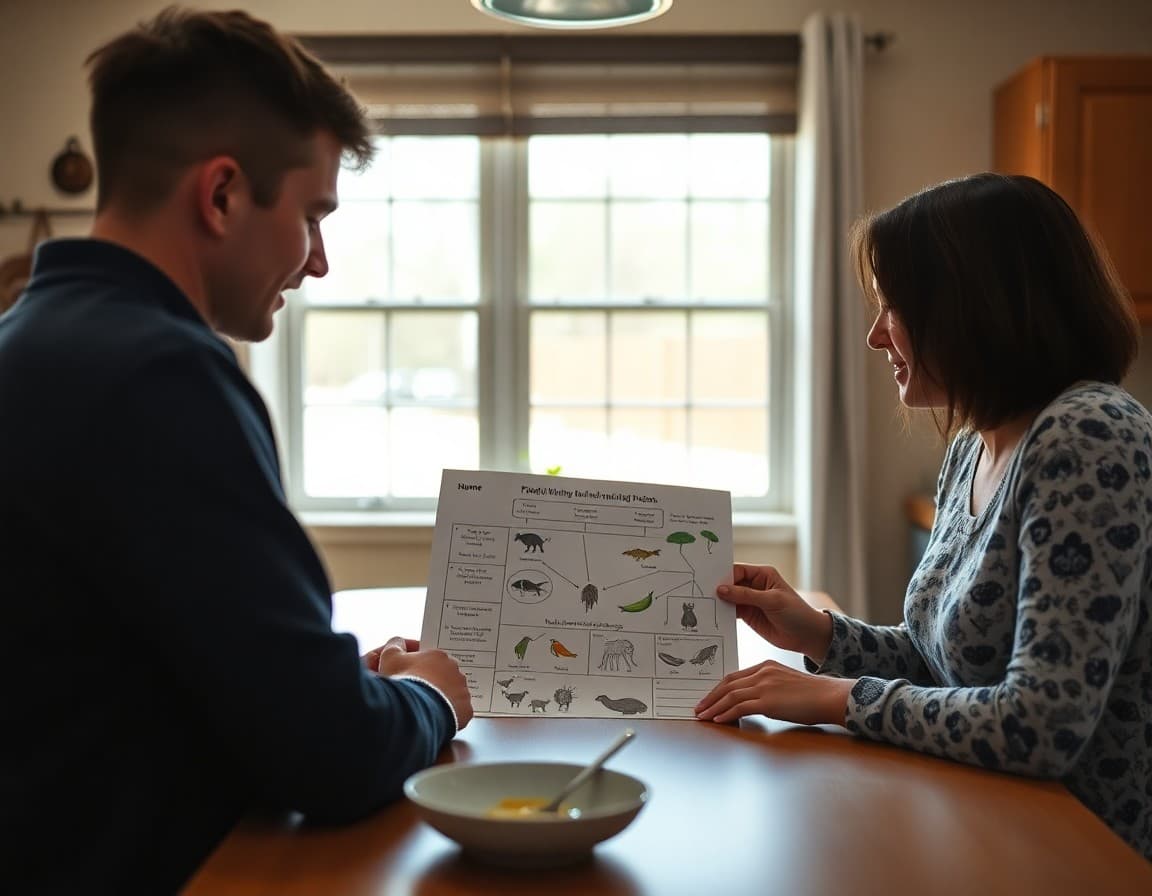
Fifth grade parents want to support environmental science at home but often do not know how. A parent help newsletter tells them specifically what their student is learning right now and gives them three or four concrete things they can do to reinforce that learning at home. It does not require them to have a science background.
What We Are Learning Right Now
Start the newsletter with a two to three sentence unit summary. Parents who know what is being studied can ask better questions and spot connections in everyday life. "We are studying ecosystems and food webs this month. Students are learning how plants, animals, insects, and decomposers all depend on each other, and what happens to an ecosystem when one piece is removed" is enough context for most families.
If there is a major project coming up, mention it here: "Students will complete a food web diagram and written explanation as their unit project, due in three weeks."
Simple Activities to Try at Home
Give parents one or two activities they can do with minimal materials and time. Here are three that work well for a 5th grade environmental science unit:
Observation walk: Go outside for 15 minutes and have your student list everything they can see, hear, or smell. Then sort the list into biotic (living or once-living) and abiotic (non-living) factors. This applies directly to what students are learning about ecosystem components.
Teach-back activity: Ask your student to explain the food web they are building in class. Have them draw it for you and explain who eats who and what would happen if one organism disappeared. This verbal explanation is one of the most effective study strategies available.
Decomposer observation: Put a small piece of bread or fruit in a plastic bag, seal it, and leave it on a windowsill. Check it every few days and have your student explain what is happening and why decomposers matter to the ecosystem.
Conversation Starters for the Dinner Table
Parents who ask specific questions get specific answers. "How was school?" produces "fine." These questions produce something more useful:
"If all the insects disappeared from our neighborhood, what would happen to the birds?" or "What is the most interesting organism you learned about this week in science?" or "Explain to me what happens to a fallen tree in the forest over time. Who is involved?"
You do not need to know the answers. Your student does. Asking the question starts the conversation.
Vocabulary to Reinforce at Home
For the current unit, these are the terms students should know. Ask your student to define each one and give a real-world example:
Producer (a plant or organism that makes its own food using sunlight), Consumer (an organism that eats other organisms for energy), Decomposer (an organism that breaks down dead matter, like fungi or bacteria), Food chain (one path of energy transfer from producer to consumer), Food web (all the overlapping food chains in an ecosystem), Biotic (living parts of an ecosystem), Abiotic (non-living parts like water, sunlight, and soil).
What to Do If Your Student Is Struggling
If your student seems confused after class or is not sure what was covered, encourage them to review their science notebook first. Fifth graders keep notes and drawings that are a strong review tool. If the notebook is not helping, your student can also try watching a short Khan Academy or National Geographic Kids video on the topic. A five-minute video on food webs can fill in gaps that a worksheet cannot.
Resources Worth Bookmarking
Two websites parents and students can use at home for 5th grade environmental science: National Geographic Kids (kids.nationalgeographic.com) has articles, videos, and photos on ecosystems, animals, and environmental topics that are written at a 5th grade level. Khan Academy's science section has free videos and practice questions on food webs, ecosystems, and earth science. Both are free and accurate.
How to Reach Me
If you have questions about your student's progress or the current unit, email me at [EMAIL]. I check email daily and respond within one school day. If your student would benefit from extra review time, I offer help sessions on [DAYS] from [TIME TO TIME].
Get one newsletter idea every week.
Free. For teachers. No spam.
Frequently asked questions
What are the best at-home activities to support 5th grade environmental science?
Outdoor observation is the simplest and most effective. A 15-minute walk where a student identifies and lists all the living and non-living things they observe directly applies biotic and abiotic factor knowledge from class. Growing a small plant and tracking what it needs to survive reinforces producers and photosynthesis. A backyard or park food web drawing is another strong option: students draw what eats what and label the producers, consumers, and decomposers they can identify.
How do I explain environmental science vocabulary to my 5th grader at home?
The best approach is to ask your student to explain the term to you rather than explaining it to them. 'What does decomposer mean? Can you give me an example we might see outside?' is more effective than reading the definition from a textbook together. If they cannot explain it, that is useful information. If they can, the explanation deepens their own understanding.
What if my 5th grader is resistant to doing science activities at home?
Connect the activity to something they already enjoy. Students who like cooking can observe decomposition in fruit or vegetables. Students who like animals can research a specific food chain involving their favorite animal. Students who enjoy art can draw and label a detailed food web or ecosystem diagram. The connection does not have to be elaborate. Finding one point of overlap between their interest and the science content is usually enough.
How often should a 5th grade environmental science teacher send parent help newsletters?
Once per major unit is realistic and useful. If your course has five or six units in the year, that means five or six parent help newsletters. Families benefit most from receiving these at the start of a unit when they have time to incorporate the suggestions. Sending a parent help newsletter at the end of a unit is less actionable since the unit is nearly over.
How can Daystage support teachers in sending regular parent help newsletters?
Daystage makes it easy to build a parent help newsletter template with sections for current topics, conversation starters, at-home activities, and resource links. Saving the template and updating it each unit takes about 10 minutes. Teachers who use a consistent format find that parents start looking forward to these newsletters because they know exactly what they will get.

Adi Ackerman
Author
Adi Ackerman is a former classroom teacher and curriculum writer with 8 years in K-8 schools. She writes about school communication, parent engagement, and what actually works in real classrooms.
More for Classroom Teachers
Ready to send your first newsletter?
3 newsletters free. No credit card. First one ready in under 5 minutes.
Get started free