

Civics Unit Newsletter for Parents: 5th Grade Guide
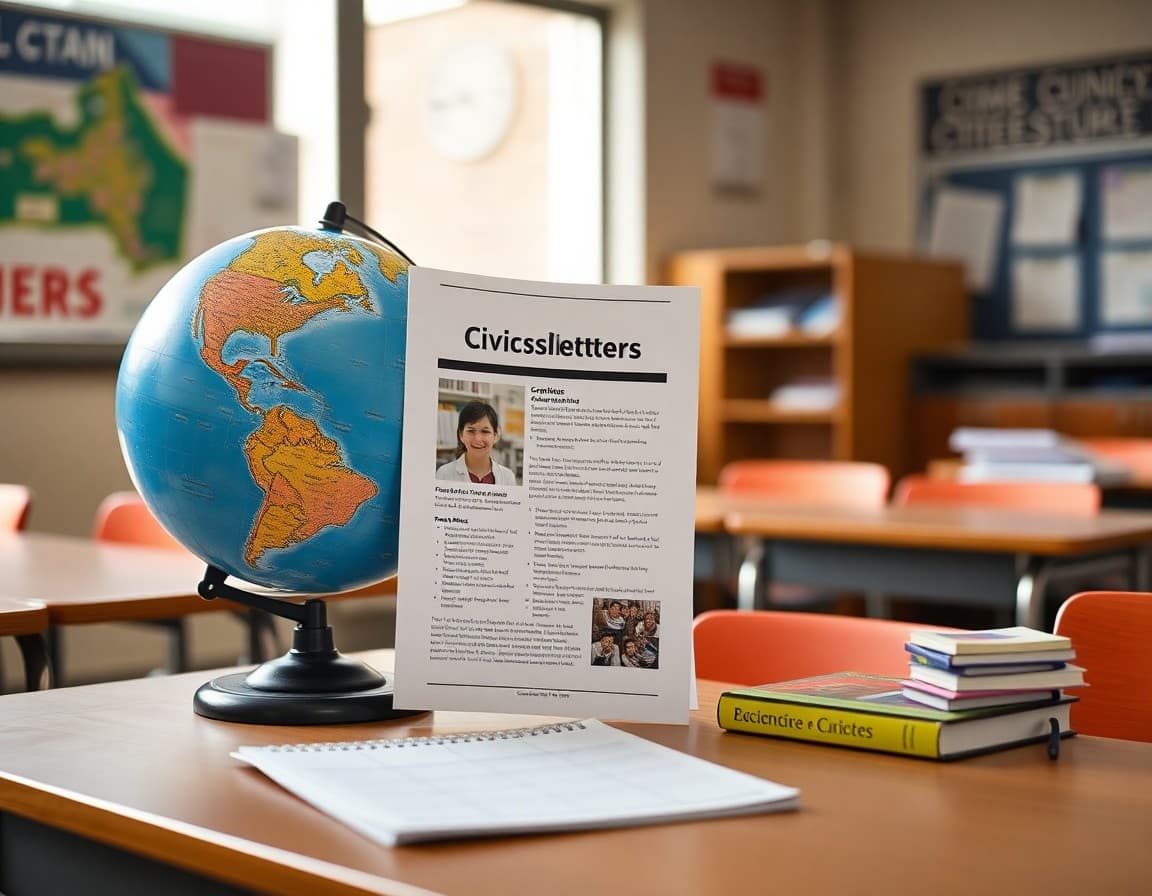
Fifth grade is when civics expands from the local and community level to the national level. Students are ready to understand the Constitution, the three branches of government, and what it means to have rights as a citizen. A unit newsletter helps parents understand this transition and gives them specific ways to reinforce it at home with students who are just beginning to understand how the larger civic world works.
What 5th Grade Civics Is Building On
By 5th grade, most students have studied community helpers, local government basics, and simple civic concepts in earlier grades. Now they're ready for the national level: the Constitution as a document that sets up rules for how the country is governed, the three branches and why they exist as separate institutions, and the Bill of Rights as a specific list of protected freedoms.
Your newsletter can acknowledge this progression: "We're building on the community and local government concepts students have learned in earlier grades. Now we're expanding that understanding to the national level."
What to Include in the Unit Newsletter
Cover the unit name and overview in plain language, the key concepts students will understand by the end of the unit, and two to three specific home activities. Include a brief vocabulary section with three to five terms. For a 5th grade civics unit, the vocabulary list is often more important than at any other grade because the terms are new and specific.
Template Excerpt: Three Branches Unit
"This week we're starting our Three Branches of Government unit. Students will learn what each branch does, who leads each one, and why the founders decided to divide government into three separate institutions instead of giving all the power to one person or group.
Key vocabulary: legislative branch (Congress, which makes laws), executive branch (the president, who enforces laws), judicial branch (the courts, which interpret laws), separation of powers, checks and balances.
At home: ask your student to explain what each branch does using their own words. Then ask: 'What would happen if one person or group had all three powers?' That question is exactly what the founders asked, and your student's answer will show you how well they understand what we're studying."
Making Abstract Concepts Concrete for 10 and 11 Year Olds
Fifth graders are concrete thinkers who are just beginning to handle more abstract ideas. The best 5th grade civics instruction uses analogies and familiar situations to bridge that gap. Your newsletter can suggest the same approach for home conversations: "Compare the three branches to the different roles in your student's school. The principal makes the rules (like the executive), the school board creates the policies (like the legislature), and if there's ever a dispute about whether something is fair, someone has to decide that (like a court). The parallel isn't perfect, but it helps 5th graders see why division of power makes sense."
The Bill of Rights in Plain Language
If your unit covers the Bill of Rights, include a simple explanation of two or three amendments that are most relevant to 5th graders' lives. The First Amendment (speech, religion, press, assembly, petition) is immediately familiar: students exercise these rights every day. The Fourth Amendment (protection from unreasonable search) is concrete and memorable. The Sixth Amendment (right to a fair trial) connects to stories students have heard about.
Ask parents to have their student explain one amendment they use in their daily life. That conversation takes five minutes and reinforces the concepts better than any additional studying.
Connecting to Current Events
Even at the 5th grade level, there are age-appropriate ways to connect civics to current events. If Congress is doing something notable, ask your student which branch that is. If the president makes an announcement, ask what branch that's in. Simple identification questions at the 5th grade level build the habit of civic observation that deeper analysis builds on in middle and high school.
Get one newsletter idea every week.
Free. For teachers. No spam.
Frequently asked questions
What civics concepts do 5th graders typically study?
Fifth grade civics often includes the structure of the U.S. government at the federal level (three branches), the Constitution and its purpose, the Bill of Rights and what it protects, civic rights and responsibilities, and an introduction to how laws are made. At this age, students are moving from community-level civics (which they studied in earlier grades) to national-level concepts, which requires more abstract thinking.
How do I explain 5th grade civics to parents in a way that builds enthusiasm?
Connect it to things students already know and care about. Fifth graders who have been in school for five years have experienced rules and consequences, elections (think classroom or school voting), and community decisions. Pointing out that the systems they're now studying are scaled-up versions of those familiar experiences makes the content feel approachable rather than abstract.
What home activities reinforce 5th grade civics?
The most effective activities connect constitutional concepts to everyday life. Look up what the First Amendment says and ask your student which part they use most. Watch a brief clip about how Congress works and ask them to explain one step. Find a recent news story involving the Supreme Court and ask your student what the court's role is. These activities are short, accessible, and directly tied to what's being taught.
How long should a 5th grade civics unit newsletter be?
200 to 300 words. Cover what you're teaching, why it matters for 10 and 11 year olds, and two specific home activities. Fifth grade parents are engaged with their student's education but time-limited, so brevity with specificity is more valuable than comprehensiveness.
Can Daystage help me create a consistent look across all my 5th grade civics newsletters?
Yes. Daystage lets you build a newsletter template with your preferred format and reuse it for each unit. The visual consistency helps parents recognize your newsletters and find the relevant information quickly.

Adi Ackerman
Author
Adi Ackerman is a former classroom teacher and curriculum writer with 8 years in K-8 schools. She writes about school communication, parent engagement, and what actually works in real classrooms.
More for Classroom Teachers
Ready to send your first newsletter?
3 newsletters free. No credit card. First one ready in under 5 minutes.
Get started free