
Private School Scholarship Newsletter: Communicating Financial Aid Opportunities to Families
Private school scholarship and financial aid programs are among the most under-communicated aspects of independent school enrollment. Schools that award millions of dollars in annual financial aid every year regularly receive applications from families who assumed they could not afford the school and never asked. The communication gap between what the school offers and what prospective families know is a solvable problem.
This guide covers how to communicate scholarship and financial aid availability in a way that reaches the families who need it, reduces stigma, and supports the school's commitment to enrollment diversity.
Why families do not ask about financial aid
The most common reason eligible families do not apply for private school financial aid is the assumption that they do not qualify. Private school tuition rates create a mental barrier that prevents families from asking, especially in communities where private education is perceived as exclusively for wealthy families.
A second common reason is stigma. Families who worry that applying for aid will disadvantage their child's application, or that receiving aid will identify them in the school community as financially different, do not apply even when they are interested.
Both barriers are communication problems. A school that names them directly and honestly does more to increase aid applications than any brochure or website update.
The language of access rather than need
"Financial aid is available for families who demonstrate financial need" is accurate but it centers the family's deficit. "We are committed to making our school accessible to students from all economic backgrounds, and we award substantial financial assistance each year to families who apply" centers the school's value and the family's opportunity.
Both are honest. The second produces more applications. Framing aid as a school investment in the diversity of its community rather than a charity for families who cannot afford full tuition changes the social calculus for families who are hesitant to apply.
Making the application process feel achievable
Financial aid applications are often confusing and time-consuming. Many schools use third-party financial analysis tools like SSS (School and Student Services) that require families to submit detailed tax and asset information. A newsletter that walks families through the process step by step, names the third-party tool if one is used, and gives families a clear sense of how long the process takes removes the intimidation factor.
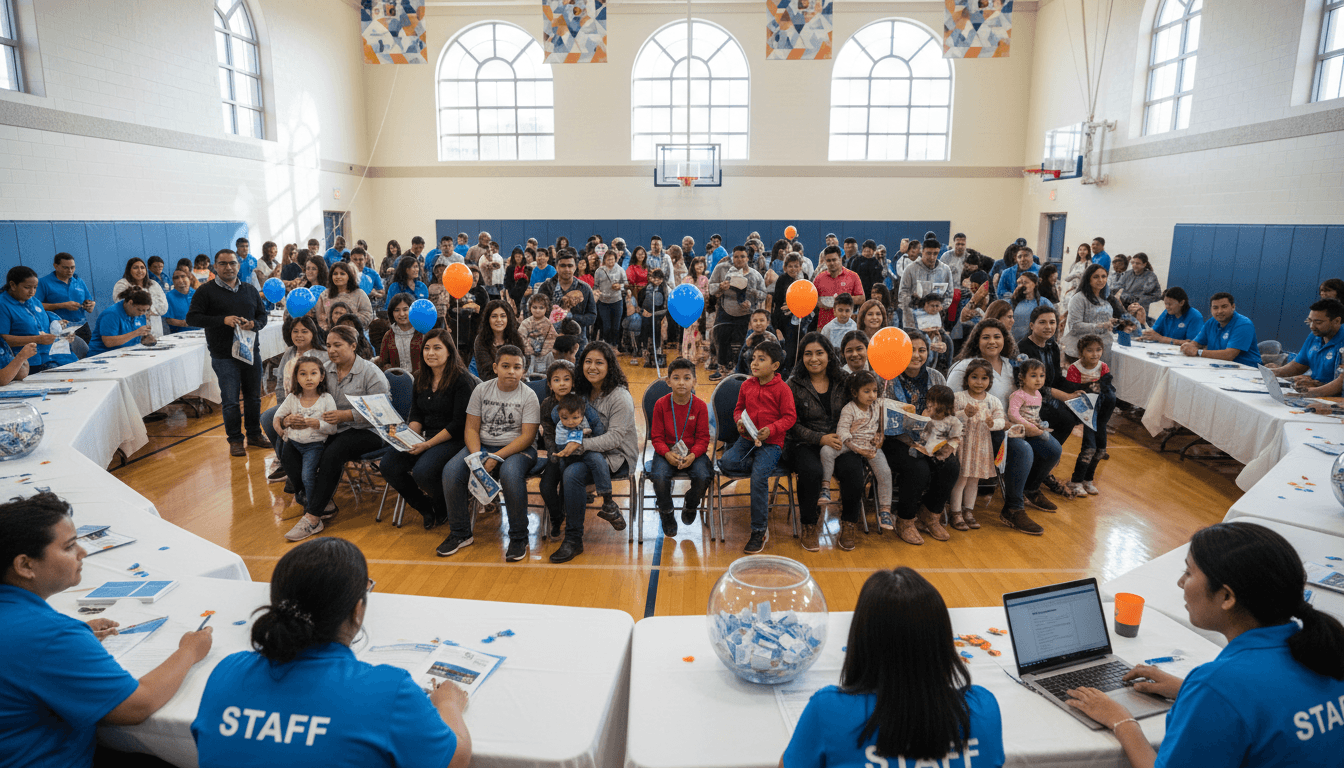
Offer a financial aid information session where families can ask questions in a group setting. Families who are uncertain about whether to apply are often converted by hearing other families' questions answered. A session with the financial aid director, held before the application deadline, regularly increases application volume for schools that try it.
Scholarship communication for named awards
Named scholarships funded by donors or alumni often have specific criteria, separate application requirements, and distinct deadlines from the general financial aid process. A newsletter that describes each named scholarship, its criteria, and its application process separately from the general aid information ensures that eligible students do not miss awards they might qualify for because they did not know the scholarships existed.
The connection between financial aid and enrollment diversity
Schools that communicate the connection between their financial aid program and their commitment to enrollment diversity attract families who value community. When the newsletter frames financial aid as part of the school's mission to serve a diverse community, families who support that mission see financial aid as a community good rather than a private matter.
Get one newsletter idea every week.
Free. For teachers. No spam.
Frequently asked questions
How should private schools communicate scholarship and financial aid availability to reduce stigma?
Present financial aid as a program the school is proud of and designed to ensure access, not as a safety net for families who cannot afford tuition. A newsletter that says 'we are committed to ensuring that talented students from all economic backgrounds can access our program, and we award significant financial aid each year' frames aid as a school value rather than a family need. That framing significantly reduces the stigma that prevents families from applying.
What information is essential in a private school scholarship newsletter?
The total amount of aid the school awards annually, the range of awards (from partial to full tuition), the eligibility criteria (whether need-based, merit-based, or both), the application process and specific deadlines, whether re-enrollment scholarship amounts are reviewed annually, and a direct contact for families with questions. Families who receive all of this information without having to ask for it are more likely to apply than families who must initiate multiple conversations to understand whether they qualify.
When is the best time to communicate scholarship availability to prospective families?
At the initial inquiry stage and during every open house communication, not only at application time. Families who assume they cannot afford a private school often do not submit an inquiry. A scholarship mention in the school's first communication to prospective families reaches those families before they self-select out of the process based on an assumed tuition barrier. Proactive communication about aid availability is one of the most effective diversity recruitment tools a private school has.
How should schools communicate with current families about scholarship renewal?
Scholarship renewal policies should be communicated in writing at the start of each academic year, including what triggers a review, what academic or behavioral standards are tied to scholarship continuation, and when renewal decisions will be communicated. Families who are surprised by a scholarship reduction or non-renewal, especially late in the school year when other options are no longer available, feel deceived even if the policy was technically disclosed. Consistent annual communication prevents this.
How can Daystage help private schools communicate scholarship and financial aid information more consistently?
Daystage lets schools build a financial aid section in both the admissions newsletter sequence and the existing family newsletter. The section describes the scholarship program, links to the application, and includes the financial aid contact. When the scholarship program changes, you update the section once and it appears correctly in all subsequent newsletters without requiring individual edits to multiple email templates.

Adi Ackerman
Author
Adi Ackerman is a former classroom teacher and curriculum writer with 8 years in K-8 schools. She writes about school communication, parent engagement, and what actually works in real classrooms.
More for Private & Charter
Private School Open House Newsletter: Promoting Your Campus Visit to Prospective Families
Private & Charter · 5 min read
Charter School Community Events Newsletter: Building Connection Through Shared Experiences
Private & Charter · 5 min read
Charter School Summer Program Newsletter: Communicating Summer Enrichment to Families
Private & Charter · 5 min read
Ready to send your first newsletter?
3 newsletters free. No credit card. First one ready in under 5 minutes.
Get started free