
Nature School Newsletter: Outdoor Learning Communication Guide
A nature school newsletter serves families who know that outdoor learning is valuable and also families who are newer to the model and want reassurance that their child is meeting academic benchmarks alongside the creek explorations. The newsletter needs to do both: celebrate the natural world as a genuine classroom and document the academic learning that happens there with enough specificity that every family can see it. This guide covers how to do that across the school year.
Open With What the Season Is Teaching
Nature schools organize their curriculum around the natural world, and the newsletter should reflect that. Open each issue with what the current season is making visible at the school's outdoor site. "October is the month our woodland becomes most legible. The leaves are coming down and the forest floor is visible in ways it is not in summer. This week, students followed a deer trail for 40 minutes, identified three different scat samples, and estimated how recently each animal had passed based on moisture and insect activity. They were doing what field biologists call sign reading, and they were better at it by Friday than they were on Monday."
Connect Every Outdoor Experience to Academic Standards
The most important communication work a nature school newsletter does is making the academic content of outdoor learning visible. Here is a template your team can use each month:
This Month's Outdoor Learning: What Students Are Building
Activity: [What students did outdoors]
Academic connections: [Which standards or skills this activity builds, with specifics]
What students knew before: [Prior knowledge students brought]
What students know now: [New understanding, skill, or knowledge gained]
What comes next: [How this experience connects to the next learning experience]
Fill in this template for your two or three biggest outdoor learning experiences each month. Families who see this format consistently develop a real understanding of the school's outdoor curriculum.
Explain Your Weather and Gear Policy Clearly
Rain, cold, and mud are not obstacles to nature school learning, they are part of the curriculum. But families need to understand this to dress their children appropriately and interpret the mud on their boots as evidence of learning rather than poor adult supervision. "We go outside in all weather except lightning and extreme cold below 15 degrees Fahrenheit. Research on outdoor education consistently shows that learning to manage physical discomfort builds resilience and risk management skills that transfer to academic and social settings. The gear recommendation list is on our website. Wool base layers are strongly recommended for November through February."
Document a Student's Learning Journey Over Multiple Issues
A nature school provides the kind of sustained, deep learning that is hard to capture in a single issue. Commit to following one student's learning arc across multiple issues each semester. "In September, we introduced you to Jonah, who was afraid of insects when he arrived. In October, he held his first beetle. This month, he identified three beetle species by observing their body structure and habitat preferences, without being told their names first. He is now the student other children ask to identify what they find." That progression shows learning that no report card can communicate.
Include Seasonal Natural Science Content
A brief natural science section each issue, written for the families reading the newsletter, connects readers to the same knowledge students are gaining. "The berries on our hawthorn trees are now fully ripe. Cedar waxwings have been visiting in flocks of 20-30 to feed on them. Cedar waxwings are one of the few birds that can eat hawthorn berries in large quantities without adverse effects. Students have been watching the flock dynamics for two weeks and noticed that younger birds feed at the outer branches while adult birds take the interior positions." That content is educational for adults and shows families exactly the kind of observation students are developing.
Report on Physical and Emotional Development
Nature school advocates often cite physical development, risk tolerance, and emotional regulation as core outdoor learning outcomes. Your newsletter should document these specifically rather than claiming them abstractly. "This month, four students who had been reluctant to cross the creek on stepping stones did so without assistance for the first time. The crossing requires balance, risk assessment, and managing fear. All four students chose to do it independently after watching peers manage it successfully over three weeks." That account documents developmental progress in observable terms without reducing it to a checklist.
Invite Family Participation in the Outdoor Environment
Parents who visit the school's outdoor site understand the educational environment in ways that no newsletter description fully captures. Invite them specifically. "Family outdoor time is scheduled for [date] from [time]. No outdoor experience required. Dress for the conditions. We will walk the main trail, visit the garden, and share what students have been observing this season. Last year, 22 family members attended. Several have become regular volunteers in the garden and on trail maintenance."
Get one newsletter idea every week.
Free. For teachers. No spam.
Frequently asked questions
How do we communicate outdoor learning outcomes to families who are not sure their child is learning enough?
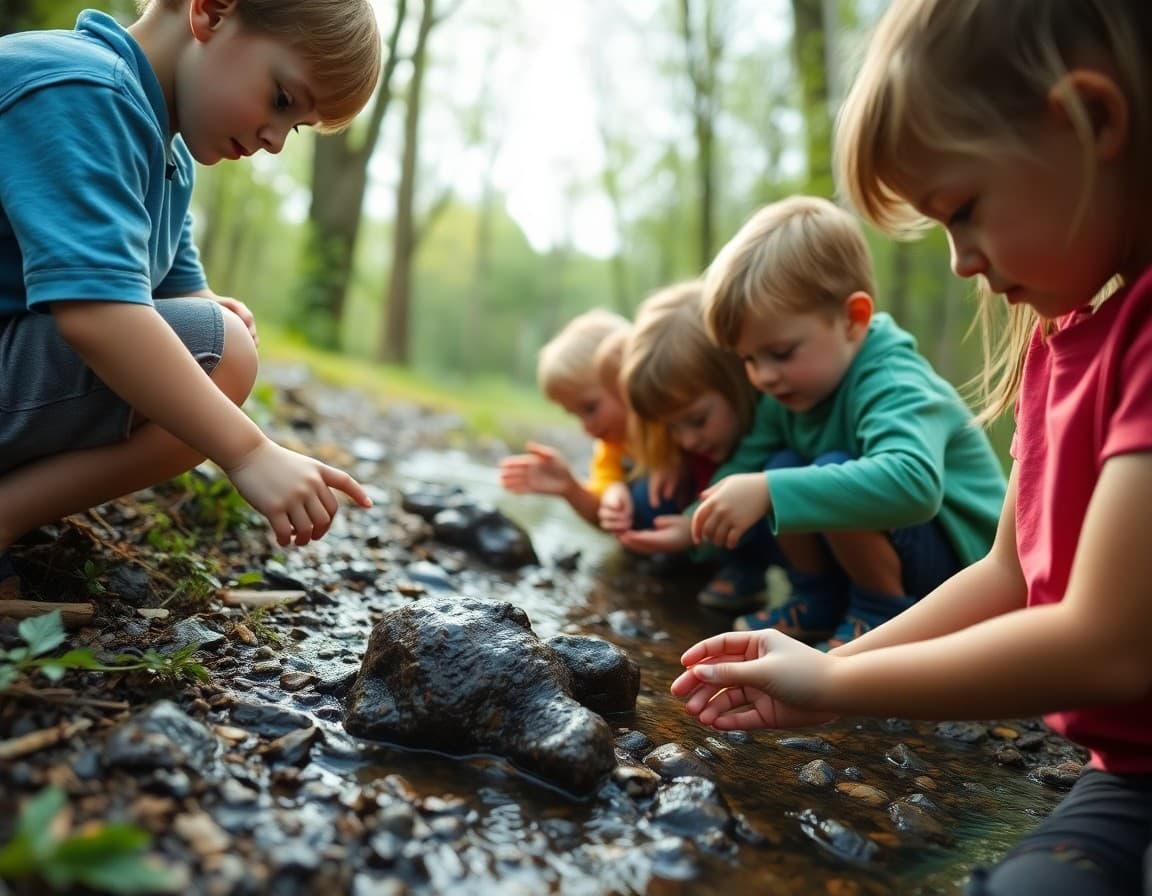
Connect every outdoor experience to the specific academic and developmental skills it builds. 'This week's creek exploration involved stream table mapping, which develops spatial reasoning and measurement skills. Students also identified three invertebrate species and classified them by taxonomic category, which is a third-grade science standard.' That connection shows families that the outdoor experience is not recreational time but purposeful learning with academic content.
How do we handle family concerns about weather, bugs, mud, and outdoor discomfort?
Address these concerns directly in your fall newsletter and return to them throughout the year. Explain your gear recommendations, your all-weather outdoor policy, and the educational rationale for going outside in challenging conditions. 'Students who learn to manage physical discomfort, cold hands, muddy boots, and unexpected rain develop resilience and adaptability that indoor-only learning environments cannot replicate.' Families who understand the purpose behind outdoor learning in difficult weather are more supportive than families who just receive mud-stained clothes without context.
What seasonal content works best in a nature school newsletter?
Ground each issue in what is actually happening in the natural world at that moment. A fall newsletter covers animal preparation for winter, plant dormancy, and migration. A winter newsletter covers tracking, winter ecology, and cold-weather adaptations. A spring newsletter covers emergence, growing, and new life. Connecting newsletter content to the actual season gives the publication a natural rhythm that reinforces the school's philosophy.
How do we document outdoor learning for families who cannot observe the school day?
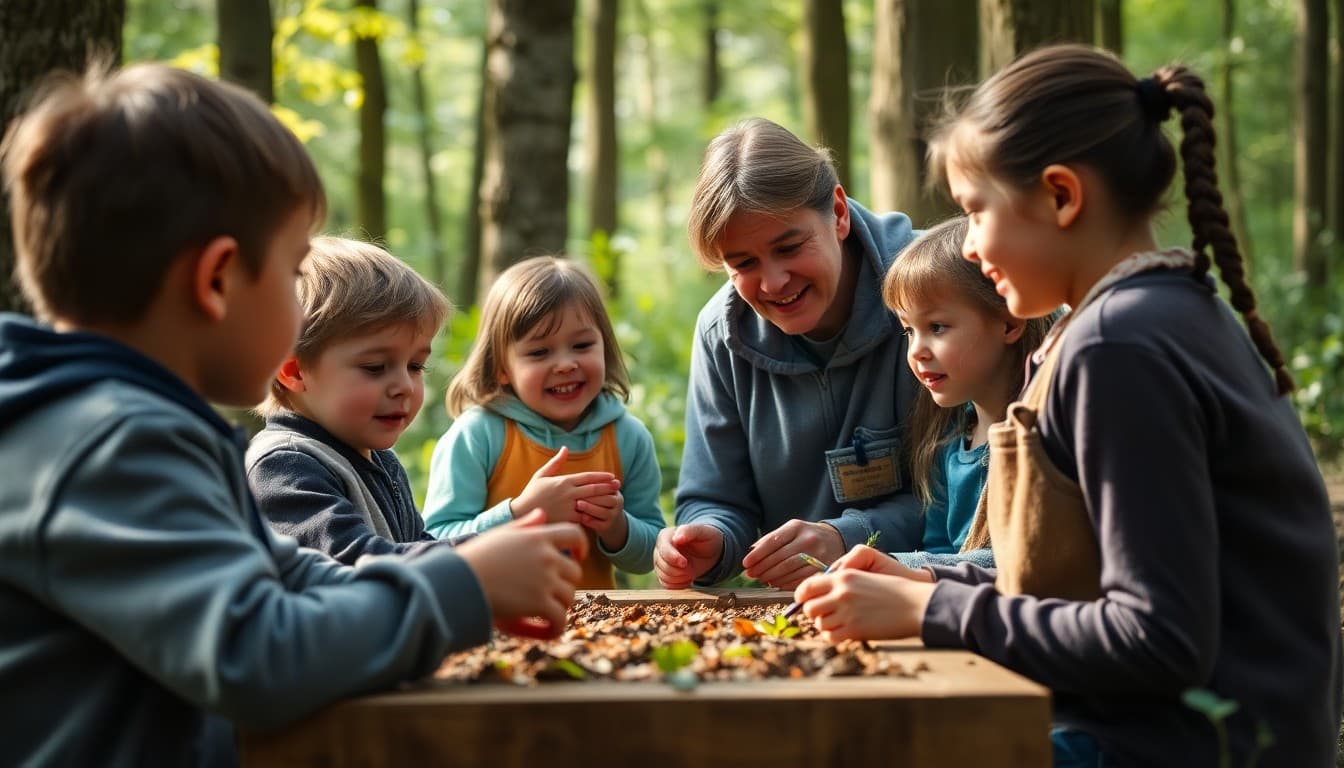
Photographs are essential for nature school newsletters. A photo of students identifying a mushroom species, building a fire, or measuring the diameter of a tree trunk communicates the outdoor learning experience in ways that text alone cannot. Include captions that explain what the students were learning in the photo, not just what they were doing. 'Students measuring the circumference of an oak to estimate its age using growth ring research' is more informative than 'students with a tree.'
Can Daystage support a nature school newsletter with photos and seasonal documentation?
Yes. Daystage supports image blocks throughout the newsletter, which is essential for a nature school where visual documentation is central to communicating what students experience. You can build an image-forward newsletter that shows outdoor learning moments alongside the text that explains their educational significance. The platform is straightforward enough for teachers who are primarily educators and naturalists, not communications professionals.

Adi Ackerman
Author
Adi Ackerman is a former classroom teacher and curriculum writer with 8 years in K-8 schools. She writes about school communication, parent engagement, and what actually works in real classrooms.
More for Private & Charter
Ready to send your first newsletter?
3 newsletters free. No credit card. First one ready in under 5 minutes.
Get started free