
Small Private School Newsletter: Intimate Community Communication

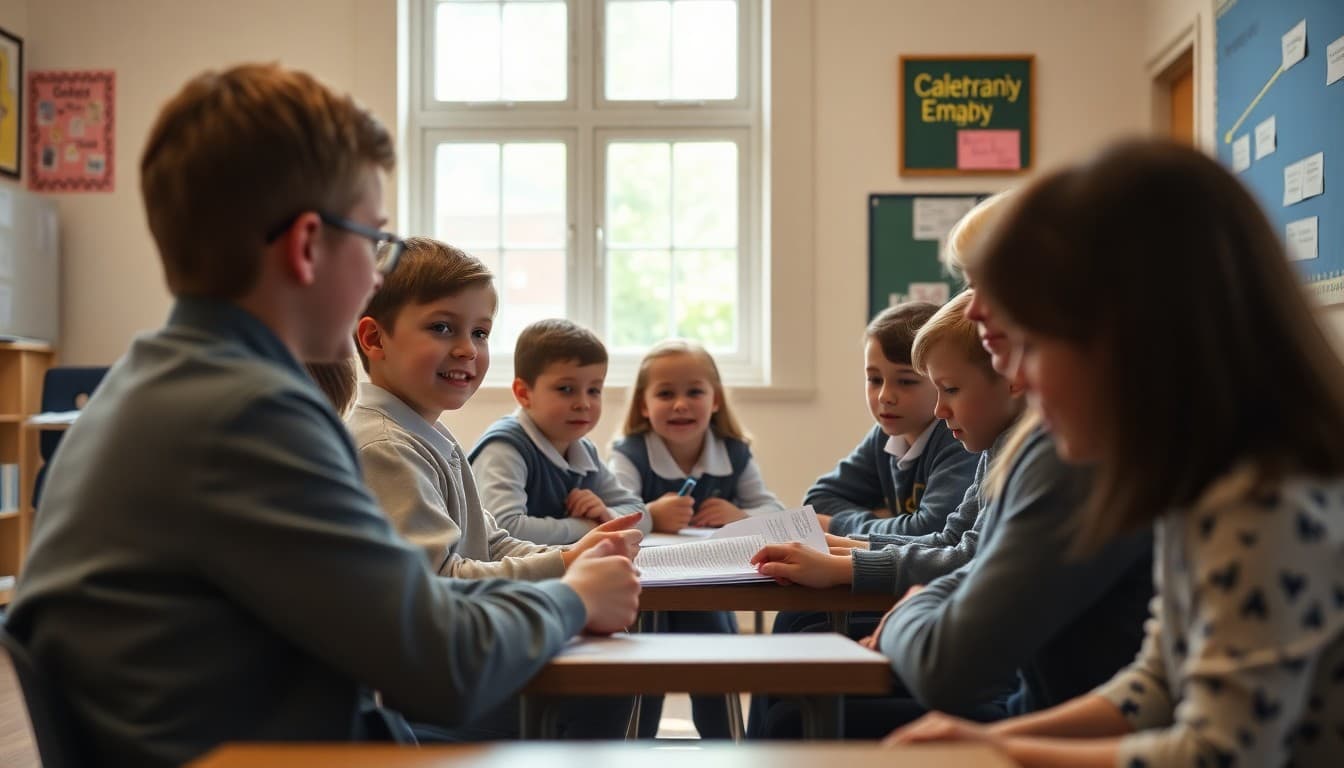
A small school has a communication advantage that large schools cannot buy: the ability to name every student, feature every teacher, and communicate with the depth and specificity that comes from actually knowing everyone in the building. A newsletter that takes advantage of that intimacy does something no large school newsletter can. It makes every family feel seen and every student feel recognized. This guide covers how to build that kind of newsletter deliberately rather than accidentally.
Name Names
The most powerful thing a small school newsletter can do is name specific students doing specific things. Not only the valedictorian and the star athlete. The student who finally mastered long division, the one who made a new friend this week, the one who stayed after to help set up chairs for the community event. In a school of 80 students, every student should appear in the newsletter by name at least twice per year. Track this. It is the single clearest signal of the school's commitment to knowing every child.
Feature Every Teacher's Voice
A small school faculty is small enough for every teacher to contribute a regular voice in the newsletter. A brief section where each teacher writes 75-100 words about what they are working on, what they are noticing in their classroom, or one moment from the week gives families a genuine connection to the adults teaching their children. These do not need to be polished. A teacher's authentic voice, honest and specific, is more valuable than a polished institutional summary. "I wasn't sure the poetry unit would land this year. I have a group of students who prefer facts to feelings. But the week we did concrete poetry, two of the most resistant students couldn't stop writing. We published their poems on the classroom wall and they read them to the whole school at Friday meeting."
Cover the Whole School as One Community
In a small school, a kindergartner and a sixth-grader know each other. The newsletter should reflect that cross-grade community. Report on events and activities that involve students across grade levels. Cover the moments when older students mentor younger ones, when different grades collaborate on a project, or when the whole school does something together. "All 74 students planted bulbs in the school garden last week. The kindergartners chose daffodils because they liked the name. The fifth-graders chose irises and researched the symbolism. They will all bloom in spring and every student will recognize them as something they planted together." That story is only possible in a small school.
Explain Mixed-Age Learning When It Comes Up
Small schools often have multi-grade or mixed-age classrooms. Explain the approach when it is relevant to what families are seeing. Here is a template:
How Mixed-Age Learning Works in Our Third/Fourth Grade:
Our third and fourth-grade students learn together for most of the day. In mathematics, students work at their individual level using differentiated tasks that often overlap between grades. In humanities, both grades study the same content but engage with it at different levels of complexity. The social benefit of the mixed-age setting is that third-graders have peer models who are a year ahead, and fourth-graders develop confidence and leadership by supporting younger learners. This is one of the reasons we keep our class sizes small enough for this approach to work.
Communicate Resource Limitations Honestly
Small schools often operate with limited resources and families who chose the school know this. Communicating honestly about resource constraints, and about how the school is addressing them, builds more trust than pretending that a small school has the same resource base as a larger one. "We do not have a dedicated school counselor this year. Our principal provides counseling support directly, and we are partnering with a community mental health organization to provide one day per week of counseling time beginning in January. We know this is a gap and we are addressing it with the resources available to us." That honesty is what small school families chose when they enrolled.
Celebrate the Size as a Feature, Not a Limitation
Write about the school's size as an intentional choice with specific educational benefits, not as a constraint to be overcome. "Because we have 74 students and 8 teachers, our student-to-teacher ratio is 9:1. Every teacher knows every student by name. Every student is known by every adult in the building. That is not an accident. It is why families choose us." A newsletter that is confident about what the school is, rather than defensive about what it is not, attracts families who are the right fit and retains the families who already enrolled for exactly those reasons.
Make the Community Newsletter Feel Like the Community
End each issue with a brief community calendar that includes not just school events but community events where the school has a presence: the local fair, the neighborhood cleanup, the town meeting where a school-related item is on the agenda. A small school is part of a small community. The newsletter that acknowledges that relationship, and invites families to participate in it, reflects the kind of connected, grounded education that small school families are choosing.
Get one newsletter idea every week.
Free. For teachers. No spam.
Frequently asked questions
What advantages does a small school have in newsletter communication?
A small school can name names. Every student can appear in the newsletter at some point during the year, not just the top performers or the ones involved in high-profile activities. Every teacher can be heard as an individual voice rather than a representative of a department. The intimacy of a small school, where every student is known by every adult, can be visible in the newsletter in ways that a large school's newsletter simply cannot replicate.
How do we handle the fact that our small community means everyone already knows everything?
Write for the families who are not physically at school every day: working parents who miss pickup conversations, families who do not speak English as a primary language, and new families who have not yet built the informal information networks. Even in a community where news travels fast, the newsletter ensures that accurate, complete information reaches everyone equally rather than through the telephone-game of community gossip.
How do we cover multi-grade or mixed-age classrooms in the newsletter?
Explain the educational philosophy behind the structure first, for families who are new or skeptical. Then cover what is happening in the mixed-age setting with specificity: how older students support younger learners, how different age groups approach the same content from different starting points, and what social development happens when students spend multiple years with the same peers and teacher.
How do we recruit new families through our newsletter?
Post the newsletter publicly on your website and ask current families to share it. A newsletter that is honest about what the school actually is, including its size, its limitations, and its strengths, attracts the families who are the right fit. A newsletter that oversells or hides the school's intimacy in favor of claiming broad capacity mismatches expectations and increases attrition.
Can Daystage help a small private school publish a newsletter without a dedicated communications staff?
Yes. Daystage is straightforward enough that a principal, an office manager, or a parent volunteer can build and send a newsletter without a communications background. At a small school where most staff are focused entirely on students, having a platform that produces a professional-looking newsletter quickly is especially valuable. The time savings matter most in small schools where every hour counts.

Adi Ackerman
Author
Adi Ackerman is a former classroom teacher and curriculum writer with 8 years in K-8 schools. She writes about school communication, parent engagement, and what actually works in real classrooms.
More for Private & Charter
Ready to send your first newsletter?
3 newsletters free. No credit card. First one ready in under 5 minutes.
Get started free