

Newsletter Guide for Montessori School Families
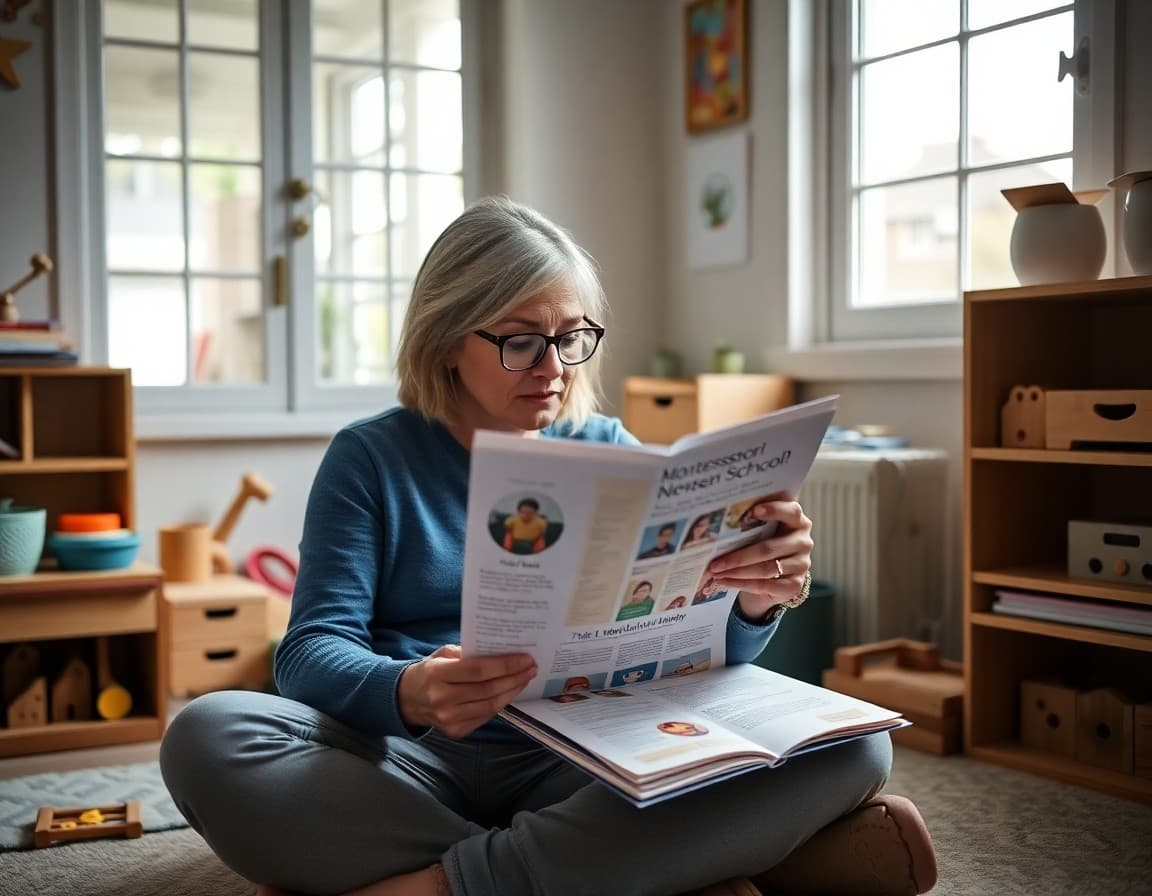
Montessori school newsletters serve a dual purpose: they communicate what is happening in the classroom, and they build the family's understanding of why it is happening. Families who understand the Montessori method are better partners in their child's education. A newsletter that consistently makes the method legible earns more than attention. It builds the alignment that makes the school's approach work at home as well as in the classroom.
Explaining the Method Without Being Preachy
Montessori educators who write newsletters sometimes fall into one of two traps: assuming that all families already understand the method deeply, or explaining it in ways that feel condescending or evangelical. The right register is neither. Write as though you are sharing what is happening in the classroom with a curious, intelligent adult who has some familiarity with Montessori but who benefits from seeing specific examples of how it works.
Instead of "our approach trusts children to follow their intrinsic motivation," write "this month, three students who had been circling the geometry materials for weeks finally sat down with the constructive triangles and worked for 45 uninterrupted minutes. That kind of focused, self-directed exploration is what the Montessori environment is designed to support." The example shows the theory without stating it as doctrine.
Describing What Students Are Working On
The most useful section of a Montessori newsletter names the current areas of work in each classroom level. For primary students, which materials are in active use this month? For lower elementary, what is the focus in language, math, and cultural studies? For upper elementary, what research projects or community work are students pursuing?
Specific descriptions of classroom work give families something to talk about with their child and help them understand the scope and sequence of Montessori curriculum in practice. "The upper elementary class has been deep in their biome research project, with each student specializing in one biome and preparing a presentation for the community group in February" is more useful than "students are exploring science and social studies through integrated projects."
A Template Excerpt for a Montessori Monthly Newsletter
Here is a section from a Montessori primary and elementary school in Vermont:
"In the primary classroom this month, there has been significant interest in the land and water globe, which has sparked a series of conversations about geography that the teachers are following with care. Several students have moved from the globe to the puzzle maps, and we are seeing early signs of what will become the elementary's cultural studies curriculum several years from now. In the lower elementary, fraction work is in full swing with the fraction circles and fraction skittles. Students are discovering equivalencies through their own investigation, and the teachers are documenting the specific moment each student makes the connection that 2/4 and 1/2 are the same quantity. These are the moments Montessori environments are built to provide."
The newsletter describes specific materials, names what is happening, and connects classroom observations to the broader arc of the Montessori curriculum. Families can see what their child is doing and why it matters.
Connecting Classroom Work to the Three-Year Cycle
Montessori education works in three-year developmental cycles that do not map to conventional grade-year thinking. A newsletter that periodically explains how the three-year cycle works in each classroom level helps families understand why their kindergartner is working alongside 4-year-olds, why a third-year elementary student is often the one introducing materials to a first-year student, and why the timeline of skill development looks different from conventional grade progression.
This context reduces anxiety for families who are comparing their child's visible progress to neighbors' children in conventional schools and helps them trust the method through the periods when progress is less visible.
Reporting Progress Without Letter Grades
Montessori schools that do not use traditional grading still need to communicate student progress to families. The newsletter is one channel for this, though it works at the classroom or community level rather than the individual student level. A brief description of where students in each level are in their developmental sequence gives families a general sense of whether the class is on track. Individual progress is better covered in conferences and narrative assessments, but the newsletter can provide context that makes those conversations more productive.
Building Family Understanding of the Environment
Montessori families who visit the classroom and observe work cycles often have questions about what they are seeing. A newsletter section that explains the purpose of specific materials or classroom practices, written in plain language, builds family understanding in a way that a single orientation session cannot sustain. Why are the materials on open shelves? Why does the teacher not typically call the whole class together? What does a three-hour work cycle look like in practice? Brief explanations of these elements, offered periodically throughout the year, build the family's capacity to be genuine partners in the Montessori approach.
Community Events and Parent Education Opportunities
Montessori schools often offer parent education sessions, observation periods, and community events that are unique to the Montessori model. The newsletter is the right place to announce these opportunities with enough context that families understand their value. A parent observation period is not just an open house. It is a chance to see the work cycle in action, to watch self-directed learning in practice, and to understand the environment their child inhabits every day. Frame it as such and attendance will reflect that framing.
Get one newsletter idea every week.
Free. For teachers. No spam.
Frequently asked questions
What makes a Montessori school newsletter different from a conventional school newsletter?
Montessori newsletters often need to explain the pedagogical approach to families who are new to the method or who are still building their understanding of how Montessori education works. Terms like work cycle, mixed-age grouping, intrinsic motivation, and child-led learning need context for families whose own schooling was traditional. A newsletter that both informs and educates about the method builds family alignment with the school's approach.
How do I report on student progress in a Montessori newsletter without grades?
Focus on specific skills students have developed, materials they have mastered, and areas where they are showing growing independence. 'Students in the primary classroom have been working extensively with the golden bead material, developing a concrete understanding of the decimal system that supports their growing number sense' communicates learning progress without letter grades. Concrete observations of skill development are more meaningful than numerical ratings in a Montessori context.
How often should a Montessori school send newsletters?
Monthly newsletters that update families on current areas of focus, the classroom environment, and upcoming community events work well for most Montessori schools. Some schools also send shorter weekly notes that connect to the work cycles happening in each classroom. The exact frequency matters less than the consistency of the rhythm and the quality of the content.
How should a Montessori newsletter address families who are skeptical about the method?
Use concrete examples and research rather than philosophical claims. A family who is uncertain about child-led learning is more persuaded by 'students who spent three years in Montessori programs outperformed peers in reading and executive function in a 2023 University of Virginia study' than by 'we trust children to follow their natural curiosity.' Evidence and specifics address skepticism better than advocacy.
What platform works well for Montessori school newsletters?
Daystage is a good choice for Montessori schools because it supports the visual and narrative style that Montessori newsletters tend toward, with space for photos of classroom work, student observations, and thoughtful descriptions of the learning environment. You can build and send in one place without needing separate design and email tools.

Adi Ackerman
Author
Adi Ackerman is a former classroom teacher and curriculum writer with 8 years in K-8 schools. She writes about school communication, parent engagement, and what actually works in real classrooms.
More for Private & Charter
Charter School Accreditation Newsletter: Communicating Quality Standards to Families
Private & Charter · 5 min read
Charter School Annual Fund Newsletter: How to Communicate the Case for Giving
Private & Charter · 6 min read
Charter School Academic Results Newsletter: Communicating Data and Outcomes to Families
Private & Charter · 6 min read
Ready to send your first newsletter?
3 newsletters free. No credit card. First one ready in under 5 minutes.
Get started free