
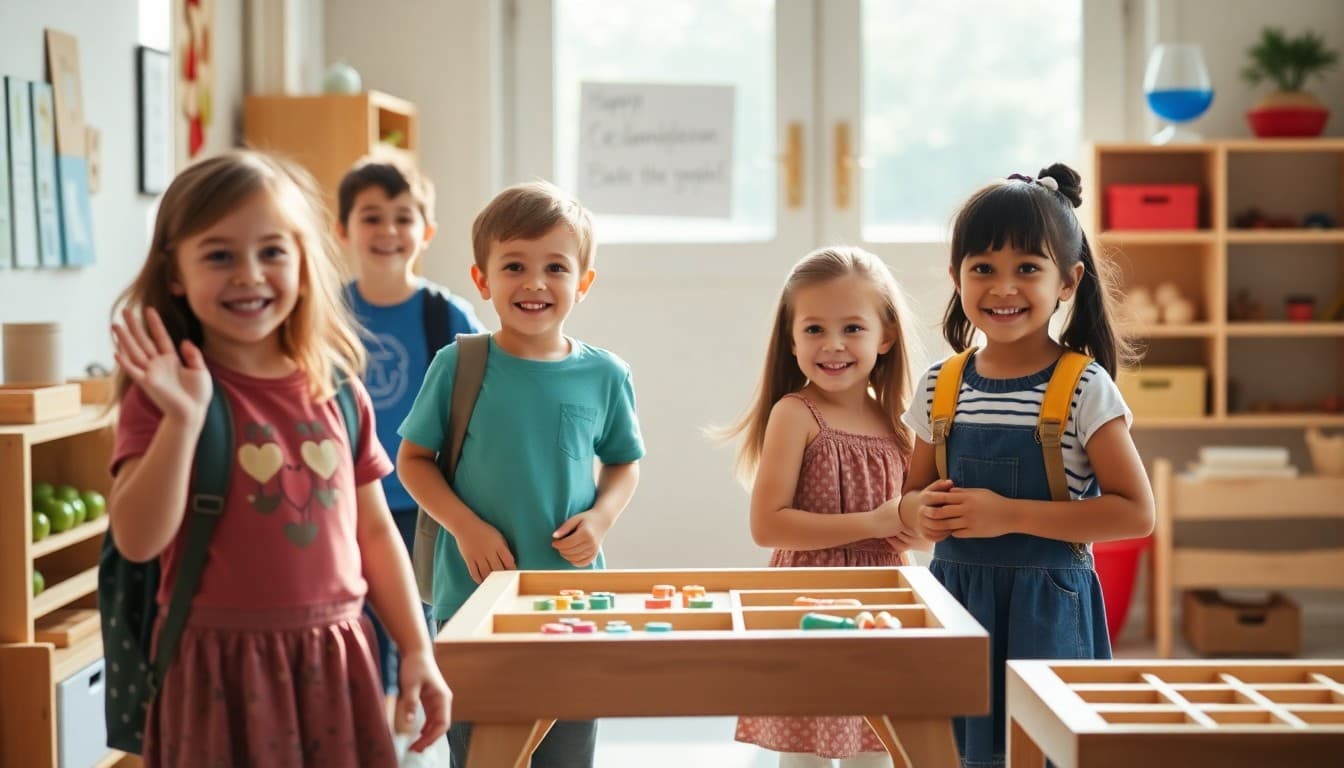
Back to School Newsletter for Montessori School Families

The Montessori back to school newsletter is doing more work than most school newsletters at the start of the year. It is preparing a diverse group of families, some in their third year with the method and some who enrolled in August, to understand and support an educational approach that looks genuinely different from what most of them experienced as children. That is a significant communication task, and it is worth doing carefully.
Two Different Audiences, One Newsletter
Returning Montessori families are largely comfortable with the method and mainly need logistics and classroom-level updates. New families need context, reassurance, and a clear picture of what September will look like for their child. A back to school newsletter that serves both audiences provides returning families with what they need without losing new families in a wall of familiar information they have not yet acquired.
One approach: a brief "For new families" section early in the newsletter that covers the essential method context, followed by updates and logistics that apply to everyone. Returning families can skim the new family section or read it as a refresher. New families get what they need without having to decode the rest of the newsletter to get there.
Describing the First Weeks of a Montessori Year
The first weeks of a Montessori school year have a specific character that new families need to understand in advance. Students, especially those new to the classroom, spend significant time in observation: watching other students work, exploring materials at a surface level, and learning the social conventions of the classroom. This looks like "not doing anything" to a parent who expects direct instruction and visible academic output from day one.
Name this in the newsletter and explain it before families notice it and become concerned. "In the first two to three weeks, especially for students who are new to the classroom, you may hear that your child 'mostly watched' or 'tried a few things but nothing specific.' This is the Montessori normalization period, and it is a necessary and valuable stage. Students who observe carefully before engaging tend to engage more deeply when they begin focused work."
A Template Excerpt for a Montessori Back to School Newsletter
Here is a section from a Montessori primary school in Boulder, Colorado:
"The first day of school is Tuesday, September 2. Primary students arrive between 8:15 and 8:30 AM and say goodbye to parents at the gate. We ask that first-day goodbyes be brief and confident, even if your child is nervous. Children who see their parents' uncertainty about separation often match it. If this is your child's first Montessori experience, expect the first two weeks to be quieter than you expect. Students are taking in the environment, watching older students, and building their internal map of how the classroom works. This is preparation for work, not a delay before it. We will send a brief update in the first week with observations from each teacher."
The newsletter gives a specific instruction (brief goodbyes), names the typical first-week experience, and explains why it happens. That combination prevents the September anxiety that often produces unnecessary teacher-parent conversations in traditional schools.
Setting Expectations for Homework and Progress Reporting
New Montessori families commonly arrive with questions about homework and grades. The back to school newsletter is the right place to set these expectations clearly. Montessori homework is typically limited to reading together, life skill practice, and perhaps nature observation, not worksheets or drill exercises. Explain the reasoning briefly: Montessori work is intensive and self-directed during the school day, and the home environment is meant to support a different kind of engagement.
Progress reporting in Montessori typically uses narrative assessments, conferences, and sometimes student-led conferences rather than letter grades. Explain the timeline for when families will receive progress information and through what format. New families who understand this in September are not caught off guard in November.
The Role of the Prepared Environment
A brief explanation of the prepared environment concept helps new families understand why the Montessori classroom looks the way it does. "Everything in a Montessori classroom has a specific purpose and is accessible to children independently. The arrangement of materials, the shelving height, the size of the work rugs, all of these are intentional. When your child learns to use the classroom materials correctly, they are also learning responsibility, order, and concentration." Two sentences like this transform a casual observation about a classroom into an insight about pedagogy.
Logistics That Matter for Montessori Families
Montessori school logistics have some specific elements that standard school newsletters do not address: whether students should bring a snack, the clothing guidelines for an environment where children work on the floor, materials care expectations, and the observation schedule for parents. Cover these in a brief logistics section and families arrive prepared in ways that make the first days go more smoothly for students and teachers both.
Get one newsletter idea every week.
Free. For teachers. No spam.
Frequently asked questions
What should a Montessori back to school newsletter include for new families?
A brief, plain-language description of how the Montessori method works in practice, what the first weeks typically look like for a new student, what the work cycle means, and how families can support the transition at home. New Montessori families often arrive with enthusiasm for the method but limited understanding of how it actually operates day to day. The back to school newsletter is the first opportunity to close that gap.
How should a Montessori school introduce the three-year cycle in a newsletter?
Explain it through the lens of what families will observe rather than through pedagogical theory. 'Your child will spend three years in this classroom. In the first year, they are primarily observing and absorbing the environment. In the second year, you will see them settling into work with more confidence and depth. By the third year, they often become models and informal teachers for newer students.' That description is accurate and accessible without requiring any prior knowledge of Montessori theory.
How do I address the anxiety that new Montessori families often feel in September?
Name it. 'The first few weeks of a Montessori school year look different from conventional school transitions. Your child may come home saying they played all day or that they do not know what they are supposed to be doing. This is normal. The Montessori transition period takes longer and produces different behavior than a conventional school start.' Naming the typical experience in advance is more helpful than waiting for concerned parents to contact teachers.
Should the Montessori back to school newsletter include information about homework and progress reporting?
Yes. These are two of the most common questions new Montessori families have. Explain clearly that Montessori homework is typically reading together and life skill practice rather than worksheets. Explain when and how progress will be communicated, whether through narrative reports, conferences, or student-led conferences. Setting these expectations in August prevents misunderstandings in October.
What platform works well for Montessori back to school newsletters?
Daystage is a strong fit because it supports the warm, narrative style that Montessori newsletters tend to use, with space for classroom photos alongside written content. You can build a newsletter that feels personal and intentional rather than templated, which reflects the Montessori aesthetic of thoughtful preparation and care.

Adi Ackerman
Author
Adi Ackerman is a former classroom teacher and curriculum writer with 8 years in K-8 schools. She writes about school communication, parent engagement, and what actually works in real classrooms.
More for Private & Charter
Charter School Accreditation Newsletter: Communicating Quality Standards to Families
Private & Charter · 5 min read
Charter School Annual Fund Newsletter: How to Communicate the Case for Giving
Private & Charter · 6 min read
Charter School Arts Program Newsletter: Sharing Your Creative Curriculum With Families
Private & Charter · 5 min read
Ready to send your first newsletter?
3 newsletters free. No credit card. First one ready in under 5 minutes.
Get started free