

Democratic School Newsletter: Student-Led Learning Updates and Decisions
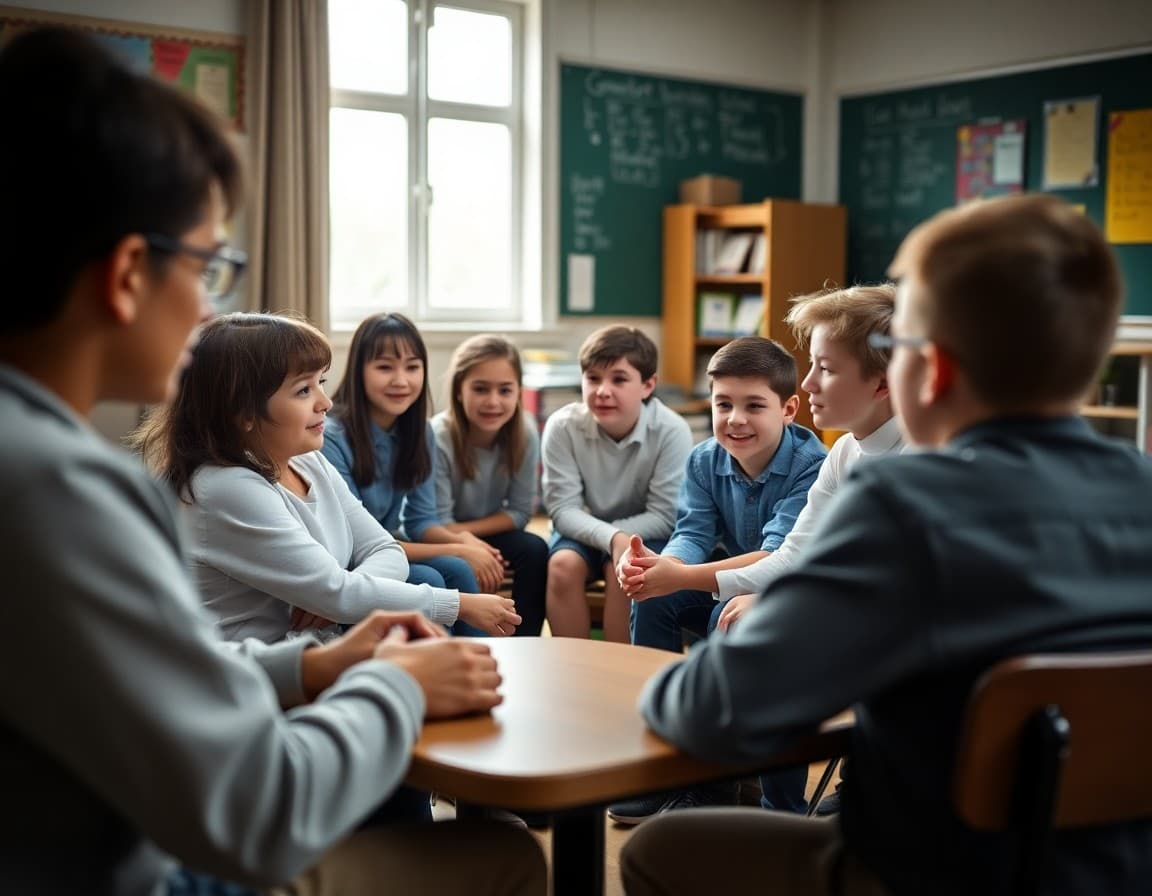
A democratic school newsletter has a specific challenge: communicating an educational philosophy that most readers have never encountered in a way that is concrete, honest, and trustworthy. Most families did not attend a democratic school. They have no personal frame of reference for what self-directed learning looks like in practice, whether it produces real academic skills, or whether children who govern themselves actually learn more. The newsletter is your primary tool for building that understanding.
Report on School Meeting Decisions
The school meeting, where students and staff have equal votes on matters of school governance, is the most distinctive feature of democratic education. Cover it in every issue as seriously as a school board covers municipal decisions. Include the agenda, the key arguments on each side of contested votes, and the final tally. "At last week's school meeting, students and staff voted 11-8 to change the start time for morning open time from 8:30 to 9:00 a.m. Students advocating for the change argued it would give students more time for self-directed projects before structured activities begin. Staff who opposed it cited concerns about losing the early morning as a quiet work period." That coverage is educational and transparent.
Show Self-Directed Learning in Specific Student Stories
Abstract descriptions of self-directed learning sound either unbelievable or alarming to families who did not experience it themselves. Specific student stories are the most persuasive content you can publish. "Amara spent four months this year studying Arabic. She started because she wanted to read a letter her grandmother wrote decades ago in a language no one in her immediate family could read. By March, she could read the letter. She shared it with the school community at Friday's all-school meeting. The letter was a recipe, and she made the dish and brought it to share." That story demonstrates self-directed learning without requiring any explanation of the philosophy behind it.
Address Academic Skills Directly
The most persistent family concern about democratic schooling is whether children develop the academic skills they need. Address it directly, with evidence. Here is a template for an outcomes section:
What Students Are Learning: October Update
This month's learning across our community included: [List of substantive academic and skill-based activities students chose and pursued, with enough detail to make them credible]. Three students completed formal mathematics study through [curriculum or resource]. Four students finished independent reading projects and presented them at Friday meeting. Two students began a computer science course through [resource]. Our oldest students are all on track with college preparatory work by any traditional measure.
Explain How Students Learn to Make Good Decisions
Skeptical families often wonder whether children who are free to do whatever they want simply play all day. The honest answer, in a well-run democratic school, is that students learn to manage freedom through experience and community accountability. Document that process. "A student who spent his first month doing almost nothing eventually brought a proposal to the school meeting for a film-making project that required three months of sustained work and the cooperation of eight other students. That proposal required planning skills, communication skills, and negotiation that no worksheet assignment could have produced." Honest accounts of how students navigate freedom build more confidence than reassuring generalities.
Feature Student Projects With Technical Depth
Democratic school students often pursue projects with remarkable depth when they choose their own direction. Cover these projects with the same technical seriousness the student applied to them. A student who built a functioning water filtration system over six weeks deserves a newsletter description that explains the engineering involved, the problems they encountered, and how they solved them, not just a celebration of the outcome. Technical depth in project coverage signals that self-directed learning produces rigorous outcomes.
Communicate Alumni Outcomes
Families considering democratic schooling want to know what graduates do. Where do they go to college? What careers do they pursue? How do they describe their democratic school experience in retrospect? A brief alumni section in each fall and spring issue provides the longitudinal evidence that the model works. "Three alumni from our 2022 graduating class are in their sophomore year of college. One is studying environmental science, one is pursuing a music technology degree, and one took a gap year working on a community farm and is starting university next fall. All three describe their ability to self-direct as the skill they use most in college." Specific, honest, and reassuring.
Invite Families to Observe and Participate
Democratic schools often welcome family presence in ways that traditional schools do not. The newsletter should extend that invitation specifically and regularly. "Families are welcome to attend Friday's all-school meeting on [date] at [time]. The meeting is a 45-minute governance session where students and staff discuss and vote on school matters. Families observe without speaking unless invited by the meeting chair. It is the most direct way to understand how the school operates."
Get one newsletter idea every week.
Free. For teachers. No spam.
Frequently asked questions
How do we explain democratic schooling to families who are skeptical about whether children can make good decisions for their own learning?
Lead with what actually happens when students have real autonomy. A newsletter account of a student who spent three months pursuing a deep interest in marine biology, built a research presentation, and shared it with the school community is more persuasive than any argument about the philosophy of self-directed learning. Show what the model produces in specific student outcomes and let the philosophy explain itself through the evidence.
How do we communicate about the school meeting and governance process to families?
Report on school meeting decisions the same way a town council covers municipal decisions: specifically, with the vote tally, the arguments made on each side, and the outcome. 'The school meeting voted 14-7 to extend open campus time by 30 minutes on Fridays. Advocates argued it would allow more time for independent projects. Opponents argued it would reduce collaboration time between students on joint projects.' That account is informative for families and models the democratic process the school is teaching.
What do families most worry about in a democratic school, and how does the newsletter address those worries?
Families worry primarily about three things: whether their child will develop academic skills without structured instruction, whether the school prepares students for college, and whether students will make productive use of unstructured time. Address all three explicitly and regularly in the newsletter. Alumni outcomes, student project descriptions, and honest accounts of how students navigate unstructured time all provide the evidence families need to trust the model.
How do we handle families who try to use the newsletter to advocate for changing the school's governance model?
The newsletter is a school communication channel, not a debate forum. Publish information about the school's model, its practices, and its outcomes. If a family wants to propose changes to the school's approach, direct them to the school meeting, which is the appropriate forum for governance decisions. The newsletter can report on school meeting discussions and outcomes without becoming a platform for individual family advocacy.
Can Daystage help a democratic school publish a newsletter that reflects the school's values of student voice?
Yes. Daystage lets you include student-written sections in the newsletter alongside staff-written content. For a school where student voice is central to the educational philosophy, a newsletter that includes actual student writing, not just descriptions of student activities, reflects that philosophy in the communication itself. Daystage's collaborative editing capabilities let students and staff contribute to a single newsletter draft.

Adi Ackerman
Author
Adi Ackerman is a former classroom teacher and curriculum writer with 8 years in K-8 schools. She writes about school communication, parent engagement, and what actually works in real classrooms.
More for Private & Charter
Ready to send your first newsletter?
3 newsletters free. No credit card. First one ready in under 5 minutes.
Get started free